Triceratops Dinosaurs: The Complete Expert Guide to the Cretaceous Giant
From 2.5-meter bone-and-keratin skulls to 800-tooth self-sharpening dental batteries: an exhaustive, peer-reviewed guide to Triceratops dinosaurs, their biomechanics, evolutionary stratigraphy, and forensic clashes with Tyrannosaurus rex.
When paleontologists evaluate the Late Cretaceous megafauna of North America, Triceratops dinosaurs stand out as the most anatomically resilient and ecologically dominant herbivores ever uncovered. Roaming the coastal floodplains of what is now Montana, Wyoming, the Dakotas, and Saskatchewan between 68 and 66 million years ago, this iconic ceratopsian was no lumbering, defenseless grazer. In the rich fossil deposits of the Hell Creek Formation, Triceratops remains account for up to 40% of all recovered large dinosaur skeletons—a demographic dominance that underscores an extraordinarily successful evolutionary design.
Yet despite more than 135 years of active excavation since Othniel Charles Marsh first described the genus in 1889, popular media continues to mischaracterize Triceratops dinosaurs. Hollywood films routinely portray them as dim-witted reptilian rhinoceroses that charged blind at full gallop or existed merely as convenient meals for hungry theropods. Modern osteohistology, biomechanical computer simulations, and bonebed taphonomy paint a radically different portrait. In this comprehensive, peer-reviewed guide, we explore the genuine biology of Triceratops: its dynamic three-horned cranial shield, self-sharpening dental battery, evolutionary species transition, and proven combat record against apex predators.
What Were Triceratops Dinosaurs? Classification and Evolutionary Origins
Triceratops (meaning “three-horned face” in ancient Greek) belongs to the family Ceratopsidae, a diverse clade of beaked, quadrupedal ornithischians that flourished across the island continent of Laramidia during the Late Cretaceous. Within Ceratopsidae, Triceratops dinosaurs represent the evolutionary climax of the subfamily Chasmosaurinae (often termed Ceratopsinae). While their centrosaurine cousins (such as Styracosaurus and Centrosaurus) typically possessed elaborate frill spikes and shorter brow horns, chasmosaurines favored elongated brow horns and expansive neck shields.
However, Triceratops made a profound evolutionary departure from all other chasmosaurines. Ancestral chasmosaurines like Torosaurus and Chasmosaurus possessed massive circular openings (parietal fenestrae) in their bony frills to save weight. In contrast, Triceratops evolved a solid, unperforated sheet of thick bone across its entire parietal-squamosal frill. This structural shift transformed the frill from a lightweight display structure into a heavy-duty physical barrier and an expansive anchorage site for colossal masticatory muscles.
To trace how ceratopsians fit into the broader narrative of Mesozoic deep time, explore our interactive Geological Timeline and examine the transition from the Jurassic into the Late Cretaceous.
Anatomy and Biomechanics of Triceratops Dinosaurs
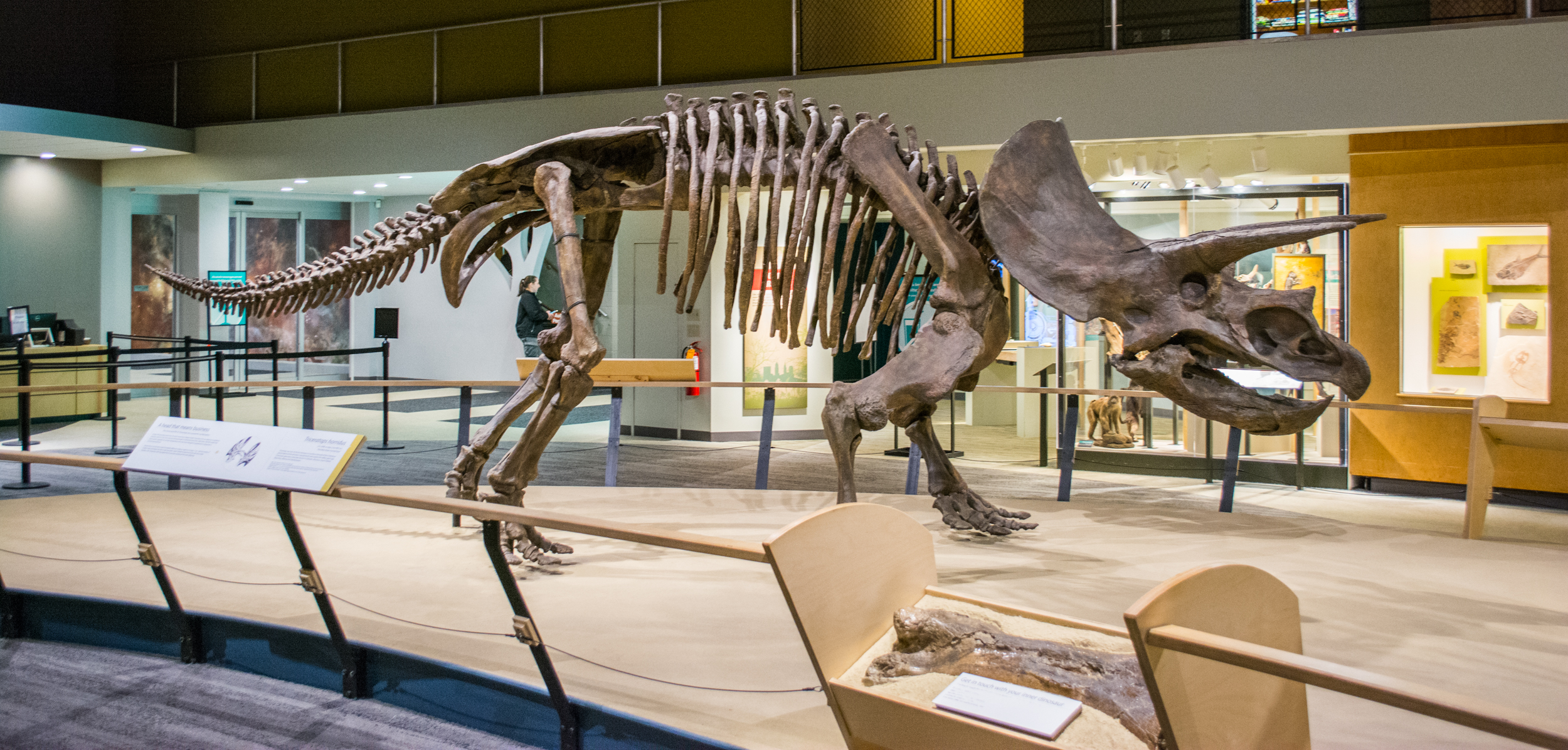
The skeletal architecture of Triceratops dinosaurs represents an engineering marvel of load-bearing strength and close-quarters maneuverability. Far from being clumsy, an adult Triceratops possessed an agile, compact center of gravity that allowed rapid rotational defense.
- Total Body Length: 8.0 to 9.0 meters (26 to 29.5 feet) from rostral beak to tail tip.
- Hip Height: 2.9 to 3.0 meters (9.5 to 10 feet), standing roughly twice the height of an adult human.
- Adult Body Mass: 6,000 to 12,000 kilograms (6 to 12 metric tons / 13,000 to 26,000 lbs), rivaling the largest modern African bull elephants.
- Skull Dimensions: Up to 2.5 to 2.6 meters (8.2 feet) in total length, making the cranium of Triceratops one of the largest and heaviest skull structures among all known terrestrial animals.
One of the most consequential anatomical features of Triceratops dinosaurs is the occipital condyle—the spherical ball-and-socket joint that connected the back of the massive skull to the first cervical vertebra (the atlas). Unlike modern horned mammals whose neck joints allow primarily vertical head-bobbing, the hemispherical condyle of Triceratops enabled a full 360-degree rotational arc. An adult could dip, tilt, sweep, and thrust its multi-ton horned head with startling speed and precision.
Biomechanical studies of ceratopsian limb posture have resolved a century-old debate. Early 20th-century restorations depicted Triceratops with sprawled, lizard-like forelimbs, while later mid-century artists drew them fully erect like an elephant. Modern 3D kinematic analyses demonstrate a semi-erect forelimb stance: the elbows were held slightly bowed outward with the digits oriented forward and slightly outward, while the hindlimbs were held columnar and upright directly beneath the pelvis. This gave Triceratops an exceptionally stable four-cornered tripod base, ideally suited for bracing against impact forces rather than sustained high-speed galloping.
The Three-Horned Cranium: Weaponry, Sheathing, and Social Display
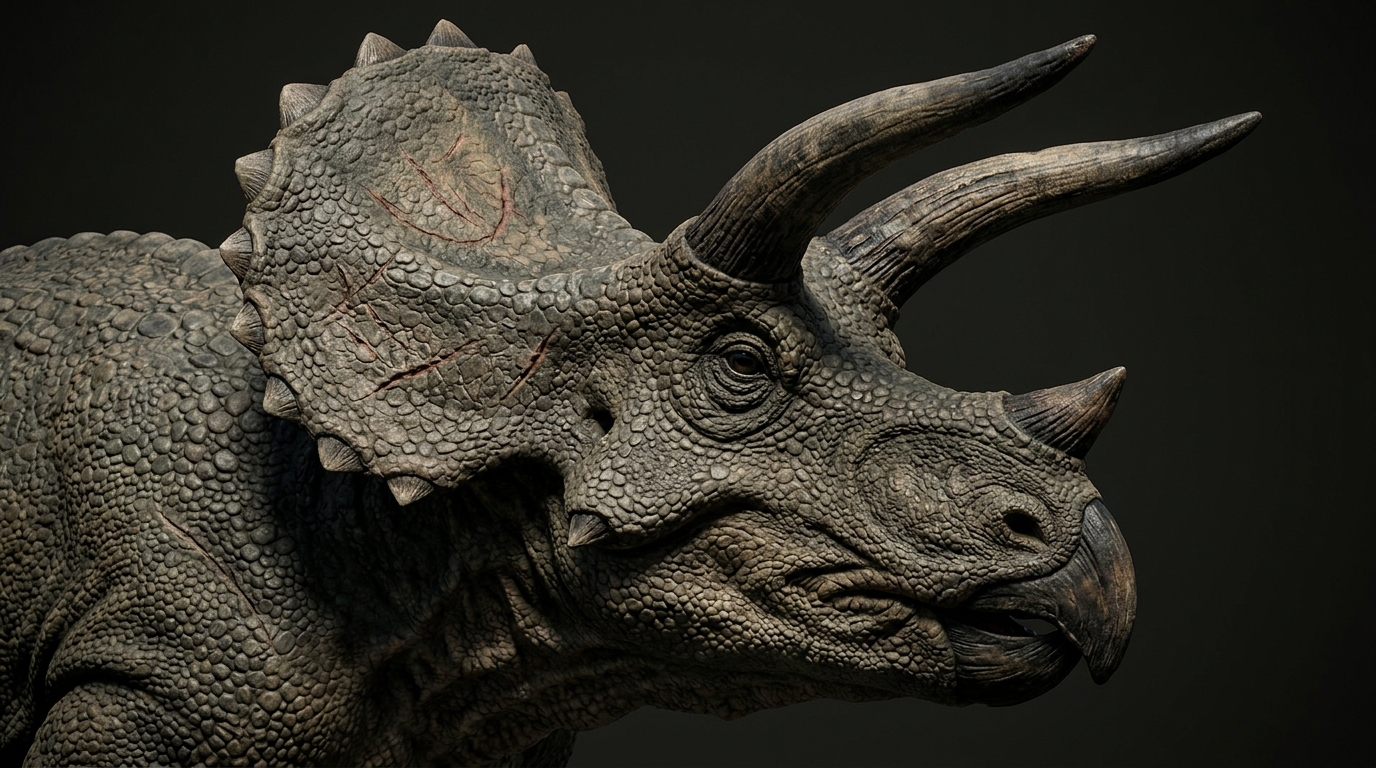
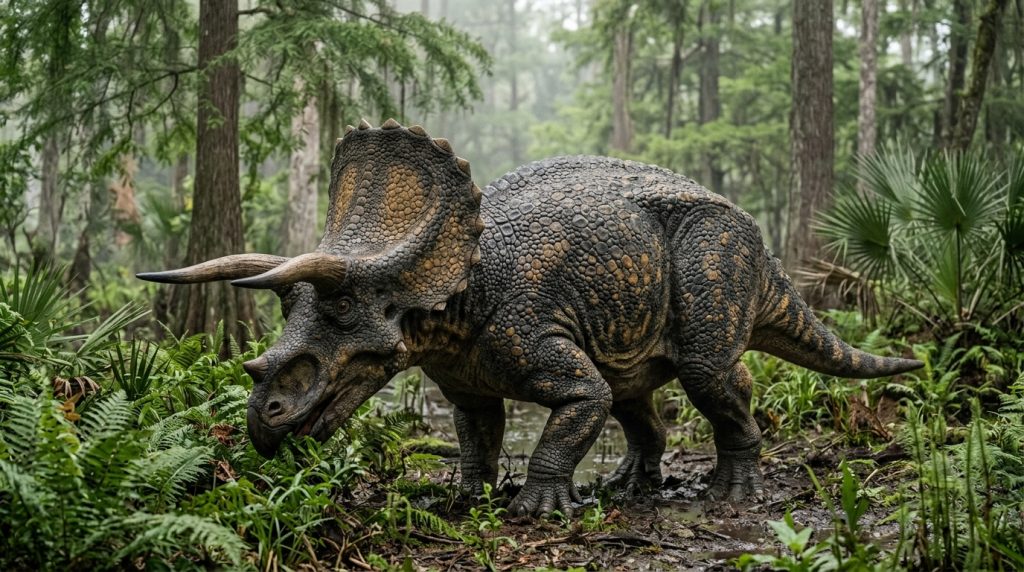
The cranial crown of Triceratops dinosaurs consists of three prominent horns: a short, thick horn on the nasal bone above the nostrils, and two enormous supraorbital brow horns rising above the eye sockets. In mature adults, the underlying fossilized bone cores of the brow horns measured over 1.0 meter (3.3 feet) in length. However, in life, these bone cores were sheathed in a dense epidermal coating of beta-keratin—the same tough structural protein found in bird talons, rhinoceros horn sheaths, and bovid horns. With its keratinous sheath intact, an adult brow horn extended to 1.3 or 1.4 meters (4.5 feet), tapering to a razor-sharp, fluted tip.
For decades, paleontologists debated whether the horns and frill evolved strictly for anti-predator defense, sexual display, species recognition, or thermoregulation. The definitive empirical answer arrived in a landmark 2009 study led by Dr. Andrew Farke and colleagues, published in PLOS ONE. The researchers performed a comprehensive pathological survey across hundreds of ceratopsian skulls, cataloging bone lesions, healed puncture wounds, and periostitis (bone infections).
Their findings were striking: Triceratops showed a dramatically higher rate of squamosal frill injuries compared to other ceratopsids like Centrosaurus. The wounds perfectly matched the exact spacing and rotational vectors of rival Triceratops brow horns locking together during head-to-head intraspecific jousting. Like modern bison or muskoxen, adult Triceratops dinosaurs engaged in ritualized horn-locking combat to settle territory disputes, herd hierarchy, and mating rights.
Simultaneously, the outer bone surface of the frill is scored with deep, branching vascular canals (neurovascular sulci). These channels housed blood vessels capable of flushing the keratin-covered skin of the frill with blood, creating dramatic color shifts for socio-sexual signaling while also radiating excess body heat generated by the animal’s massive digestive fermentation chamber. For an in-depth forensic breakdown of these cranial dynamics, read our dedicated analysis on Why Triceratops Had Three Horns and a Huge Frill.
Feeding Ecology: Dental Batteries and the 24,000-Newton Shearing Beak
To sustain an eight-ton body, Triceratops dinosaurs required an industrial-grade food processing system. Rather than eating soft grasses—which had not yet diversified into dominant ecosystems during the Cretaceous—Triceratops targeted tough, fibrous, silica-dense vegetation such as palms, cycads, ferns, and conifer branches that grew in the lower forest understory.
The primary harvesting tool was a toothless rostral bone that capped the upper jaw, matching a predentary bone on the lower jaw to form a sharp, hooked, parrot-like beak. This beak functioned as high-leverage shears, lopping off tough woody stems with pinpoint leverage.
Behind the beak lay one of the most sophisticated dental systems in vertebrate history. A 2015 study by Dr. Gregory Erickson and colleagues published in Science Advances revealed that ceratopsian teeth possessed five distinct tissue layers, including specialized coronal cementum, enamel, and three types of dentin. Modern mammals (such as horses and bison) possess only four tissue types. The differentially wearing tissues created self-sharpening ridges that operated like botanical scissors.
These teeth were arranged in dense dental batteries—closely packed vertical columns containing 36 to 40 tooth positions per jaw quadrant, with 3 to 5 replacement teeth stacked beneath each active tooth. In total, a single adult Triceratops maintained between 432 and 800 teeth in its jaws simultaneously. As feeding wore the surface teeth away, new replacement teeth seamlessly migrated upward into the shearing line. Powered by massive jaw muscles anchored across the forward frill, biomechanical models calculate a posterior bite force of 18,000 to 24,000 Newtons (4,000 to 5,400 pounds-force), enabling Triceratops to slice cleanly through vegetation that would destroy the teeth of modern herbivores.
The Two Valid Species: Triceratops horridus vs. Triceratops prorsus
Throughout the late 19th and early 20th centuries, enthusiastic paleontologists named more than sixteen distinct species of Triceratops based on minor variations in horn angle or frill shape. Modern taxonomic revision has collapsed this cluttered nomenclature into just two rigorously validated species: Triceratops horridus and Triceratops prorsus.
In 2014, John Scannella, Denver Fowler, Mark Goodwin, and Jack Horner published a definitive stratigraphic study of the Hell Creek Formation based on more than fifty ceratopsian skulls excavated over an eleven-year field survey. Their research demonstrated that the two species did not compete side-by-side; rather, they represent an evolutionary lineage changing through time (anagenesis):
| Taxonomic Character | Triceratops horridus | Triceratops prorsus |
|---|---|---|
| Stratigraphic Layer | Lower and Middle Hell Creek Formation (older) | Upper Hell Creek Formation (younger, near K-Pg boundary) |
| Nasal Horn Morphology | Shorter, upright, with a broad base | Significantly taller, robust, curving forward (prorsus = “forward”) |
| Snout / Rostrum Proportions | Elongated, lower profile snout | Abbreviated, deep, compact rostrum |
| Brow Horn Curvature | Forwardly sweeping, more slender bone cores | More upright base with massive curvature at mid-length |
This stratigraphic sequence proves that over approximately two million years of the late Maastrichtian stage, Triceratops dinosaurs evolved shorter, deeper snouts and dramatically heavier, forward-angled nasal weaponry. Learn more about the geologic layers that preserved these fossils in our comprehensive study, Decoding the Hell Creek Formation: The Final Days of the Dinosaurs.
Ontogenetic Metamorphosis and the “Toroceratops” Debate
One of the most remarkable discoveries in dinosaur paleontology over the past twenty years is how profoundly Triceratops dinosaurs transformed as they matured. In 2006, Dr. Jack Horner and Dr. Mark Goodwin analyzed a developmental growth series ranging from tiny baby skulls measuring under 30 centimeters to gigantic adult crania exceeding two meters.
In tiny hatchling and juvenile Triceratops, the brow horns did not point forward—they curved dramatically backward toward the neck frill. As the animal reached subadult adolescence, bone remodeling reabsorbed the inner curve and deposited dense fibrolamellar bone on the anterior surface, swinging the horns forward by nearly 180 degrees into lethal forward-pointing lances. Concurrently, the triangular bone ossicles lining the frill perimeter (epoccipitals) transformed from sharp, serrated spikes in juveniles into flattened, fused bone buttons in mature adults.
This extreme ontogenetic plasticity sparked intense scientific debate in 2010 when Horner and Scannella proposed the “Toroceratops” hypothesis, suggesting that Torosaurus latus—a contemporary ceratopsid with a much larger frill containing two huge holes—was merely the fully mature, elderly stage of Triceratops. The proposal argued that as Triceratops aged past reproductive maturity, the frill thinned and opened circular fenestrae.
However, subsequent histological and morphological investigations by Dr. Nicholas Longrich (2012) and Dr. Andrew Farke refuted this merger. Longrich identified fully mature adult Triceratops skulls with closed cranial sutures that showed no pre-fenestral bone thinning, as well as immature juvenile Torosaurus specimens that already exhibited distinct parietal openings. Today, the paleontological consensus firmly recognizes Triceratops and Torosaurus as distinct, valid genera. For deeper lessons on how paleontologists analyze growth series, visit our Dinosaur Learning Hub.
Integument, Skin, and Soft Tissue Evidence: The “Lane” Specimen
For more than a century, artists reconstructed ceratopsians with generic, alligator-like scales. That changed dramatically with the discovery of “Lane” (specimen HMNS 2006.1743.01), an exceptionally preserved Triceratops horridus excavated from the Lance Formation of Wyoming, currently curated at the Houston Museum of Natural Science.
Lane preserves the most complete, extensive patch of fossilized skin impressions ever discovered from a horned dinosaur. The integument reveals an astonishing mosaic:
- Hexagonal Basement Scales: The base layer consists of tightly interlocking non-overlapping polygonal scales measuring 5 to 10 millimeters in diameter.
- Raised Conical Tubercles: Dispersed across the flank and back are large, raised tubercles reaching up to 10 centimeters across. Many of these large scales feature a central conical projection with radiating ridges.
- The Quill / Bristle Question: Intriguingly, some of the large tubercles possess central depressions resembling follicle pits. While early ceratopsians like Psittacosaurus possessed tubular quill-like bristles on their tails, there is no direct evidence confirming feathers or long quills on adult Triceratops. Instead, these structures likely anchored tough, raised epidermal studs or keratinous bosses, providing a durable, defensive outer armor across the animal’s flanks.
Forensic Clashes: Triceratops Dinosaurs vs. Tyrannosaurus Rex
The iconic duel between Triceratops and Tyrannosaurus rex is often dismissed as a Hollywood trope, but the fossil record preserves undeniable forensic evidence that these two apex titans engaged in violent, life-or-death confrontations.
In 2008, paleontologists examining an adult Triceratops brow horn core (specimen UCMP 154452) identified deep gouges matching the incisiform dentition of an adult Tyrannosaurus rex. The tip of the horn had been completely bitten off during a violent strike. Crucially, the bone surrounding the shearing trauma showed extensive periosteal woven bone growth and remodeling—proving the Triceratops survived the attack, fought off the predator, and lived for years afterward as the bone healed.
Similarly, multiple Triceratops frills exhibit puncture holes matching the conical teeth of tyrannosaurids, with smooth, rounded bone margins confirming healing. Conversely, several Tyrannosaurus rex fossils display healed puncture wounds on their leg bones, abdominal ribs, and pelvic girdles that correspond precisely to the diameter and thrust angle of a Triceratops brow horn.
An adult Triceratops, standing firmly on its splayed forelimbs and pivoting with its hemispherical neck joint, represented one of the most perilous prey items in terrestrial history. A charging predator risked impalement by two four-foot keratin-sheathed spears driven by nine tons of counter-thrusting muscle. For a direct scientific comparison of the mass, bite forces, and tactical weaponry of these two Hell Creek titans, explore our Dinosaur Comparison Engine, or dive into our comprehensive profile of Tyrannosaurus Rex: Everything You Need to Know About the Tyrant King.
Key Museum Specimens That Changed Paleontology
HMNS 2006.1743.01 (“Lane”)
Excavated in Wyoming; preserves nearly complete three-dimensional mummified skin impressions, confirming the hexagonal scale network and large conical tubercles of T. horridus.
“Big John” (Private / Exhibition)
The largest documented Triceratops skull in the world at 2.62 meters. A 2022 study by D’Anastasio et al. in Scientific Reports identified a healed horn puncture on its frill caused by an intraspecific fight.
Melbourne Museum (“Horridus”)
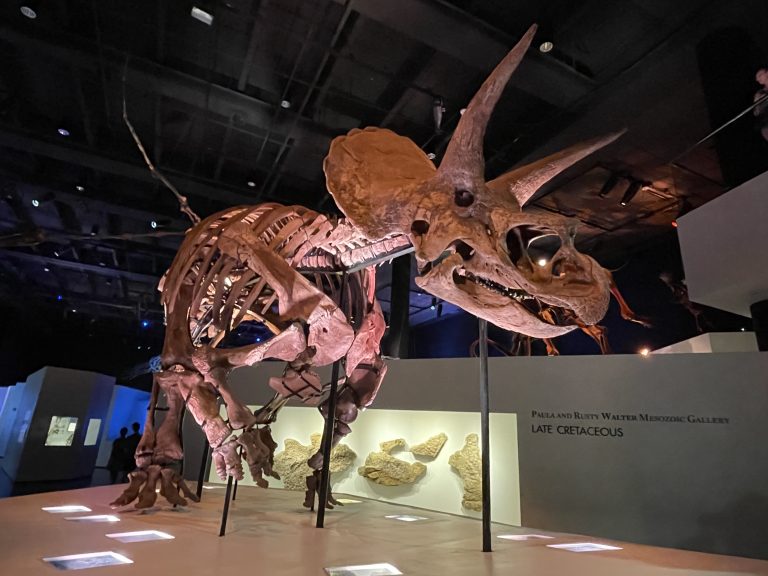
One of the most complete Triceratops skeletons in existence (over 85% real fossil bone), excavated in Montana. Features pristine vertebral columns and intact horn cores.
USNM 4720 (“Hatcher”)
The world’s first mounted Triceratops skeleton, assembled at the Smithsonian National Museum of Natural History in 1905, establishing the baseline anatomical archetype for early paleontology.
Common Misconceptions About Triceratops Dinosaurs
Misconception 1: “Triceratops charged its enemies at high speed like a modern rhino.”
Reality: Biomechanical stress analysis confirms that galloping charges would have shattered ceratopsian forelimb bones. Instead of running headlong across open plains, Triceratops planted its sturdy semi-sprawling limbs, held its ground, and used its spherical neck joint to deliver rapid, devastating thrusts and parries in close combat.
Misconception 2: “The neck frill was purely a shield to protect against T. rex bites.”
Reality: While the solid frill did protect the delicate neck vertebrae, its primary evolutionary drivers were muscle anchorage for its massive masticatory system, intra-species horn-locking defense during mating competition, and visual socio-sexual communication via vascular skin flushing.
Misconception 3: “Torosaurus was proved to be just an elderly Triceratops.”
Reality: The 2010 “Toroceratops” hypothesis captured widespread media attention, but subsequent anatomical, histological, and cladistic studies confirmed that Torosaurus has different frill histology, different epoccipital counts, and distinct juvenile specimens, validating it as a separate genus.
Misconception 4: “Triceratops was a solitary animal with no herd structure.”
Reality: While single specimens are frequently excavated, the discovery of juvenile bonebeds in Montana and the Netherlands (a multi-individual Triceratops quarry excavated by the Naturalis Biodiversity Center) demonstrates that juveniles and subadults formed gregarious groups for mutual protection.
Frequently Asked Questions
How long were the horns of Triceratops dinosaurs?
In mature adult specimens, the fossilized bone cores of the two brow horns reached approximately 1.0 meter (3.3 feet) in length. Covered in life by a fibrous keratinous sheath, the living horns reached 1.3 to 1.4 meters (over 4.5 feet), tapering to a sharp, fluted point.
Could a Triceratops kill a Tyrannosaurus rex?
Yes. Biomechanical mass calculations demonstrate that an adult Triceratops driving forward with 8 to 10 tons of momentum could easily pierce the unarmored ribcage, lungs, or femoral artery of an attacking T. rex, causing immediate fatal trauma. Healed bite marks and puncture wounds on both species confirm that encounters were frequent and deadly.
What did Triceratops dinosaurs eat?
Triceratops was a strict herbivore specialized for tough, fibrous, low-growing vegetation. Its parrot-like beak clipped woody branches, and its 800 continuously replacing teeth sheared silica-rich cycads, palms, and prehistoric ferns into digestible pulp.
Did Triceratops live in herds?
Yes. Although early excavations suggested a solitary existence, discoveries of multi-individual bonebeds—particularly subadult groups in Wyoming and Montana—indicate that young Triceratops banded together in protective pods, and adults likely migrated or gathered in seasonal herds.
Why were juvenile Triceratops horns curved backward?
Hatchling and juvenile Triceratops horns curved backward toward the frill as a developmental indicator. This backward orientation prevented young animals from being perceived as territorial threats by aggressive adult herd members before shifting forward during sexual maturity.
Final Takeaway: The Evolutionary Triumph of the Three-Horned Face
Triceratops dinosaurs were not clumsy relics of a bygone era—they were the crowning achievement of ornithischian herbivore evolution. By uniting an impregnable solid frill, razor-sharp self-sharpening dental batteries, and two four-foot keratin lances on an agile 360-degree neck joint, Triceratops achieved absolute ecological dominance across the Late Cretaceous floodplain forests.
Their dominance ended not from biological shortcomings or competitive displacement, but from the cataclysmic extraterrestrial impact at Chicxulub 66 million years ago. Today, through histological sectioning, CT scans, and forensic paleopathology, Triceratops stands recognized as one of the most sophisticated and powerful animals ever to walk the Earth.
To dive deeper into the ancient world of horned dinosaurs and prehistoric predators, visit our official scientific Triceratops Dinosaur Profile, compare its armor against the living tank Ankylosaurus, or simulate a battle of biomechanics in our interactive Dinosaur Comparison Engine.
Peer-Reviewed Literature Cited
- Marsh, O. C. (1889). Notice of gigantic horned Dinosauria from the Cretaceous. American Journal of Science, 38(228): 173–175.
- Horner, J. R., & Goodwin, M. B. (2006). Major cranial changes during Triceratops ontogeny. Proceedings of the Royal Society B: Biological Sciences, 273(1602): 2757–2761. DOI: 10.1098/rspb.2006.3643
- Farke, A. A., Wolff, E. D., & Tanke, D. H. (2009). Evidence of combat in Triceratops. PLOS ONE, 4(1): e4252. DOI: 10.1371/journal.pone.0004252
- Scannella, J. B., & Fowler, D. W. (2014). A review of the stratigraphic distribution of Triceratops in the Hell Creek Formation, Montana. Geological Society of America Special Papers, 503: 313–344. DOI: 10.1130/2014.2503(12)
- Erickson, G. M., Sidebottom, M. A., Kay, D. I., Turner, M. A., Nathan, I. P., Norell, M. A., & Krick, B. A. (2015). Wear biomechanics in the complex dental tissues of ceratopsian dinosaurs. Science Advances, 1(5): e1500055. DOI: 10.1126/sciadv.1500055
- D’Anastasio, R., Cilli, J., Bacchia, F., Fanti, F., Gobbo, G., & Capasso, L. (2022). Histological and chemical diagnosis of a combat lesion in Triceratops “Big John”. Scientific Reports, 12: 3941. DOI: 10.1038/s41598-022-08554-x

Referenced Dinosaur Species 5 species
Triceratops horridus
Triceratops horridus
Triceratops horridus is one of the most recognizable horned dinosaurs. Equipped with two brow horns measuring up to 1 meter in length, a shorter nasal horn, and a solid parietal-squamosal frill, it was a dominant herbivore that actively defended against contemporary predators like Tyrannosaurus rex.
Tyrannosaurus rex
Tyrannosaurus rex
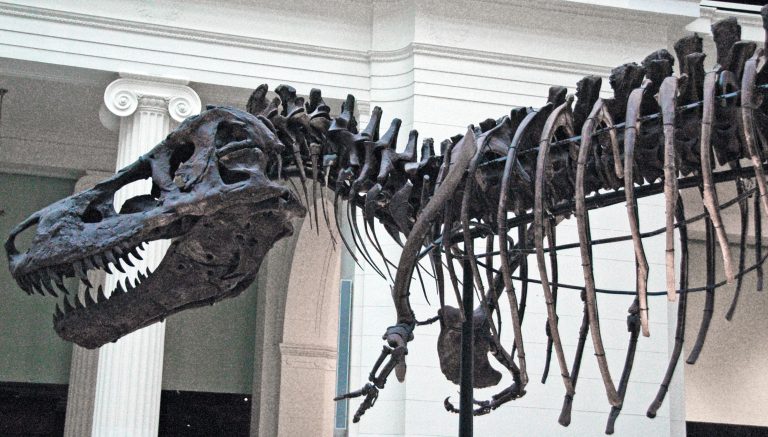
Tyrannosaurus rex was one of the largest terrestrial carnivores of all time, roaming western North America just prior to the Cretaceous-Paleogene extinction event. With an estimated bite force exceeding 35,000 Newtons and acute stereoscopic vision, it sat uncontested at the apex of its ecosystem.
Ankylosaurus magniventris
Ankylosaurus magniventris
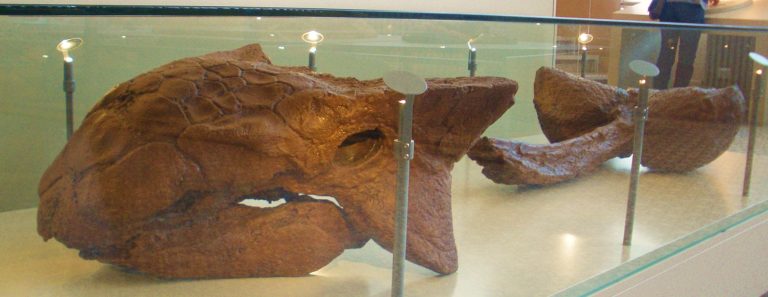
The living tank of the Late Cretaceous, armored in thick osteoderm plates with cranial horns and a massive distal tail club capable of shattering theropod bones.
Stegosaurus stenops
Stegosaurus stenops
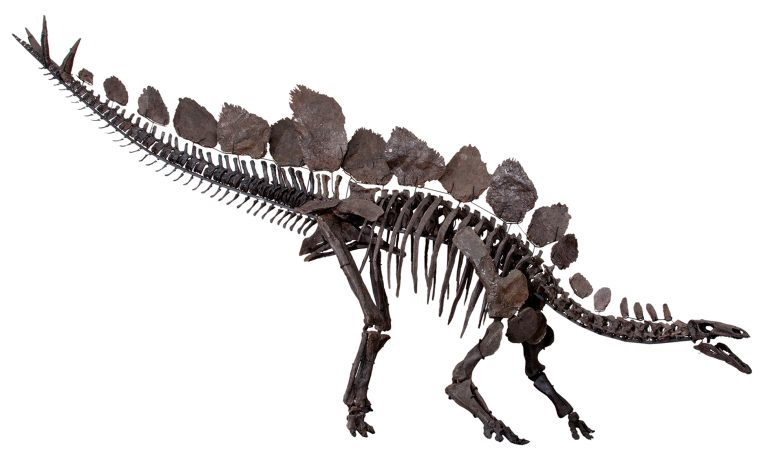
An iconic plated herbivore possessing alternating osteodermal dorsal plates for thermoregulation or display and four lethal tail spikes (thagomizer) for active defense.
Brachiosaurus altithorax
Brachiosaurus altithorax
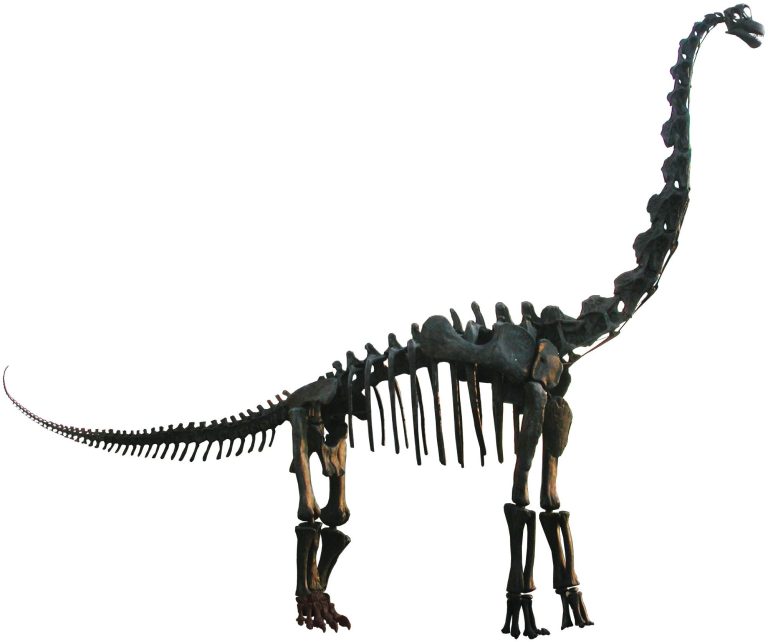
A colossal macronarian sauropod with disproportionately long forelimbs and an elevated neck built for high-canopy conifer browsing during the Late Jurassic.
Related Paleontological Dispatches
Stegosaurus: Why It Had Back Plates and a Spiked Tail
With its tiny head, towering double row of kite-shaped plates, and a tail bristling with four lethal spikes,…
Triceratops: Why It Had Three Horns and a Huge Frill
For more than a century, popular books and films have depicted Triceratops as nature’s ultimate prehistoric battle tank:…

Did T. rex Have Feathers? What the Fossils Really Say
Over the past three decades, popular depictions of Tyrannosaurus rex have swung between two radical extremes. For nearly…