Ankylosaurus: The Living Tank of the Cretaceous
A forensic paleontological breakdown of Ankylosaurus magniventris: how mosaic osteoderms, interlocking caudal vertebrae, and an explosive tail club formed the apex defensive system of the Late Cretaceous.

In the final stages of the Late Cretaceous, western North America was home to some of the most formidable macropredators in geological history, led by Tyrannosaurus rex. Yet sharing these same Hell Creek floodplains was an herbivore so thoroughly fortified that it turned passive defense into an art form: Ankylosaurus magniventris. Popularly christened the “living tank” of the dinosaur world, Ankylosaurus has often been depicted as an indestructible, lumbering reptile wrapped in a solid iron carapace. However, modern bone histology, 3D biomechanical modeling, and newly analyzed cranial fossils reveal a far more sophisticated biological reality. From composite keratin-shielded osteoderms to an engineered terminal tail club capable of shattering cortical bone, Ankylosaurus represents the pinnacle of thyreophoran evolutionary engineering.
Key Paleontological Takeaways
- Not a Solid Shell: Rather than an inflexible turtle-like carapace, the armor of Ankylosaurus consisted of hundreds of individual oval and keeled bony plates (osteoderms) and micro-ossicles embedded flexibly within thick dermal tissue.
- The Tail Club Biomechanics: The famous tail club was a dual-component weapon consisting of a stiff, tendon-locked “handle” (interlocking caudal vertebrae) and a massive bone “knob” capable of generating thousands of Newtons of impact force (Arbour & Snively, 2009).
- Beyond Predator Defense: While long viewed solely as a deterrent against Tyrannosaurus rex, recent paleopathological studies indicate ankylosaurid tail clubs were frequently used in intraspecific flank-striking combat between competing adults.
- Remarkable Olfactory Senses: CT scans of the skull reveal labyrinthine, looped nasal cavities that humidified inhaled dry air and housed massive olfactory bulbs, granting Ankylosaurus an extraordinary sense of smell.
1. Discovery and Classification: Barnum Brown’s “Great-Bellied” Mystery
The story of Ankylosaurus began in 1906, during an expedition led by legendary fossil hunter Barnum Brown of the American Museum of Natural History (AMNH). Excavating within the Hell Creek Formation of northern Montana, Brown’s crew unearthed a remarkable specimen (holotype AMNH 5895) consisting of an incomplete skull roof, dorsal vertebrae, ribs, dermal armor plates, and a shoulder girdle.
In 1908, Brown published the formal scientific description, naming the genus Ankylosaurus from the Greek words ankylos (“fused”, “crooked”, or “stiffened”) and sauros (“lizard”), highlighting the extensive fusion of bones in its skull and armor. He assigned the specific name magniventris—meaning “great belly”—in reference to the animal’s extraordinarily broad ribcage and voluminous digestive tract.
Despite being the namesake of the entire clade Ankylosauridae, Ankylosaurus magniventris remains one of the rarest dinosaurs in the Hell Creek and Scollard formations. While paleontologists have uncovered dozens of Triceratops and Edmontosaurus skeletons, Ankylosaurus is known from only a handful of partial specimens. Adults measured between 6.0 and 8.0 meters (20 to 26 feet) in total length, stood approximately 1.7 meters tall at the hips, and weighed an estimated 4.8 to 8.0 metric tons, making it the largest known ankylosaurian dinosaur in Earth history.
2. The Dermal Shield: Mosaic Osteoderms and Keratin Layers
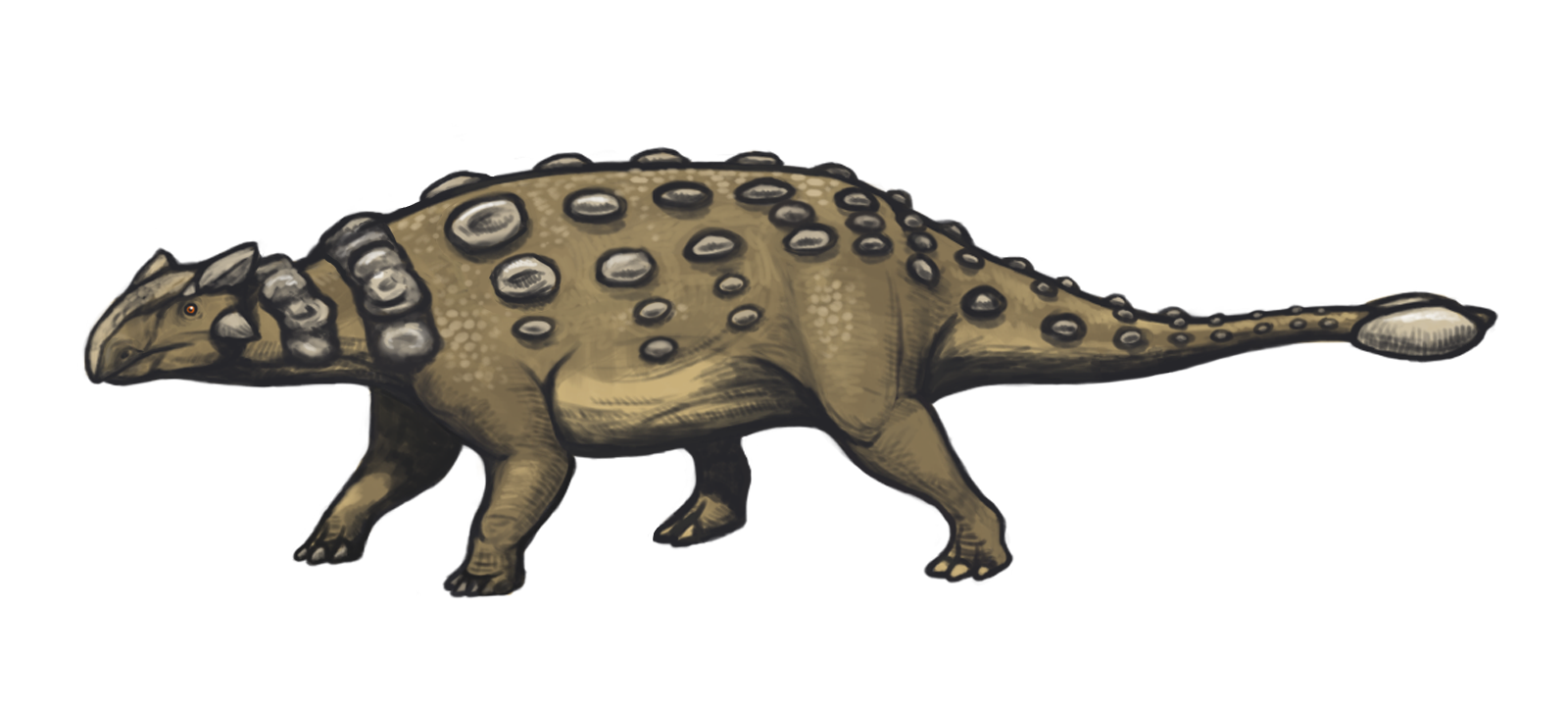
In popular dinosaur art, Ankylosaurus is routinely illustrated as if its torso were encased in an immovable slab of metal or a monolithic armadillo shell. In reality, its defensive armor was a dynamic biological system composed of specialized osteoderms—bony deposits formed within the dermis layer of the skin.
A. Composition and Microstructure
Histological thin-section analyses conducted by Dr. Victoria Arbour and Dr. Philip Currie reveal that ankylosaur osteoderms were light yet remarkably shock-absorbent:
- Sandwich Architecture: The interior of each plate consisted of cancellous (sponge-like, porous) bone filled with blood vessels, sandwiched between dense outer layers of compact cortical bone. This composite structure prevented micro-fractures from propagating across the plate during high-velocity impacts.
- Keratinous Sheaths: In life, the mineralized osteoderms were capped by thick sheaths of epidermal keratin—the same fibrous protein found in turtle beaks and rhinoceros horns. These keratinous covers extended beyond the bone margins, forming sharp, keeled edges and vibrant display surfaces.
- Flexible Inter-Plate Articulation: Rather than fusing into an inflexible carapace, hundreds of individual oval, rectangular, and keel-shaped osteoderms were arranged in distinct transverse bands across the neck, back, and hips. Thousands of tiny, millimeter-sized bony nodules (ossicles) were embedded in the leathery skin between the larger plates, granting the animal flexible movement while eliminating unarmored gaps.
B. Cervical Half-Rings
The most structurally reinforced portion of the armor was located directly behind the skull. Ankylosaurus possessed two broad, U-shaped cervical half-rings that guarded the dorsal and lateral sides of the neck. Each ring consisted of heavy osteoderms fused to an underlying band of bone. Because the neck is a primary target for ambush predators seeking to sever spinal cords or jugular veins, these half-rings served as impenetrable neck guards.
3. Anatomy of a Tail Club: The Rigid Handle and Bone-Crushing Knob
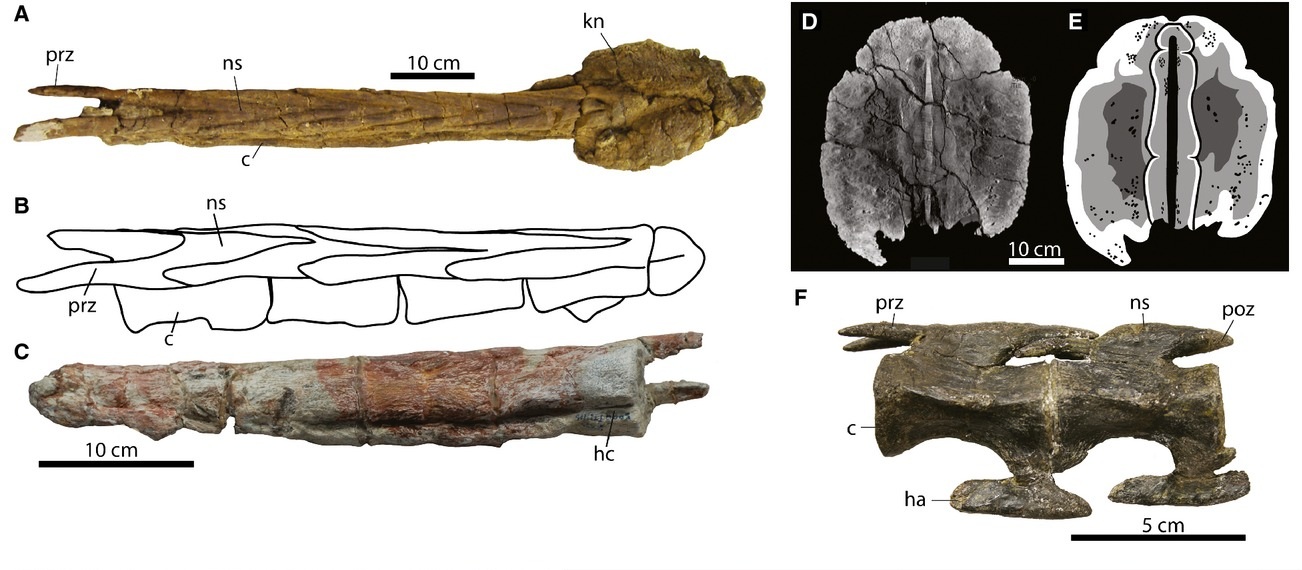
While early thyreophorans like Stegosaurus relied on spiked tails (thagomizers) to slash assailants, derived ankylosaurids evolved a completely distinct biomechanical weapon: the terminal tail club. Rather than a simple bone growth, the club was a precision-engineered kinetic delivery system composed of two anatomically distinct zones: the handle and the knob.
| Tail Club Component | Anatomical Construction | Biomechanical Function |
|---|---|---|
| The Handle (Vertebrae) | Distal caudal vertebrae with overlapping, elongated prezygapophyses and ossified tendons surrounding the vertebral column. | Eliminated vertical and lateral flexibility, converting the rear half of the tail into an unbending, rigid lever arm. |
| The Knob (Osteoderms) | Two enlarged lateral osteoderms plus smaller terminal and medial osteoderms fused tightly around the final vertebrae. | Delivered high-density mass (exceeding 50–60 kg) at the tip of the lever, maximizing impact momentum. |
| Proximal Musculature | Enlarged musculus caudofemoralis longus and interspinales muscles originating from the wide pelvis. | Provided explosive lateral swinging power through an arc exceeding 100 degrees while maintaining ground balance. |
In groundbreaking finite element analyses, paleontologist Dr. Victoria Arbour (2009) calculated the kinetic forces generated by adult ankylosaurid tail clubs. Arbour demonstrated that a large knob could deliver impact forces ranging from 14,000 to over 24,000 Newtons. This kinetic energy was more than sufficient to fracture the cortical bone of a theropod’s fibula or tibiotarsus, effectively crippling any carnivore caught within its striking radius.
4. Predator Deterrent vs. Rival Sparring: How Was the Club Really Used?
For more than a century, popular media has portrayed the tail club exclusively as a weapon designed to shatter the shins of hunting Tyrannosaurus rex. While there is no doubt that the club could inflict catastrophic blunt-force trauma on an attacking theropod, modern research suggests its primary evolutionary driver may have been intraspecific combat (fights between members of the same species).
The Case for Flank Sparring
In a landmark 2022 study of the exceptionally preserved ankylosaurid Zuul crurivastator, Arbour and colleagues documented healed fractures and blunt-force trauma concentrated on the lateral flank osteoderms, rather than the limbs or cranial roof. This injury pattern strongly matches the sparring behavior seen in modern antelopes and bison: rival males stood side-by-side or parallel to one another and traded sweeping flank strikes to establish territory, mating rights, and dominance hierarchy.
Defense Against Tyrannosaurus rex
When confronted by a macropredator like T. rex, Ankylosaurus did not need to run. With short, powerful limbs and an extraordinarily wide center of gravity, it likely dropped its belly flush against the substrate, tucking its limbs beneath its armored flanks. In this defensive crouch, the predator was presented with a domed fortress of bone and horn. If the carnivore attempted to flank the animal, the swinging tail club served as an active perimeter defense.
However, Ankylosaurus was not invulnerable. If a fully grown T. rex (capable of generating 57,000 N of bite force) managed to overturn an Ankylosaurus, its unarmored ventral abdomen was completely defenseless. Fossil evidence of heavily damaged ankylosaur bone elements in Hell Creek bonebeds demonstrates that tyrannosaurs did indeed feed on ankylosaur carcasses, whether scavenged or hunted.
5. Cranial Architecture and Olfactory Power: Feeding and Senses
Beneath its heavily ornamented exterior, the skull of Ankylosaurus concealed complex anatomical adaptations that challenge the historic stereotype of ankylosaurs as “primitive, slow-witted” reptiles.
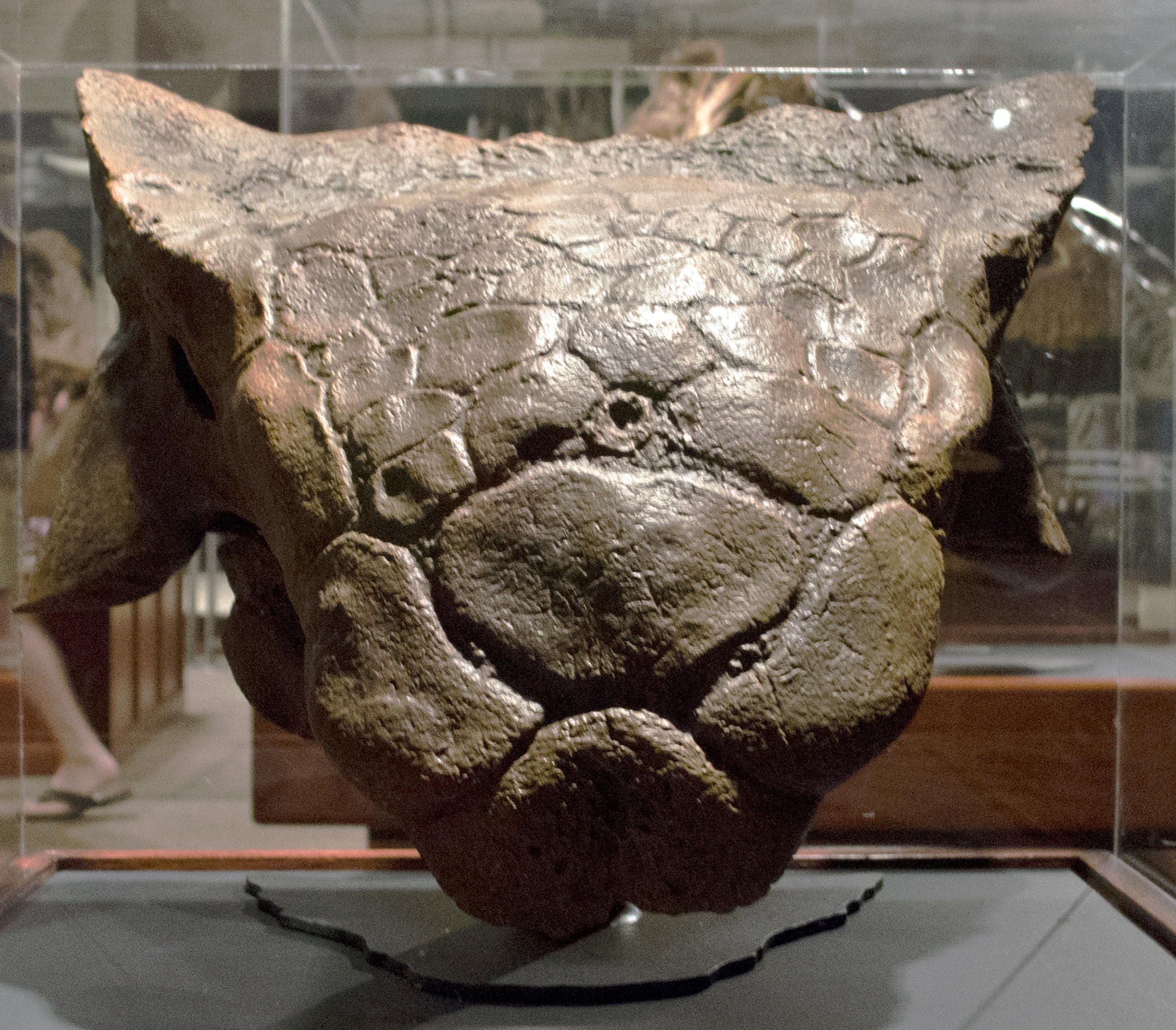
- Caputegulae and Cranial Horns: The skull bones were completely fused and obscured by tiled armor plates called caputegulae. Pyramidal squamosal horns projected backward and laterally from the upper corners of the head, shielding the delicate otic capsules (ears) and neck muscles.
- Complex Nasal Airway Cavities: High-resolution CT scans performed by Miyashita et al. (2011) and Jason Bourke et al. (2014) revealed that ankylosaur skulls contained convoluted, S-shaped nasal passages resembling an internal labyrinth. These looping air ducts functioned as heat exchangers, cooling warm blood heading toward the brain, conserving water in arid seasons, and potentially acting as vocal resonators for low-frequency acoustic communication.
- Exceptional Sense of Smell: Digital endocasts of the braincase indicate that the olfactory bulbs occupied a disproportionately large percentage of the total brain volume. Ankylosaurus possessed an acute sense of smell, allowing it to locate dispersed patches of flowering shrubs, ferns, and decaying vegetation across vast distances.
- Dental Specialization: At the front of the snout, a broad keratinous beak (rhamphotheca) cropped low vegetation indiscriminately. In the rear of the jaw, small, phylliform (leaf-shaped) teeth with vertical wear facets processed soft foliage. Ankylosaurus relied on a massive fermentation vat within its broad belly to digest high volumes of tough, fibrous plant matter.
Common Misconceptions About Ankylosaurus
- Misconception 1: “Ankylosaurus was covered in a single solid shell like a giant turtle.”
- Unlike turtles, whose shells are formed by fused ribs and vertebrae, the armor of Ankylosaurus was made of hundreds of distinct osteoderms embedded within pliable leathery dermis. This mosaic configuration gave the animal full trunk mobility, allowing it to bend, breathe, and navigate rugged Mesozoic terrain with ease.
- Misconception 2: “Baby Ankylosaurus had a fully formed tail club at hatching.”
- Ontogenetic fossil studies show that juvenile ankylosaurs were completely clubless. As an ankylosaur grew, the distal tail vertebrae gradually fused and ossified their surrounding tendons into the rigid “handle” first. Only when the individual neared subadult size did the lateral osteoderms expand and fuse to form the heavy “knob,” proving the club was a late-developing secondary sexual and defensive structure.
- Misconception 3: “Ankylosaurus could easily swing its tail vertically over its back.”
- The interlocking prezygapophyses and ossified tendons of the handle vertebrae severely restricted vertical movement. Biomechanical modeling proves the tail club could only swing in a horizontal, lateral plane close to the ground, designed specifically to strike sideways at legs, ankles, and flanks.
Frequently Asked Questions
How big was Ankylosaurus?
Adult Ankylosaurus magniventris measured between 6.0 and 8.0 meters (20 to 26 feet) long, stood about 1.7 meters (5.5 feet) tall at the hips, and weighed between 4.8 and 8.0 metric tons (10,500 to 17,600 lbs). It was the largest armored dinosaur known to science.
Could an Ankylosaurus defeat a T. rex in a fight?
Ankylosaurus was well equipped to deter an attack. A direct hit from its 50-kilogram tail club could easily break a T. rex leg bone, inflicting a fatal injury on a bipedal predator. However, if a T. rex managed to flip the ankylosaur onto its back, its soft underbelly was defenseless against crushing jaws.
What did Ankylosaurus eat?
Ankylosaurus was a low-browsing herbivore. Its broad beak cropped ferns, flowering shrubs, cycads, and fruits growing within 1 meter of the ground, relying on a vast digestive gut to ferment fibrous vegetation.
Where have Ankylosaurus fossils been found?
Fossils of Ankylosaurus have been discovered in latest Cretaceous rock formations across western North America, including the Hell Creek Formation of Montana, the Lance and Ferris formations of Wyoming, and the Scollard Formation of Alberta, Canada.
Why are Ankylosaurus fossils so rare?
Unlike herd-dwelling hadrosaurs and ceratopsians, Ankylosaurus appears to have been a solitary or low-density animal living in upland environments farther away from active river sedimentation where fossils commonly form.
Final Takeaway: Nature’s Masterpiece of Passive Defense
Ankylosaurus magniventris was far more than an awkward, heavy-footed reptile burdened by bone. It was an exquisitely adapted survivor of the latest Cretaceous world. Through a mosaic armor of composite osteoderms, an aerodynamically advanced olfactory cranium, and an engineered kinetic tail club, Ankylosaurus held its ground alongside the most lethal carnivores the planet had ever seen—thriving until the cosmic impact at the close of the Cretaceous brought the Age of Dinosaurs to an end.
Peer-Reviewed Literature Cited
- Arbour, V. M., & Mallon, J. C. (2017). Unusual cranial and postcranial anatomy in the archetypal ankylosaur Ankylosaurus magniventris. FACETS, 2(2), 764–794. doi:10.1139/facets-2017-0063
- Arbour, V. M., & Snively, E. (2009). Biomechanics and function of the tail club in ankylosaurid dinosaurs. The Anatomical Record, 292(9), 1312–1328. doi:10.1002/ar.20982
- Arbour, V. M., & Currie, P. J. (2015). Systematics, phylogeny and palaeobiogeography of the ankylosaurid dinosaurs. Journal of Systematic Palaeontology, 14(5), 377–444. doi:10.1080/14772019.2015.1059985
- Arbour, V. M., et al. (2022). Palaeopathological evidence for intraspecific combat in ankylosaurid dinosaurs. Biology Letters, 18(12), 20220404. doi:10.1098/rsbl.2022.0404
- Brown, B. (1908). The Ankylosauridae, a new family of armored dinosaurs from the Upper Cretaceous. Bulletin of the American Museum of Natural History, 24, 187–201.
- Bourke, J. M., et al. (2014). Breathing life into dinosaurs: tackling challenges of soft-tissue modeling and nasal airflow in extinct archosaurs. The Anatomical Record, 297(11), 2148–2186. doi:10.1002/ar.23046
- Miyashita, T., et al. (2011). Cranial morphology of Ankylosaurus magniventris and its relevance to the phylogeny of Ankylosauria. Journal of Paleontology, 85(4), 631–643. doi:10.1666/10-102.1
Scientific Sources & Peer-Reviewed Literature

Referenced Dinosaur Species 2 species
Tyrannosaurus rex
Tyrannosaurus rex
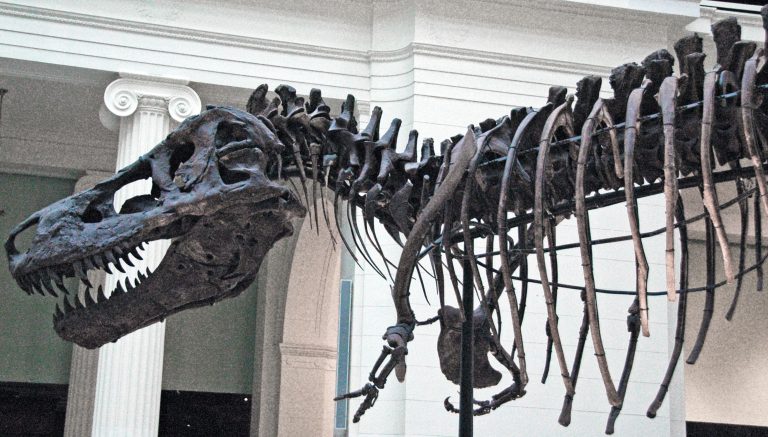
Tyrannosaurus rex was one of the largest terrestrial carnivores of all time, roaming western North America just prior to the Cretaceous-Paleogene extinction event. With an estimated bite force exceeding 35,000 Newtons and acute stereoscopic vision, it sat uncontested at the apex of its ecosystem.
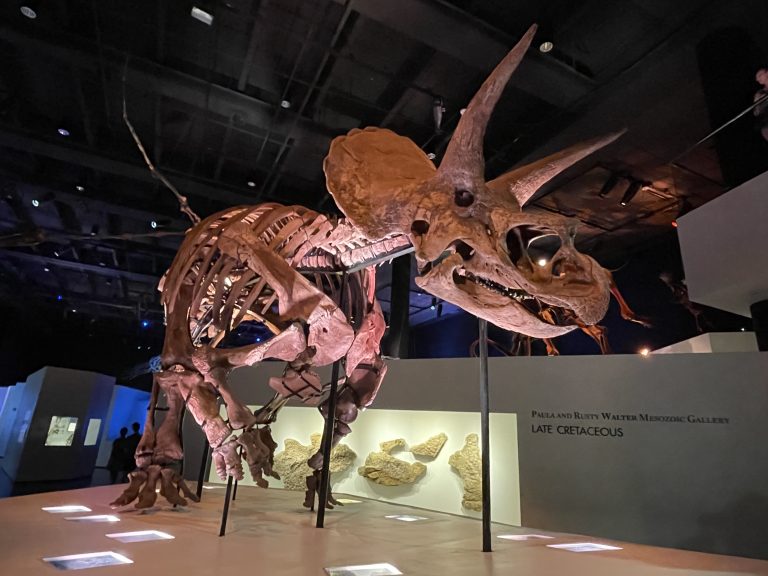
Triceratops horridus
Triceratops horridus
Triceratops horridus is one of the most recognizable horned dinosaurs. Equipped with two brow horns measuring up to 1 meter in length, a shorter nasal horn, and a solid parietal-squamosal frill, it was a dominant herbivore that actively defended against contemporary predators like Tyrannosaurus rex.
Related Paleontological Dispatches
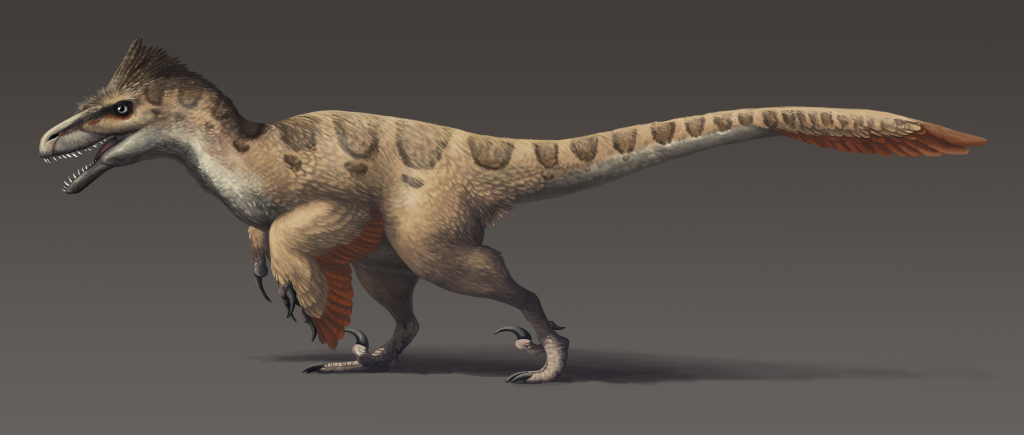
Utahraptor: The Giant Raptor Found in Utah
When pop culture introduced the world to the terrifying “raptors” of cinema in 1993, audiences were terrified by…

Giganotosaurus: The Giant Predator of Patagonia
When Argentine paleontologists Rodolfo Coria and Leonardo Salgado announced the discovery of Giganotosaurus carolinii in 1995, the announcement…
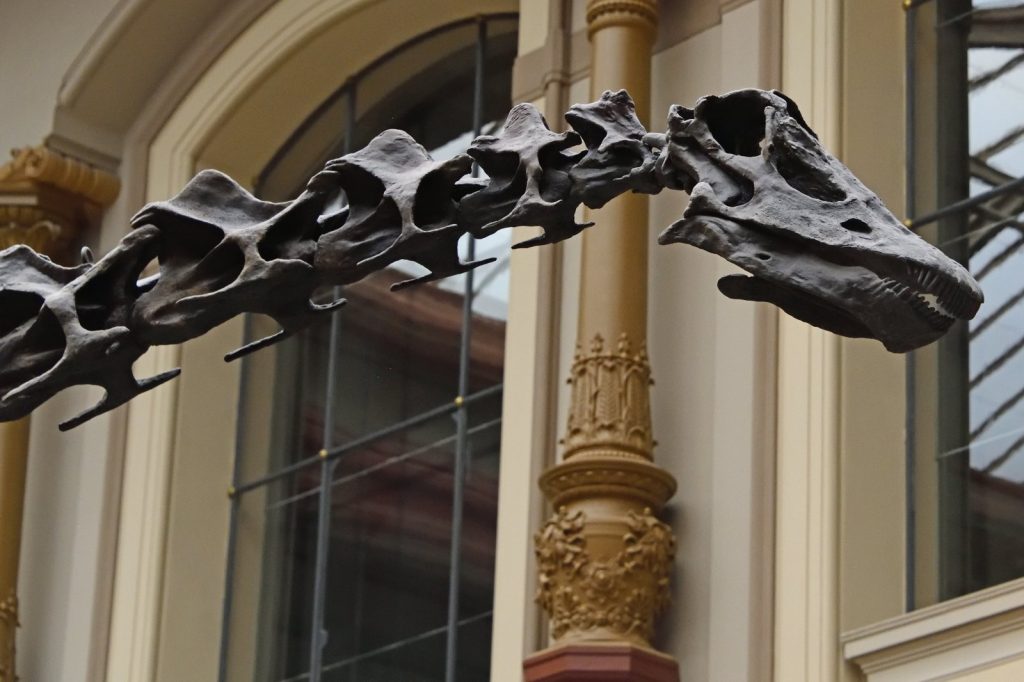
Diplodocus: How Long Was This Whip-Tailed Giant?
Among all the colossal dinosaurs unearthed from the Late Jurassic rock strata of western North America, Diplodocus has…