Did T. rex Have Feathers? What the Fossils Really Say
Did the tyrant king wear a coat of feathers, or was it entirely scaly? Separating direct T. rex fossil evidence from evolutionary inference, discover what skin impressions, Yutyrannus, and thermal physics really reveal.

Over the past three decades, popular depictions of Tyrannosaurus rex have swung between two radical extremes. For nearly a century, pop culture portrayed T. rex as an overgrown scaly crocodile. Then, following the revolutionary discoveries of feathered dinosaurs in China during the late 1990s and 2000s, paleoart swung violently in the opposite direction—rendering the tyrant king as a giant, fluffy, 40-foot murder-bird covered head-to-toe in plumage.
Today, the scientific dust has settled, and the reality revealed by peer-reviewed paleontology is far more nuanced, fascinating, and grounded in empirical evidence. To answer the question—Did T. rex have feathers?—we must carefully distinguish between three distinct types of scientific information: direct fossil evidence from T. rex itself, evidence from its close relatives, and evolutionary thermal physics (gigantothermy).
Here is what the fossil record actually documents about the skin, scales, and integument of Tyrannosaurus rex.
Integument Evidence at a Glance
- Direct T. rex Skin Impressions: All preserve scales (neck, pelvis, tail)
- Scale Morphology: Fine, non-overlapping polygonal “basement” scales (1–2 mm)
- Feathered Relatives: Dilong (~1.6 m) & Yutyrannus (~9 m) had protofeathers
- Thermal Physics: 9-ton adults in warm climates risked lethal overheating
- Juvenile Hypothesis: Hatchlings likely retained insulatory down
- Scientific Consensus: Adult T. rex was predominantly, if not entirely, scaly
1. Direct Fossil Evidence from T. rex: The Wyrex Specimen
The most important starting point in any scientific inquiry is direct physical evidence. Does any fossil of Tyrannosaurus rex preserve fossilized skin? Yes.
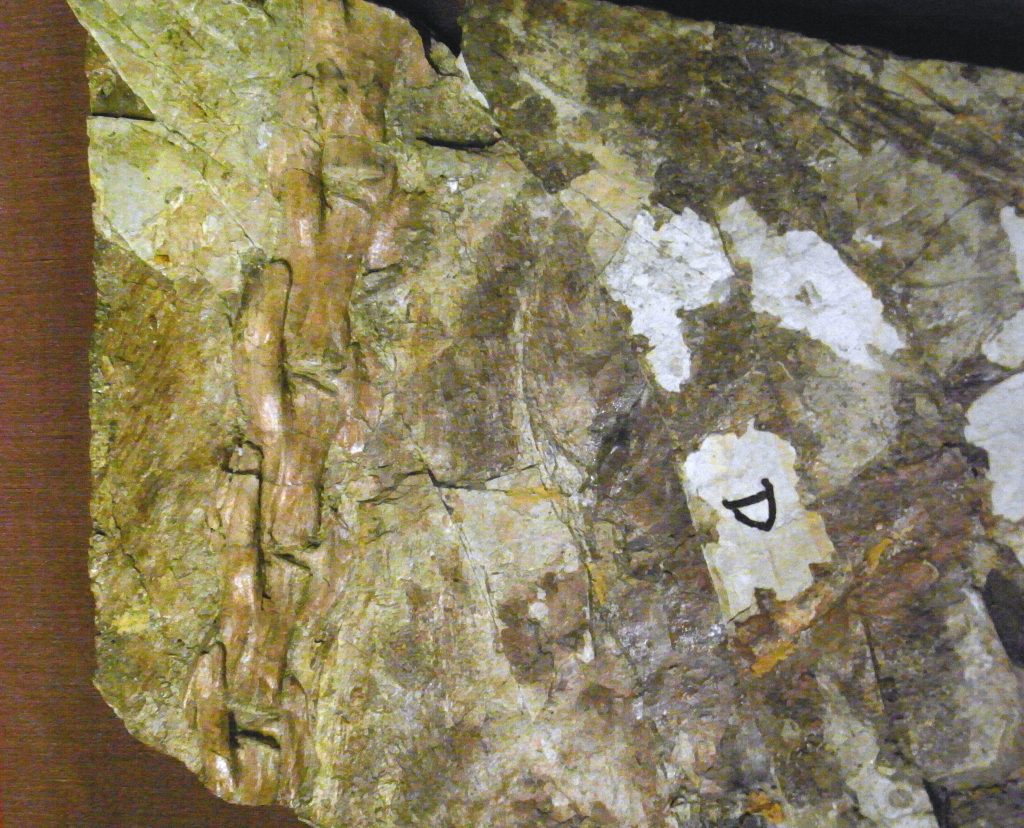
In 2002, paleontologists from the Black Hills Institute excavated an exceptionally preserved partial skeleton nicknamed “Wyrex” (specimen BHI 6230) from the Hell Creek Formation of Fallon County, Montana. Crucially, Wyrex preserved patches of fossilized skin impressions from multiple anatomical regions:
- The Posterior Neck: Preserves small, rounded, non-overlapping polygonal scales.
- The Pelvis and Hip Region: Preserves uniform reticulate scales measuring approximately 1 to 2 millimeters across.
- The Base of the Tail: Preserves a continuous sheet of fine, pebbled reptilian scales.
In none of these preserved anatomical regions is there any trace of feather calami, quill knobs, or filamentous structures. The skin of adult T. rex in these regions was unmistakably scaly.
2. The Broader Tyrannosaurid Family: A Universal Pattern of Scales
In 2017, a landmark study led by Dr. Phil Bell of the University of New England, published in Biology Letters, conducted the first comprehensive global survey of tyrannosaurid skin. The team analyzed skin impressions from Wyrex alongside multiple closely related Late Cretaceous tyrannosaurids:
- Gorgosaurus libratus (Dinosaur Park Formation, Alberta) — skin preserved from the thoracic ribs and flank.
- Tarbosaurus bataar (Nemegt Formation, Mongolia) — skin preserved from the throat, neck, and caudal vertebrae.
- Daspletosaurus torosus (Two Medicine Formation, Montana) — skin preserved from the lower torso.
- Albertosaurus sarcophagus (Horseshoe Canyon Formation, Alberta) — skin preserved from the abdominal wall.
The result across all five apex tyrannosaurid genera was identical: every single preserved skin impression consisted of fine, non-overlapping polygonal scales. Not a single adult tyrannosaurid from the Late Cretaceous has ever yielded a confirmed feather.
3. If T. rex Was Scaly, Why Did Scientists Think It Had Feathers?
If direct fossils show scales, where did the feathered T. rex concept originate? It came from phylogenetic bracket analysis following two sensational discoveries in the Early Cretaceous of Liaoning, China:
Dilong paradoxus (2004)
Discovered in the 126-million-year-old Yixian Formation, Dilong was a small, early-diverging tyrannosauroid measuring roughly 1.6 meters (5.2 feet) in length. Its fossils preserved unambiguous branched, filamentous protofeathers along its jaw and tail, proving that the ancestral stem-tyrannosauroid lineage possessed feathers.
Yutyrannus huali (2012)
Eight years later, researchers described Yutyrannus (“beautiful feathered tyrant”), a massive 9-meter (30-foot), 1,400-kilogram carnivore. Yutyrannus was preserved with thick, 20-centimeter (8-inch) filamentous plumage covering its neck, arms, legs, and tail. This shocked the world because it proved that large body size alone did not prevent a tyrannosauroid from being fully feathered.
Following the discovery of Yutyrannus, many scientists reasonably applied evolutionary parsimony: if basal tyrannosauroids had feathers, and large 1.4-ton tyrannosauroids had feathers, then perhaps T. rex did as well. However, this assumption overlooked two decisive biological factors: climate and gigantothermy.
4. The Thermal Physics of Gigantothermy: Why 9 Tons Cannot Wear a Down Coat
Why would Yutyrannus have thick feathers while T. rex was scaly? The answer comes down to biophysics and paleoclimatology:
1. Climate Differences
Yutyrannus lived in a cool temperate, high-altitude volcanic forest in the Early Cretaceous of China. Oxygen isotope studies indicate the Yixian ecosystem had severe, sub-freezing winters with a mean annual temperature of roughly 10°C (50°F). For Yutyrannus, a dense coat of filamentous down was essential to prevent hypothermia.
In contrast, T. rex lived 60 million years later in the warm, humid, subtropical coastal floodplains of the Hell Creek Formation (~66 Ma), with an average annual temperature of 16°C to 20°C (61°F to 68°F). It never experienced freezing winters.
2. The Square-Cube Law and Overheating
More critically, T. rex weighed roughly 9,000 kilograms—over six times heavier than Yutyrannus. According to the square-cube law, as an animal increases in size, its internal volume (which produces metabolic heat) increases by the cube, while its surface skin area (which dissipates heat) increases only by the square.
A multi-ton animal naturally retains immense body heat—a biological condition known as gigantothermy. For an active, warm-blooded 9-ton apex predator running in a warm climate, retaining heat was not a challenge; dumping excess metabolic heat to prevent lethal heatstroke was the primary physiological hurdle. Just as modern adult African elephants and rhinos lost dense hair coats compared to cold-adapted woolly mammoths, giant late-diverging tyrannosaurs shed extensive insulatory plumage to facilitate radiant cooling.
5. Ontogenetic Shift: Were Baby T. rexes Fluffy?
While adult T. rex was predominantly scaly, paleobiologists widely suspect that hatchlings and young juveniles may have had feathers. A newborn T. rex emerged from its egg weighing only 2 to 5 kilograms. At that tiny size, its surface-area-to-volume ratio was enormous, meaning it lost body heat rapidly in cool nights.
Because the genetic machinery for feathers was present in the tyrannosauroid genome, it is biologically plausible that hatchling T. rex was born with an insulatory downy coat. As the animal underwent its explosive adolescent growth spurt between ages 14 and 18—adding 2.5 kg of body mass per day—it would have shed its down as gigantothermic thermal mass rendered insulatory feathers physiologically redundant or disadvantageous.
6. The Dorsal Unknown: Could T. rex Have Had Display Bristles?
It is scientifically irresponsible to claim that T. rex definitely had zero feathers anywhere on its body. While Wyrex and other specimens preserve scales on the neck, flanks, belly, pelvis, and tail, there are currently no preserved skin impressions from the midline dorsal spine (the top of the back).
It remains biologically plausible that adult T. rex may have possessed sparse, localized filamentous structures along the ridge of the spine or arms—not for insulation, but for socio-sexual display, species recognition, or sensory perception (analogous to the sparse hairs on an elephant’s tail or bristles on a wild boar). However, until a fossil showing dorsal integument is discovered, this remains an educated hypothesis rather than confirmed fact.
Comparative Matrix: Integument Across Tyrannosauroidea
| Species | Geological Age | Estimated Adult Mass | Confirmed Integument | Environmental Climate |
|---|---|---|---|---|
| Dilong paradoxus | Early Cretaceous (~126 Ma) | ~15 kg | Filamentous protofeathers | Temperate, cool forest |
| Yutyrannus huali | Early Cretaceous (~125 Ma) | ~1,400 kg | Dense 20-cm protofeathers | Cool, sub-freezing winters (~10°C mean) |
| Gorgosaurus libratus | Late Cretaceous (~76 Ma) | ~2,500 kg | Polygonal scales (flank) | Warm temperate floodplain |
| Tarbosaurus bataar | Late Cretaceous (~70 Ma) | ~5,000 kg | Pebbled scales (throat, tail) | Semi-arid floodplain basin |
| Tyrannosaurus rex | Late Cretaceous (~66 Ma) | ~8,500–9,500 kg | Fine reticulate scales (neck, pelvis, tail) | Warm, humid subtropical (~18°C mean) |
Common Mistakes and Misconceptions About T. rex Integument
Misconception 1: “Scientists proved T. rex was covered in feathers like a giant chicken.”
Reality: Direct fossil evidence proves the opposite. Every confirmed skin impression recovered from adult T. rex and its closest relatives preserves scales, not feathers.
Misconception 2: “Because Yutyrannus had feathers, T. rex must have had them too.”
Reality: This ignores 60 million years of evolution, a sixfold increase in body mass, and radically different climates. Evolution frequently secondary-losses traits when physical demands change (e.g., whales losing hindlimbs, elephants losing thick hair).
Misconception 3: “Dinosaur scales are identical to modern lizard scales.”
Reality: Tyrannosaurid scales are reticulate “basement” scales, structurally distinct from the overlapping scales of snakes or iguanas. They are non-overlapping tubercular structures derived from avian-line integument.
Frequently Asked Questions
Has any feather ever been found on an actual T. rex fossil?
No. As of 2026, not a single feather or feather follicle has ever been found on an authentic Tyrannosaurus rex specimen. All skin patches recovered to date preserve fine, pebbled scales.
Why did Yutyrannus have feathers if T. rex did not?
Yutyrannus lived in a cool Early Cretaceous climate with freezing winters (~10°C mean) and was smaller (~1.4 tons). T. rex weighed ~9 tons and lived in a subtropical climate (~18°C mean), where gigantothermy made a feather coat a fatal overheating risk.
Could baby T. rexes have had feathers?
Yes. Hatchlings weighing only a few kilograms had high surface-area-to-volume ratios and lost heat quickly. It is biologically plausible that juveniles possessed insulatory down that shed as they grew into giant adults.
What does T. rex skin look like?
Fossil skin impressions show tiny, non-overlapping polygonal scales measuring 1 to 2 millimeters wide, giving the skin a fine, pebbled texture similar to the skin on a modern bird’s foot.
Could adult T. rex have had display feathers on its back?
Possibly. Because no skin impressions have been found from the midline dorsal spine, sparse sensory bristles or display crests cannot be ruled out, though extensive insulatory coats are disproven.
Final Takeaway: Respecting the Empirical Evidence
The story of Tyrannosaurus rex integument is a triumphant demonstration of science in action. It began with an outdated scaly stereotype, exploded into an over-enthusiastic feathered pendulum swing, and has now arrived at a mature, evidence-grounded consensus.
The real Tyrannosaurus rex was neither a green movie lizard nor an overgrown emu. It was an evolutionarily refined nine-ton apex predator that developed a skin covering tailored precisely to its colossal body mass, active lifestyle, and subtropical habitat. By letting the fossils lead rather than artistic preferences, paleontology reveals an animal more magnificent than either extreme.
To explore more about tyrannosaur biology, check out our comprehensive Tyrannosaurus Rex Profile, compare it with feathered paravians in our Dinosaur Comparison Engine, or explore our educational guides on Paleoart and Integument.
Peer-Reviewed Literature Cited
- Bell, P. R., Campione, N. E., Persons, W. S., Currie, P. J., Fanti, F., Tanke, D. H., & Ford, T. L. (2017). Tyrannosauroid integument reveals whether feathers were lost in giant species. Biology Letters, 13(6): 20170092. DOI: 10.1098/rsbl.2017.0092
- Xu, X., Wang, K., Zhang, K., Ma, Q., Xing, L., Sullivan, C., Hu, D., Cheng, S., & Wang, S. (2012). A gigantic feathered dinosaur from the Lower Cretaceous of China. Nature, 484(7392): 92–95. DOI: 10.1038/nature10906
- Xu, X., Norell, M. A., Kuang, X., Wang, X., Zhao, Q., & Jia, C. (2004). Basal tyrannosauroids from China and evidence for protofeathers in tyrannosauroids. Nature, 431(7009): 680–684. DOI: 10.1038/nature02855

Referenced Dinosaur Species 5 species
Tyrannosaurus rex
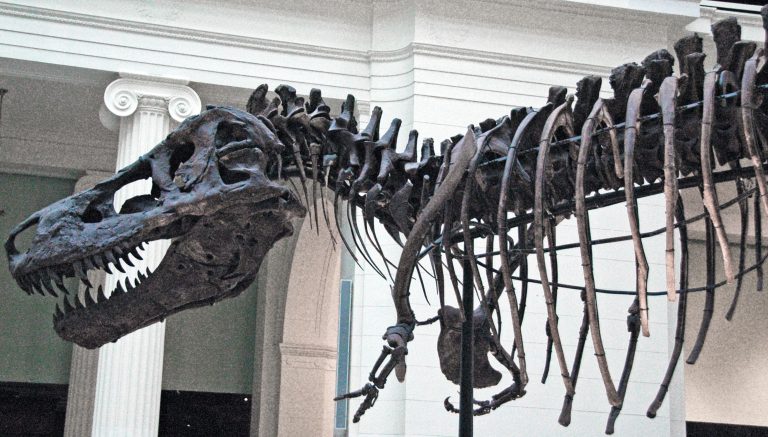
Tyrannosaurus rex
Tyrannosaurus rex was one of the largest terrestrial carnivores of all time, roaming western North America just prior to the Cretaceous-Paleogene extinction event. With an estimated bite force exceeding 35,000 Newtons and acute stereoscopic vision, it sat uncontested at the apex of its ecosystem.
Velociraptor mongoliensis
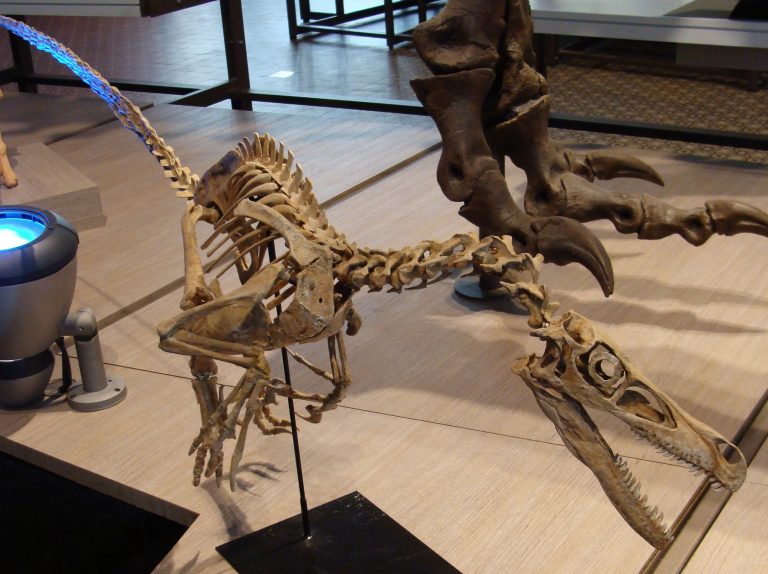
Velociraptor mongoliensis
A turkey-sized feathered dromaeosaurid predator of the Gobi Desert, renowned for its hyperextensible sickle-shaped second toe claw and acute binocular hunting vision.

Archaeopteryx lithographica
Archaeopteryx lithographica
The historic transitional fossil bridging non-avian feathered theropods and modern birds, possessing feathered wings alongside toothed jaws and a bony tail.
Gallimimus bullatus
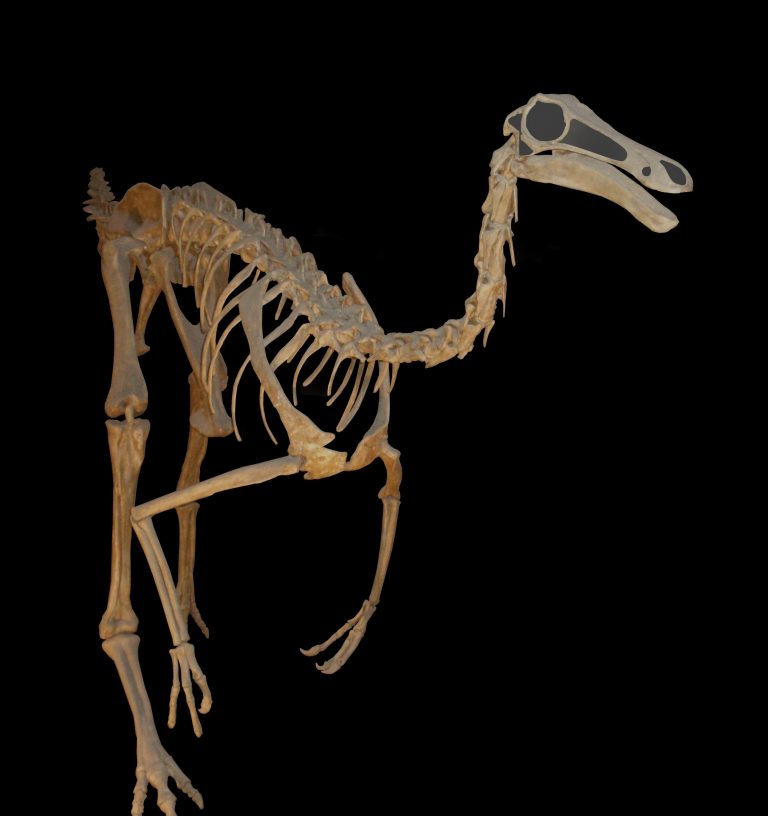
Gallimimus bullatus
A fleet-footed ostrich-mimic theropod with a toothless keratinous beak suited for omnivorous grazing on vegetation, seeds, and small wetland invertebrates.
Triceratops horridus
Triceratops horridus
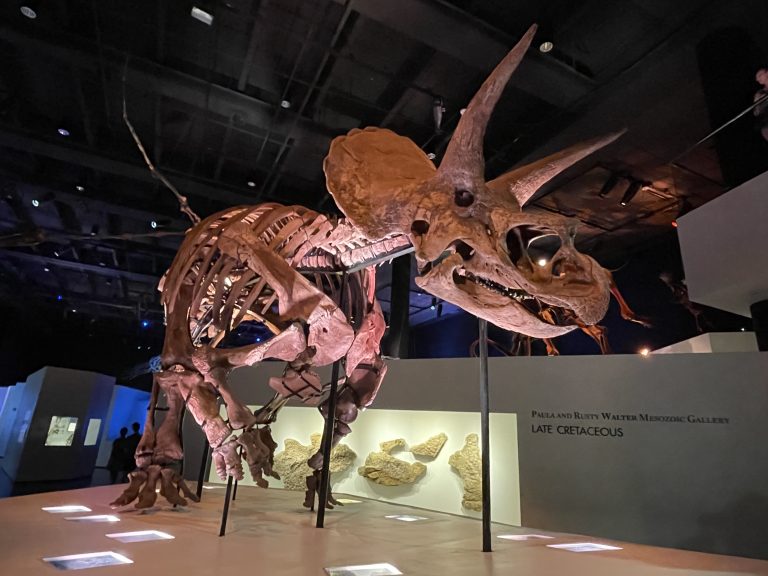
Triceratops horridus is one of the most recognizable horned dinosaurs. Equipped with two brow horns measuring up to 1 meter in length, a shorter nasal horn, and a solid parietal-squamosal frill, it was a dominant herbivore that actively defended against contemporary predators like Tyrannosaurus rex.
Related Paleontological Dispatches
Stegosaurus: Why It Had Back Plates and a Spiked Tail
With its tiny head, towering double row of kite-shaped plates, and a tail bristling with four lethal spikes,…
Triceratops: Why It Had Three Horns and a Huge Frill
For more than a century, popular books and films have depicted Triceratops as nature’s ultimate prehistoric battle tank:…
How Big Was a T. rex? Size, Weight and Height Compared
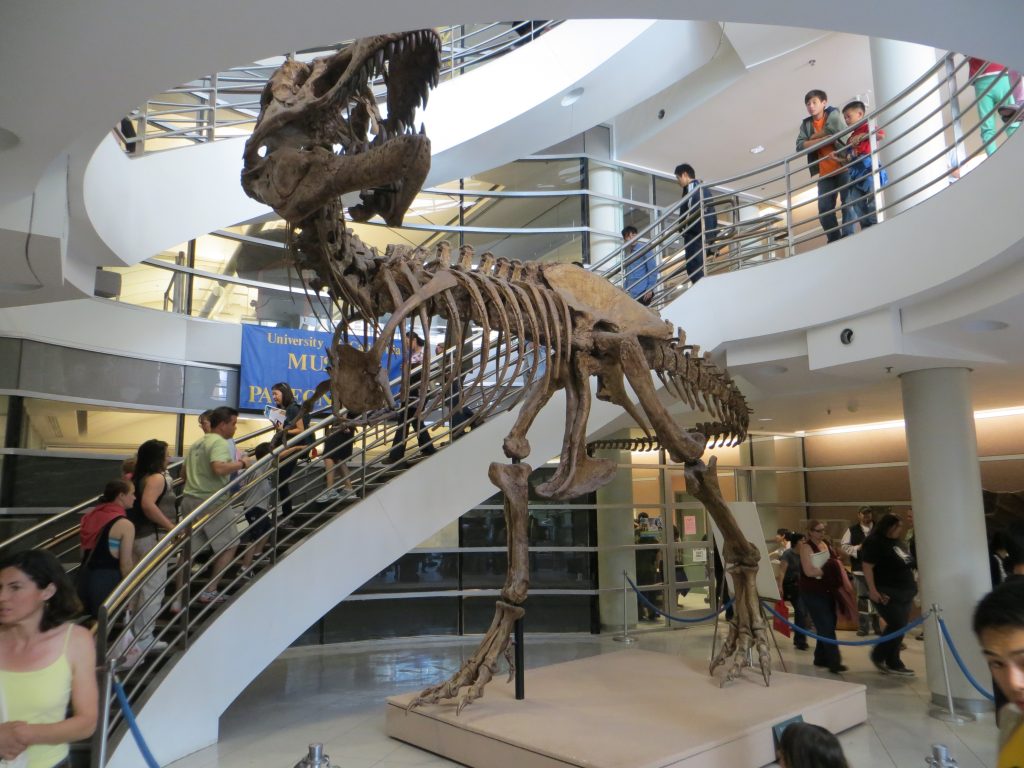
Search the internet for the size of Tyrannosaurus rex, and you will find wildly contradictory numbers. One website…