Tyrannosaurus Rex: Everything You Need to Know About the Tyrant King
Beyond the cinematic roar: an exhaustive, peer-reviewed guide to Tyrannosaurus rex. Explore its bone-crushing 57,000-Newton bite, hawk-grade binocular vision, explosive adolescent growth spurts, and controversial hunting ecology.
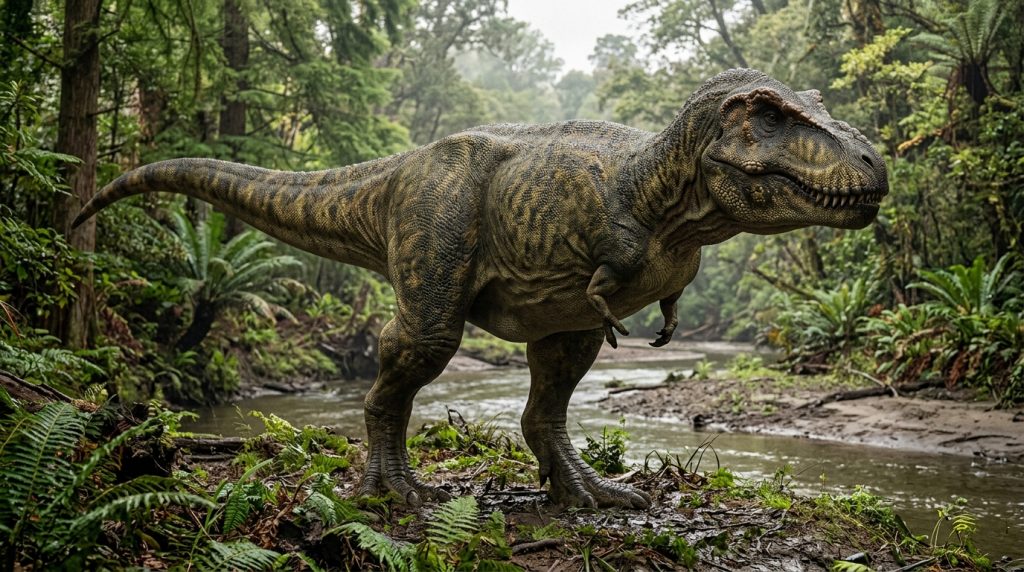
No prehistoric animal has captured human imagination quite like Tyrannosaurus rex. Since its formal scientific naming in 1905, the “king of the tyrant lizards” has stood as the universal archetype of prehistoric terror. Yet in popular movies and television documentaries, T. rex is frequently reduced to a roaring cinematic monster—a lumbering, short-sighted brute that relied on clumsy speed or dumb luck to hunt.
The biological reality established by modern vertebrate paleontology is infinitely more awe-inspiring. Tyrannosaurus rex was not an oversized lizard; it was a hyper-specialized, highly intelligent, nine-ton macropredator equipped with stereoscopic binocular vision superior to a modern bird of prey, an olfactory system rivaling a bloodhound, and the most devastating bone-crushing bite force ever measured in a terrestrial carnivore.
Here is an exhaustive, evidence-based guide to everything science currently knows about the anatomy, sensory biology, biomechanics, growth, and evolutionary reign of Tyrannosaurus rex.
Tyrannosaurus rex: Species Profile
- Taxonomy: Coelurosauria → Tyrannosauridae → Tyrannosaurus rex
- Geological Period: Late Cretaceous (Late Maastrichtian, ~68–66 Ma)
- Geographic Range: Western North America (Laramidia)
- Adult Length: 12.0 to 12.4 meters (39 to 41 feet)
- Hip Height: 3.6 to 3.9 meters (12 to 13 feet)
- Estimated Mass: 8,000 to 10,000 kg (8.8 to 11.0 US tons)
- Bite Force: 35,000 to 57,000 Newtons (up to 12,800 lbs)
1. Discovery History: From the Montana Badlands to the Scientific Throne
The first recognized fossil material of Tyrannosaurus was unearthed in 1900 in eastern Wyoming by the legendary fossil hunter Barnum Brown of the American Museum of Natural History (AMNH). Two years later, in 1902, Brown excavated an exceptionally complete skeleton from the Hell Creek Formation of Garfield County, Montana (specimen CM 9380, now the Holotype at the Carnegie Museum in Pittsburgh).
In 1905, paleontologist Henry Fairfield Osborn formally described the animal, christening it Tyrannosaurus rex—combining the Greek tyrannos (“tyrant”), sauros (“lizard”), and the Latin rex (“king”). In the very same 1905 publication, Osborn also described another theropod specimen under the name Dynamosaurus imperiosus. A year later, Osborn realized both specimens belonged to the same species; because the description of Tyrannosaurus rex appeared a few pages earlier in the original paper, the Principle of Priority permanently cemented T. rex as the valid name.
2. Cranial Architecture and Bone-Crushing Bite Force
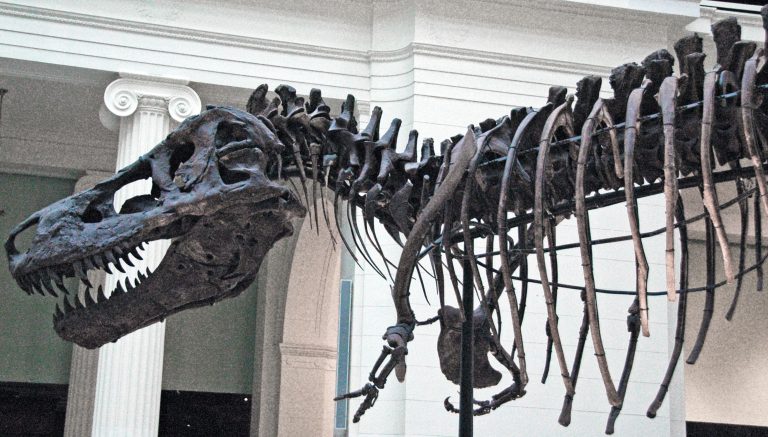
The skull of an adult T. rex was an engineering marvel of biological shock absorption, measuring up to 1.52 meters (5 feet) in length. Unlike the narrow, blade-like skulls of earlier theropods like Allosaurus, the skull of T. rex was dramatically widened at the back and tapered at the snout.
Key cranial adaptations included:
- Fused Nasal Bones: The paired nasal bones along the top of the snout were tightly fused and thickened, preventing torsion and twisting stress when biting into thrashing prey.
- Immobile, Rigid Palate: Unlike modern lizards that possess kinetic, flexible skulls, the palate bones of T. rex were rigidly locked together, transmitting immense compressive forces directly through the cranium.
- Bite Force Biomechanics: 3D digital biomechanical simulations led by Bates and Falkingham estimated adult bite forces ranging from 35,000 to 57,000 Newtons at the rear teeth. For comparison, that is nearly four times the bite force of a large saltwater crocodile and over thirty times the bite force of an adult lion.

3. Teeth Designed for Osteophagy: Bananas of Destruction
The dentition of Tyrannosaurus rex differed fundamentally from all other theropod clades. While dromaeosaurids and carcharodontosaurids had thin, serrated, steak-knife-like teeth designed to slice skin and muscle, T. rex evolved incrassate (thickened) teeth shaped like curved bananas.
Measuring up to 30 centimeters (12 inches) including the deep root, the crown of each tooth featured robust, reinforced serrations. This morphology was adapted not for slicing, but for osteophagy (bone-crushing). Fossil coprolites (fossilized feces) attributed to T. rex contain up to 50{349c590a1c7dba0edd042a8cb051d4ef440ecfe2a9c24e1b0b2c894f80ccce3c} pulverized bone fragments from hadrosaurs and ceratopsians, proving that T. rex routinely crushed and digested the mineral-rich marrow and cortical bone of its prey.
4. Sensory Mastery: Vision, Smell, and Infrasound Hearing
The popular trope from Jurassic Park—”keep still, its vision is based on movement”—is one of the most egregious scientific inaccuracies in cinematic history. CT scans of fossil braincases (endocasts) have revealed that T. rex possessed extraordinary sensory capabilities:
- Binocular Stereoscopic Vision: Because the back of the skull was exceptionally broad, the eye sockets faced directly forward, providing a binocular field of view of 55 degrees—wider than a modern hawk and significantly greater than a human. Visual acuity tests indicate it could perceive depth and resolve objects up to 6 kilometers away.
- Acute Olfaction: The olfactory bulbs (responsible for smell) occupied an enormous portion of the forebrain. Relative olfactory ratio calculations indicate its sense of smell was comparable to that of modern turkey vultures or bloodhounds, allowing it to detect scent plumes over vast distances.
- Low-Frequency Infrasound Hearing: The elongated cochlear duct indicates specialized hearing sensitivity tuned to low-frequency sounds (below 1,000 Hz). This suggests T. rex may have communicated through deep, reverberating rumbles across miles of dense Cretaceous floodplain forests.
5. The Forelimb Enigma: Why Were the Arms So Small?
The diminutive two-fingered forelimbs of T. rex—measuring approximately 1 meter (3.3 feet) long on a 12-meter animal—have been the subject of endless popular jokes. However, functional morphology reveals that they were far from useless vestigial remnants.
The cortical bone of the humerus was exceptionally thick, and deep muscle attachment scars indicate powerful development of the biceps brachii and coracobrachialis muscles. Biomechanical studies estimate that each arm could curl approximately 200 kilograms (440 pounds). Hypothesized functions include gripping prey during close-quarters bite delivery, restraining a mate during copulation, or aiding the animal in pushing itself up from a resting prone position on the ground.
6. Biomechanics, Mass, and Locomotion: How Fast Was It?
Early 20th-century restorations depicted T. rex dragging its tail in an upright tripod kangaroo posture. Biomechanical research in the 1970s and 1980s completely discarded this model, establishing that T. rex held its vertebral column strictly horizontal, with the massive caudofemoralis tail musculature acting as a dynamic counterweight to the heavy head.
Regarding speed, multi-body dynamic simulations and bone strain calculations indicate that an adult 9-ton T. rex could not run in a true suspended-phase gallop without risking catastrophic bone fracture. Instead, its maximum velocity was a brisk power-walk estimated at 17 to 27 km/h (11 to 17 mph). However, because its prey—heavy herbivores like Triceratops and Ankylosaurus—moved at similar or slower speeds, T. rex did not need to outrun a gazelle; it was built for endurance, power, and overwhelming ambush acceleration.
7. Ontogeny and Growth Curves: The Explosive Teenage Spurt
By cutting microscopic thin sections of fossil limb bones and counting annual growth rings (Lines of Arrested Growth, or LAGs), paleontologists have reconstructed the complete life cycle of Tyrannosaurus rex:
| Life Stage | Approximate Age | Estimated Body Mass | Ecological Niche & Anatomy |
|---|---|---|---|
| Hatchling / Juvenile | 0–10 years | Under 500 kg | Slender, long-legged cursorial hunter preying on lizards and small mammals. |
| Subadult (Adolescent) | 11–17 years | 1,000 to 4,000 kg | Fast, agile pursuit predator with blade-like teeth; previously misclassified by some as “Nanotyrannus”. |
| Adult (Exponential Spurt) | 18–22 years | 5,000 to 8,000 kg | Growth rate reaches ~2.5 kg (5.5 lbs) per day. Skull broadens, teeth thicken into bone-crushers. |
| Full Skeletal Maturity | 25–30+ years | 8,500 to 10,000+ kg | Massive apex macropredator. Growth plateaus; high incidence of healed battle trauma. |
8. Predator or Scavenger? The False Dilemma
In the 1990s, paleontologist Jack Horner popularized the provocative hypothesis that T. rex was an obligate scavenger, pointing to its small arms, slow running speed, and massive olfactory bulbs. Today, the debate is firmly settled: T. rex was an active apex predator that opportunistically scavenged whenever free meat was available, precisely like modern lions, hyenas, and grizzly bears.
Definitive physical evidence of active predation includes:
- Healed Bite Marks on Prey: Hadrosaur tail vertebrae and Triceratops frills exhibit unambiguous T. rex tooth puncture wounds that show clear signs of bone remodeling and healing—proving the prey animal was bitten while alive and escaped to heal.
- Embedded Teeth in Fossil Bones: A hadrosaur caudal vertebra discovered in South Dakota preserves a T. rex tooth crown completely fused inside regrown bone tissue, providing forensic proof of a predatory attack.
9. Integument: Did T. rex Have Feathers?
While early-diverging tyrannosauroids from China like Dilong and Yutyrannus possessed dense coats of filamentous protofeathers, direct fossil skin impressions from Tyrannosaurus rex (such as the “Wyrex” specimen BHI 6230) and close relatives like Gorgosaurus and Tarbosaurus preserve fine, non-overlapping reticulate scales across the neck, torso, pelvis, and tail.
This suggests that as tyrannosaurids evolved multi-ton body sizes in warm Late Cretaceous climates, giant adults lost extensive feathery coats to facilitate gigantothermic heat dissipation (analogous to how adult modern elephants have sparse hair compared to woolly mammoths). However, hatchlings and subadults may still have retained insulatory fuzz during early ontogeny.
10. Famous Specimens That Shaped Science
CM 9380 (The Holotype)
Discovered by Barnum Brown in 1902 in Garfield County, MT. Housed at the Carnegie Museum in Pittsburgh, it remains the formal nomenclatural anchor of the species.
FMNH PR 2081 (“Sue”)
Discovered in 1990 in South Dakota. Over 90{349c590a1c7dba0edd042a8cb051d4ef440ecfe2a9c24e1b0b2c894f80ccce3c} complete, measuring 12.3 meters long. Preserves healed rib fractures, arthritis, and an estimated lifespan of ~28 years.
RSM P2523.8 (“Scotty”)
Excavated in Saskatchewan, Canada. Possesses the most robust femur ever measured in a theropod, yielding adult mass estimates exceeding 8,800 to 9,500 kg.
MOR 1125 (“B-rex”)
Discovered in Montana by Mary Schweitzer. Preserved endogenous medullary bone (proving it was a gravid female) and original soft-tissue protein fragments.
Common Misconceptions About Tyrannosaurus Rex
Misconception 1: “T. rex had exposed, crocodylian-like teeth hanging out of its mouth.”
Reality: Recent histological studies by Cullen et al. (2023) demonstrated that large theropods possessed extraoral fleshy lips. Because tooth enamel requires constant hydration to prevent microfractures, T. rex kept its teeth sealed behind soft-tissue lips when its jaws were closed.
Misconception 2: “T. rex was the biggest meat-eating dinosaur to ever live.”
Reality: While T. rex is the heaviest and most robustly built macropredator discovered, several other theropods were longer, notably Spinosaurus (reaching 14–15 meters) and South America’s Giganotosaurus.
Misconception 3: “T. rex went extinct because it was too large and clumsy.”
Reality: T. rex was at the absolute peak of evolutionary perfection when it vanished. It did not die out due to competition or maladaptation, but was wiped out instantaneously 66 million years ago by the catastrophic Chicxulub asteroid impact that terminated the Mesozoic era.
Frequently Asked Questions
How strong was a T. rex bite compared to other predators?
An adult T. rex generated rear bite forces estimated at 35,000 to 57,000 Newtons (roughly 8,000 to 12,800 pounds of force). This is the highest bite force ever calculated for a terrestrial animal, capable of shattering heavy cortical dinosaur bone.
Could T. rex outrun a jeep like in Jurassic Park?
No. Biomechanical skeletal stress models prove that an adult 9-ton T. rex could not run at 45 mph without breaking its limb bones. Its realistic top walking speed was approximately 17 to 27 km/h (11 to 17 mph), which was still fast enough to overtake its contemporary prey.
How long did a T. rex live?
Based on annual growth rings in fossil bones (LAGs), T. rex had an estimated maximum lifespan of approximately 28 to 32 years. “Sue” (FMNH PR 2081) died at roughly 28 years old.
Did T. rex have lips covering its teeth?
Yes. 2023 paleontological analyses showed that theropod tooth enamel wear patterns and cranial foramina match modern monitor lizards with fleshy oral lips rather than lipless crocodylians, meaning its teeth were concealed when its mouth was closed.
Where have T. rex fossils been found?
Fossils have been excavated across western North America (the ancient subcontinent of Laramidia), including Montana, Wyoming, South Dakota, North Dakota, Colorado, Utah, New Mexico, Alberta, and Saskatchewan.
Final Takeaway: The Supreme Sovereign of Deep Time
Tyrannosaurus rex earned its royal title not through Hollywood myth, but through millions of years of evolutionary refinement. As the apex predator of Late Cretaceous North America, it brought together immense structural mass, bone-pulverizing jaw mechanics, and razor-sharp sensory processing into one of the most formidable predators our planet has ever seen.
The more paleontology uncovers about this iconic animal, the more astonishing it becomes. Far from a lumbering relic of the past, T. rex stands as a masterclass in vertebrate biomechanics and deep-time survival.
To continue your journey into the world of the tyrant king, visit our dedicated Tyrannosaurus Rex Profile, pit it against contemporaries in our Comparison Engine, or explore its final days on our interactive Geological Timeline.
Peer-Reviewed References & Authoritative Studies
- Osborn, H. F. (1905). Tyrannosaurus and other Cretaceous carnivorous dinosaurs. Bulletin of the American Museum of Natural History, 21: 259–265.
- Bates, K. T., & Falkingham, P. L. (2012). Estimating maximum bite performance in Tyrannosaurus rex using multi-body dynamics. Biology Letters, 8(4): 660–664. DOI: 10.1098/rsbl.2012.0056
- Cullen, T. M., et al. (2023). Theropod facial tissues and the presence of oral lips. Science, 379(6639): 1348–1352. DOI: 10.1126/science.abo7877
- Erickson, G. M., et al. (2004). Gigantism and comparative life-history parameters of tyrannosaurid dinosaurs. Nature, 430(7001): 772–775. DOI: 10.1038/nature02699
- Bell, P. R., Campione, N. E., Persons, W. S., Currie, P. J., Fanti, F., Tanke, D. H., & Ford, T. L. (2017). Tyrannosauroid integument reveals whether feathers were lost in giant species. Biology Letters, 13(6): 20170092. DOI: 10.1098/rsbl.2017.0092

Referenced Dinosaur Species 5 species
Tyrannosaurus rex
Tyrannosaurus rex
Tyrannosaurus rex was one of the largest terrestrial carnivores of all time, roaming western North America just prior to the Cretaceous-Paleogene extinction event. With an estimated bite force exceeding 35,000 Newtons and acute stereoscopic vision, it sat uncontested at the apex of its ecosystem.
Triceratops horridus
Triceratops horridus
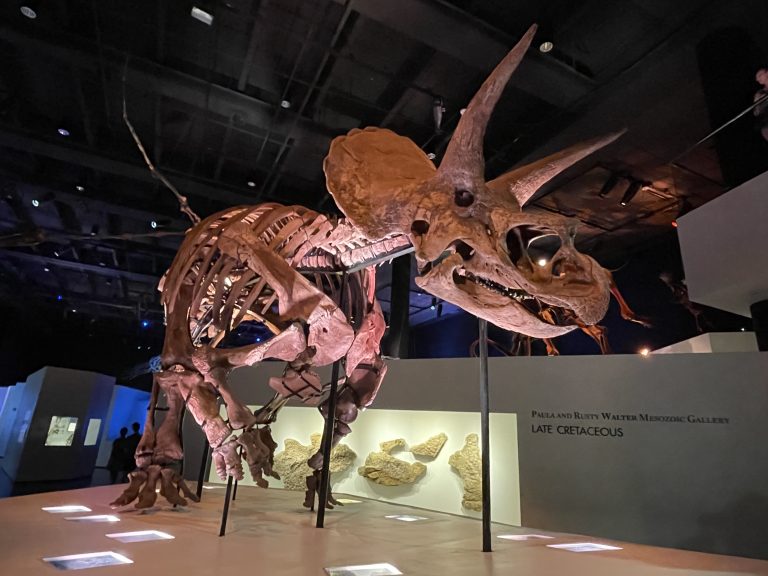
Triceratops horridus is one of the most recognizable horned dinosaurs. Equipped with two brow horns measuring up to 1 meter in length, a shorter nasal horn, and a solid parietal-squamosal frill, it was a dominant herbivore that actively defended against contemporary predators like Tyrannosaurus rex.
Ankylosaurus magniventris
Ankylosaurus magniventris
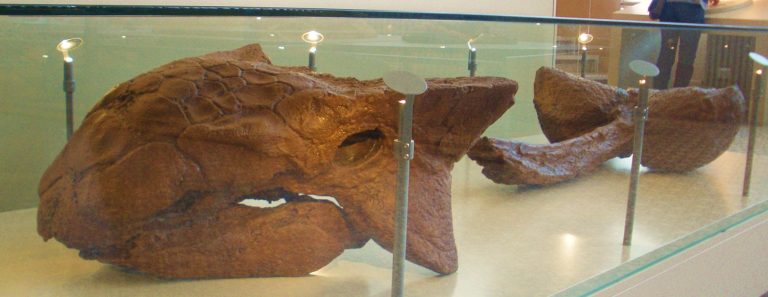
The living tank of the Late Cretaceous, armored in thick osteoderm plates with cranial horns and a massive distal tail club capable of shattering theropod bones.
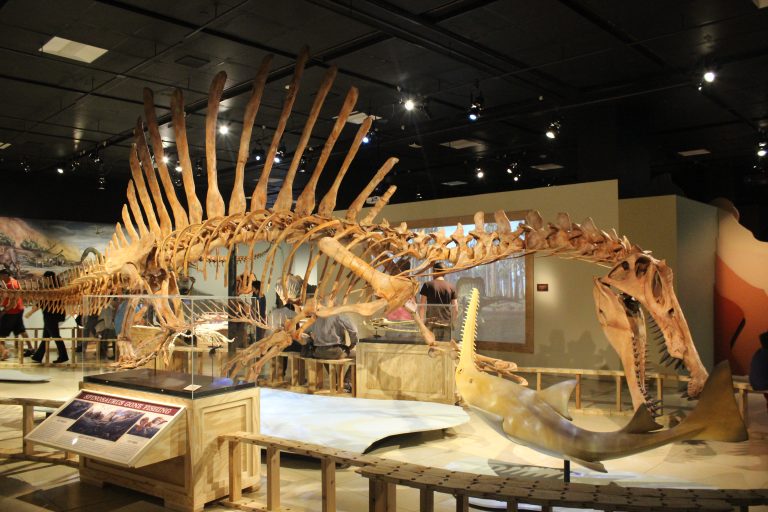
Spinosaurus aegyptiacus
Spinosaurus aegyptiacus
A colossal semi-aquatic predatory theropod equipped with a massive dorsal neural sail, crocodyliform snout, and paddle-like tail adapted for pursuing giant Cretaceous fish.
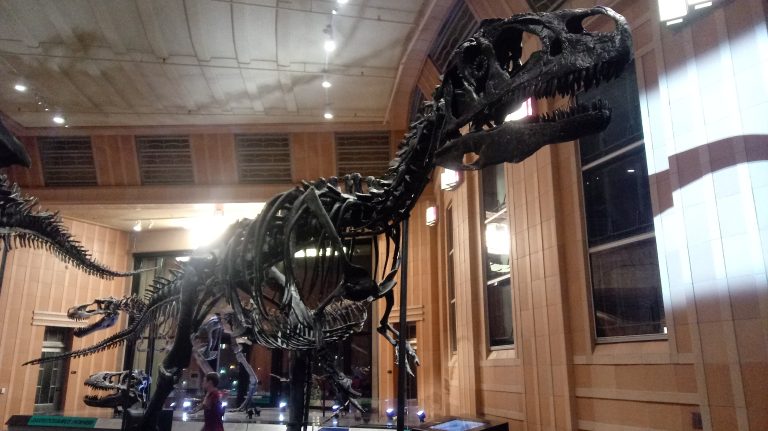
Allosaurus fragilis
Allosaurus fragilis
The most common and lethal apex predator of the Late Jurassic Morrison Formation, hunting with gaping jaws, slashing bites, and robust three-clawed forelimbs.
Related Paleontological Dispatches
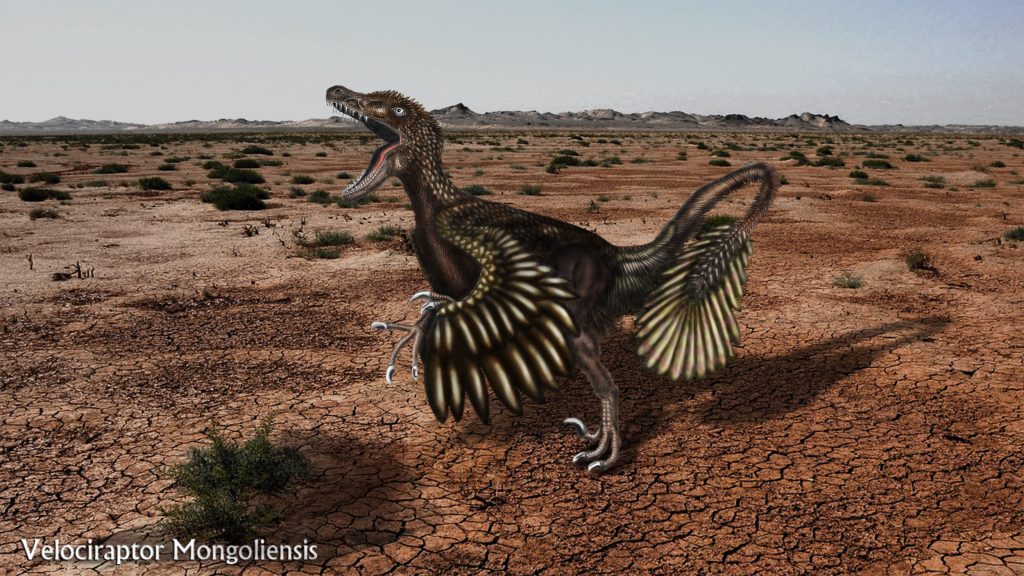
Velociraptor: The Truth Behind the Movie Monster
Ask anyone to describe a Velociraptor, and they will almost certainly picture the terrifying creature from the Jurassic…

Triassic vs Jurassic vs Cretaceous: What Changed Between the Dinosaur Periods?
When the public imagines the prehistoric world, they frequently picture a single, sprawling primeval jungle where a Stegosaurus…
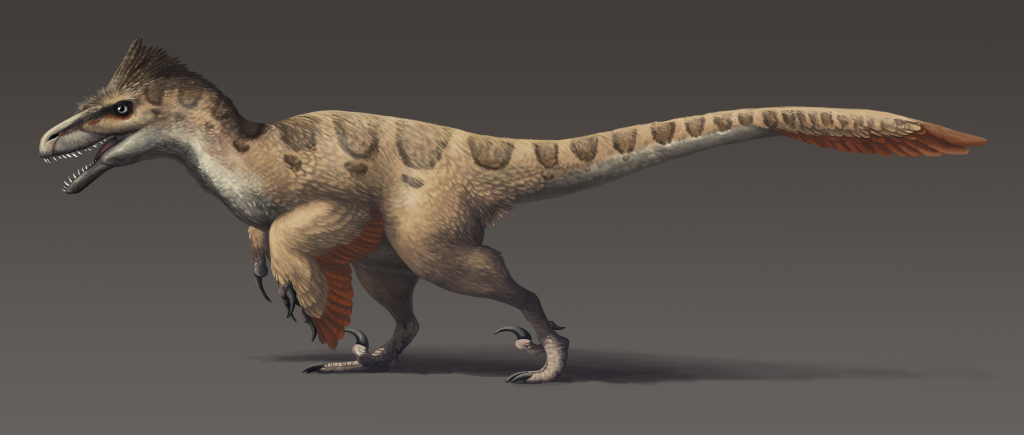
Utahraptor: The Giant Raptor Found in Utah
When pop culture introduced the world to the terrifying “raptors” of cinema in 1993, audiences were terrified by…