Velociraptor: The Truth Behind the Movie Monster
Shattering Hollywood myths with forensic fossil proof: discover why the real Velociraptor was knee-high, covered in flight-grade feathers, and used its sickle claw like a modern bird of prey.
Ask anyone to describe a Velociraptor, and they will almost certainly picture the terrifying creature from the Jurassic Park film franchise: a six-foot-tall, sleekly scaled, door-opening super-predator that hunted in coordinated military packs and disemboweled victims with a flick of its toe claw. It is one of the most iconic movie monsters in cinematic history.
It is also almost completely scientifically incorrect.
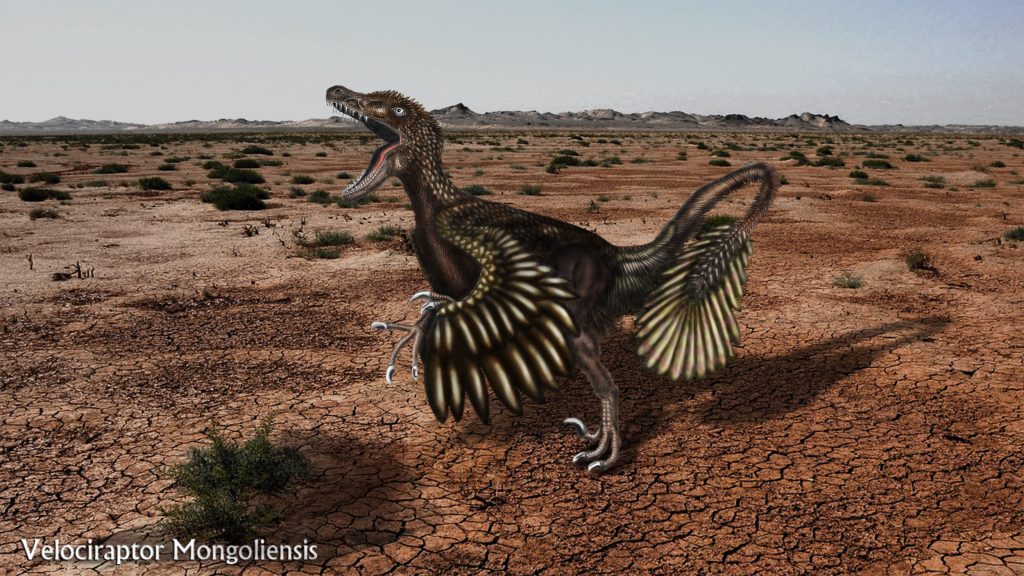
The real Velociraptor was an astonishing evolutionary animal, but it was not a six-foot scaly reptile. It was a knee-high, fully feathered paravian theropod roughly the size of a modern wild turkey or coyote. Yet far from making the real animal disappointing, authentic paleontological discoveries—including direct fossil quill knobs and the legendary “Fighting Dinosaurs” fossil frozen in mortal combat—reveal a predator far more biologically captivating than Hollywood’s fictional reptilian monster.
Here is the evidence-based truth about Velociraptor mongoliensis, separating cinematic folklore from peer-reviewed paleontology.
Velociraptor: The Real Animal vs. The Movie Monster
- Actual Size: ~1.8 to 2.0 m long (5.9–6.8 ft)
- Hip Height: ~0.5 meters (1.6 ft — knee-high to an adult human)
- Body Mass: 15 to 19 kg (33 to 42 lbs)
- Integument: 100{349c590a1c7dba0edd042a8cb051d4ef440ecfe2a9c24e1b0b2c894f80ccce3c} feathered (quill knobs on ulna prove wings)
- Habitat: Arid sand dunes of Late Cretaceous Mongolia (~75–71 Ma)
- Movie Counterpart: Actually based on the North American Deinonychus
1. The Hollywood Identity Crisis: Why the Movie Raptor Was Deinonychus
How did Hollywood create a six-foot monster and call it Velociraptor? The answer lies in an odd footnote of taxonomic history.
When author Michael Crichton wrote the original 1990 novel Jurassic Park, he relied heavily on Gregory S. Paul’s influential 1988 book, Predatory Dinosaurs of the World. Paul championed an unconventional taxonomic classification that lumped several distinct dromaeosaurid genera into the single genus Velociraptor. Specifically, Paul reclassified the larger North American dromaeosaurid Deinonychus antirrhopus (discovered in Montana by John Ostrom in the 1960s) as “Velociraptor antirrhopus.”
Crichton preferred the dramatic sound of the name Velociraptor over Deinonychus, but borrowed the anatomy, human-scale proportions, and skeletal size of Deinonychus. When Steven Spielberg adapted the novel into the 1993 film, the visual effects team scaled up the Deinonychus skeleton even further, creating a creature standing over 6 feet tall. The movie monster was never a real Velociraptor; it was an oversized Deinonychus in disguise!
2. Real Dimensions: Turkey Height and Coyote Weight
In reality, Velociraptor mongoliensis—first described by Henry Fairfield Osborn in 1924 from the Flaming Cliffs of the Gobi Desert—was a small, lightweight predator:
- Total Length: Measured approximately 1.8 to 2.07 meters (5.9 to 6.8 feet), but more than half of that length was accounted for by its long, stiffened, rod-like tail.
- Height: Stood barely 0.5 meters (1.6 feet) tall at the hips. If a living Velociraptor stood next to you today, its back would not reach your knee, and its head would reach your mid-thigh.
- Body Mass: Skeletal mass scaling indicates an adult weighed between 15 and 19 kilograms (33 to 42 pounds)—roughly the weight of a medium-sized dog (such as a Beagle or Coyote) or a large wild turkey.
Far from tackling full-grown hadrosaurs or humans, Velociraptor was anatomically specialized for hunting desert lizards, small mammals, hatchlings, and juvenile ornithischians that populated the arid sand-dune fields of the Djadochta Formation (~75–71 million years ago).
3. Direct Proof of Feathers: The 2007 Quill Knob Discovery
For years, skeptics argued that while primitive Chinese dromaeosaurids like Microraptor had feathers, perhaps late-diverging desert raptors like Velociraptor had lost them. That objection was permanently shattered in 2007.
In a landmark paper published in Science, paleontologists Alan Turner, Peter Makovicky, and Mark Norell examined the forearm bone (ulna) of an exquisitely preserved Velociraptor specimen (IGM 100/981) excavated at Ukhaa Tolgod, Mongolia. Along the dorsal edge of the ulna, they discovered six evenly spaced, regularly aligned bony bumps: quill knobs (papillae ulnaris).
In living birds, quill knobs are ligamentous attachment points that anchor the calami of secondary pennaceous flight feathers directly to the bone, preventing them from twisting under aerodynamic strain. Calculating the distance between the knobs, Turner and colleagues proved that Velociraptor bore 14 large, vaned secondary feathers on each forearm. Velociraptor did not have scaly arms; it possessed true feathered wings!
4. The Sickle Claw: Grappling Hook, Not Disemboweling Scythe
The centerpiece of the raptor myth is the hyperextensible, curved second toe claw—the famous “sickle claw” (pedal ungual digit II). Popular media long claimed this claw was an offensive scythe used to slash open the bellies of prey.
In 2011, a comprehensive biomechanical study led by Dr. Denver Fowler introduced the Raptor Prey Restraint (RPR) model. Fowler’s team tested the cutting capabilities of the sickle claw and compared its curvature with living birds of prey:
- No Cutting Edge: The underside of the claw core is rounded, not sharp. Even with a keratin sheath, it was designed for puncture and grip, not slicing.
- High-Tensile Grappling: The claw operated like the talons of modern eagles and hawks. Velociraptor used its sickle claws to pin struggling prey to the ground under its full body weight.
- Wing-Assisted Mantling: While pinning prey with its feet, Velociraptor would have flapped its feathered wings for balance (a behavior called “mantling” in raptors), using its jaws to deliver quick, disabling bites to the victim’s neck.
5. The Ultimate Forensic Crime Scene: The “Fighting Dinosaurs”

In paleontology, direct behavioral evidence is virtually nonexistent. But in 1971, a joint Polish-Mongolian expedition discovered specimen MPC-D 100/25 in the southern Gobi Desert: the iconic Fighting Dinosaurs.
Entombed by a sudden collapsing sand dune during a ferocious dust storm, a Velociraptor mongoliensis and a sheep-sized horned dinosaur, Protoceratops andrewsi, are frozen in the middle of active mortal combat:
- The Velociraptor has seized the frill of the Protoceratops with its left claw, while its sickle claw is kicked upward and driven deep into the soft throat and carotid artery region of the herbivore.
- In response, the Protoceratops has clamped its powerful shearing beak onto the Velociraptor‘s right arm, breaking the theropod’s bone.
This remarkable fossil is indisputable empirical proof that Velociraptor was an active predator that engaged in high-risk combat with prey roughly its own body weight.
6. Pack Hunting vs. Solitary Stalkers
Did Velociraptor hunt in organized packs with complex social intelligence, as shown in the movies? The fossil evidence paints a more solitary picture.
All confirmed Velociraptor body fossils from Mongolia have been found as solitary individuals, not in mass bonebeds. Furthermore, comparisons of dinosaur braincases (endocasts) show that while dromaeosaurids had larger relative brain volumes than sauropods or stegosaurs, their encephalization quotient was roughly on par with modern ground birds (such as emus or turkeys), not chimpanzees or dolphins.
If multiple Velociraptor gathered around a carcass, their behavior likely resembled modern komodo dragons or vultures: an aggressive, opportunistic mob driven by competition and hierarchy, rather than an organized wolf pack with coordinated flanking signals.
7. The Evidence Spectrum: Separating Fact from Fiction
| Category | Paleontological Claim | Scientific Confidence |
|---|---|---|
| Directly Known | Small size (15–19 kg), quill knobs on ulna (14 wing feathers), sickle claw on second toe, active predator of Protoceratops. | 100{349c590a1c7dba0edd042a8cb051d4ef440ecfe2a9c24e1b0b2c894f80ccce3c} verified by holotype body fossils and quill knob osteology. |
| Strongly Inferred | RPR prey pinning behavior, wing-assisted mantling stability, cathemeral/nocturnal foraging based on sclerotic eye rings. | High confidence based on biomechanics and comparative raptor biology. |
| Plausible | Opportunistic loose mob feeding at carcasses; simple acoustic signaling and visual display. | Plausible based on modern archosaur social structures. |
| Speculative | Coordinated pack hunting with dedicated flankers and alpha social leaders. | Zero fossil evidence; inconsistent with solitary taphonomy. |
| Fictional (Myth) | 6-foot height, scaly skin, disemboweling toe scythe, turning door handles, primate-level intelligence. | Pure Hollywood fiction disproven by osteology and anatomy. |
Common Misconceptions About Velociraptor
Misconception 1: “Velociraptor was tall enough to look through a kitchen window.”
Reality: It stood roughly 1.6 feet tall at the hips. An adult human would look down on its head.
Misconception 2: “Feathers made Velociraptor look silly or non-threatening.”
Reality: A 40-pound predatory carnivore armed with sharp serrated teeth, acute binocular night vision, and razor grappling talons—moving with hawk-like agility—would be terrifying to encounter in the dark.
Misconception 3: “Velociraptors lived in the jungle alongside T. rex.”
Reality: Velociraptor lived in Central Asia (Mongolia and northern China), while T. rex lived in North America. Furthermore, Velociraptor lived in arid desert dune fields 75 million years ago, dying out millions of years before T. rex evolved.
Frequently Asked Questions
Which dinosaur were the movie raptors actually based on?
The movie raptors were based on Deinonychus antirrhopus, a larger North American dromaeosaurid discovered in Montana, which stood roughly 3.4 meters long and was scaled up even further by cinematic animators.
How do scientists know Velociraptor had feathers?
In 2007, paleontologists discovered fossilized quill knobs (papillae ulnaris) on the forearm bone (ulna) of a Velociraptor specimen from Mongolia, which directly anchor pennaceous flight feathers in modern birds.
Could Velociraptor fly with its feathered wings?
No. Velociraptor had forelimbs that were too short and a body that was too heavy for powered flight. It used its wings for stability when pinning struggling prey (mantling) and for rapid maneuvering while running.
How big was the sickle claw on Velociraptor?
The fossilized bone core of the second toe claw measured about 6.5 centimeters (2.6 inches) along its outer curve. In life, covered with an outer keratin sheath, the claw reached over 9 centimeters (3.5 inches).
Did Velociraptor hunt in packs?
There is no fossil evidence of organized pack hunting in Velociraptor. Fossils are found as solitary individuals, suggesting they were solitary hunters or opportunistic scavengers similar to modern komodo dragons or hawks.
Final Takeaway: A Masterpiece of Prehistoric Evolution
Stripping away the Hollywood myths does not diminish Velociraptor—it transforms it into one of the most stunning creatures to ever walk the earth. Instead of a generic scaly movie monster, we discover an agile, feathered, avian hunter that mastered the harsh desert dunes of Cretaceous Mongolia.
With its flight-grade wing feathers, predatory pin-and-grapple biomechanics, and lethal encounters frozen in stone, the real Velociraptor is a testament to the profound evolutionary bridge connecting non-avian dinosaurs to living birds.
To explore more about dromaeosaurid biology, visit our dedicated Velociraptor Profile, compare it against contemporary hunters in our Dinosaur Comparison Engine, or explore feathered dinosaur evolution on our Geological Timeline.
Peer-Reviewed Literature Cited
- Turner, A. H., Makovicky, P. J., & Norell, M. A. (2007). Feather quill knobs in the dinosaur Velociraptor. Science, 317(5845): 1721. DOI: 10.1126/science.1145076
- Fowler, D. W., Freedman, E. A., Scannella, J. B., & Kambic, R. E. (2011). The predatory ecology of Deinonychus and the origin of flapping in birds. PLOS ONE, 6(12): e28964. DOI: 10.1371/journal.pone.0028964
- Barsbold, R. (1974). Saurischian dinosaurs from the Upper Cretaceous of the GMN. Palaeontologia Polonica, 30: 5–22.
- Osborn, H. F. (1924). Three new Theropoda, Protoceratops zone, central Mongolia. American Museum Novitates, 144: 1–12.
- Schmitz, L., & Motani, R. (2011). Nocturnality in dinosaurs inferred from scleral ring and orbit morphology. Science, 332(6030): 705–708. DOI: 10.1126/science.1200043

Referenced Dinosaur Species 5 species
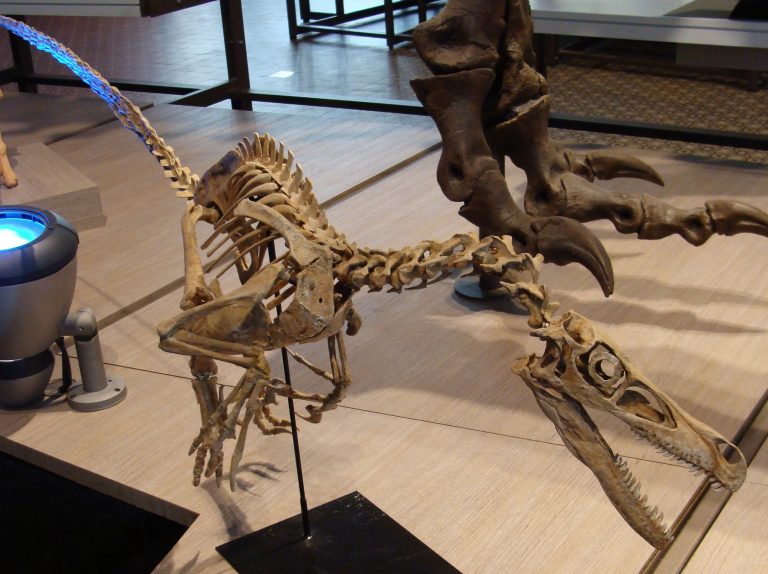
Velociraptor mongoliensis
Velociraptor mongoliensis
A turkey-sized feathered dromaeosaurid predator of the Gobi Desert, renowned for its hyperextensible sickle-shaped second toe claw and acute binocular hunting vision.

Archaeopteryx lithographica
Archaeopteryx lithographica
The historic transitional fossil bridging non-avian feathered theropods and modern birds, possessing feathered wings alongside toothed jaws and a bony tail.
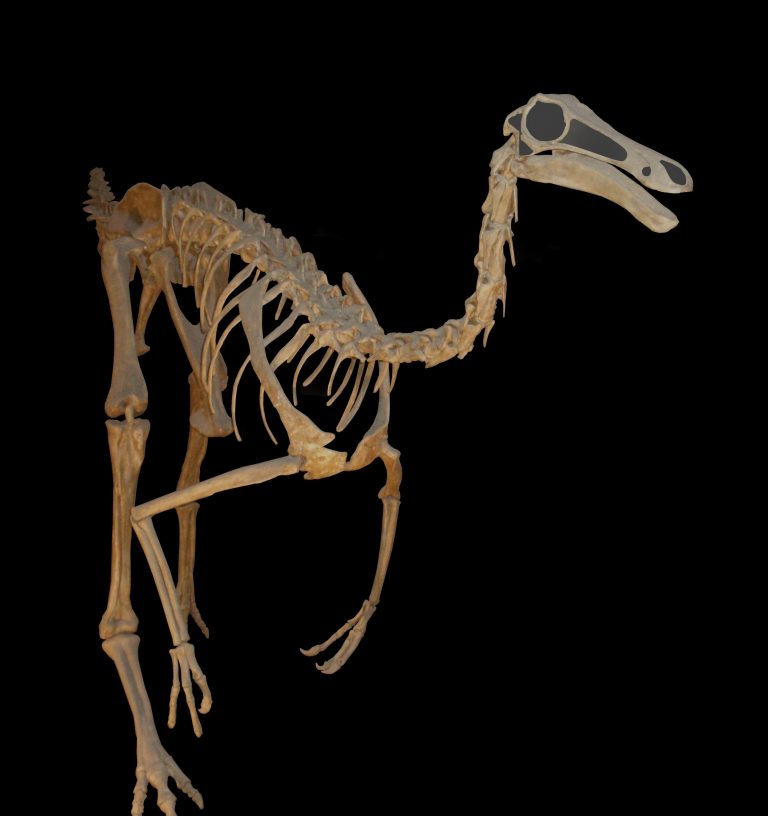
Gallimimus bullatus
Gallimimus bullatus
A fleet-footed ostrich-mimic theropod with a toothless keratinous beak suited for omnivorous grazing on vegetation, seeds, and small wetland invertebrates.
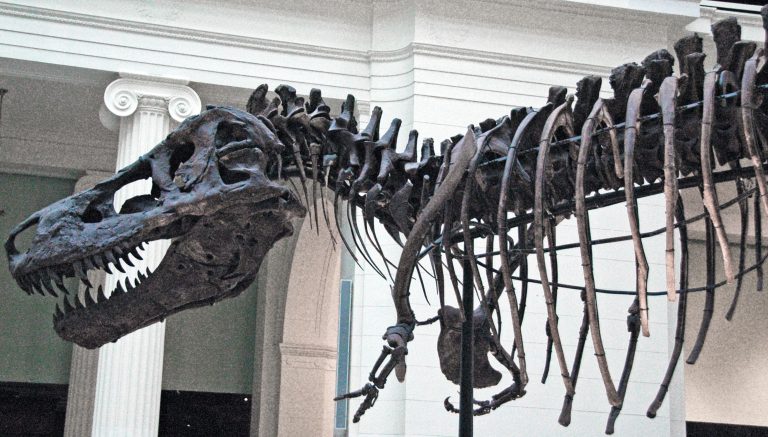
Tyrannosaurus rex
Tyrannosaurus rex
Tyrannosaurus rex was one of the largest terrestrial carnivores of all time, roaming western North America just prior to the Cretaceous-Paleogene extinction event. With an estimated bite force exceeding 35,000 Newtons and acute stereoscopic vision, it sat uncontested at the apex of its ecosystem.
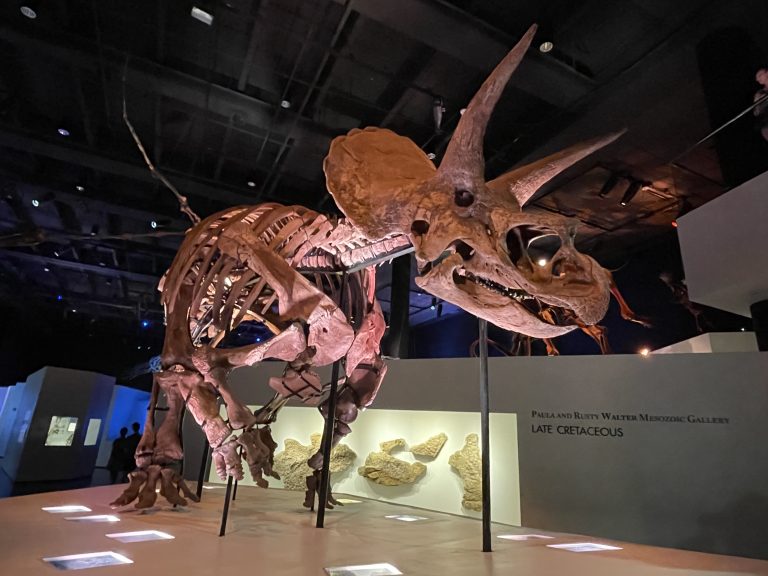
Triceratops horridus
Triceratops horridus
Triceratops horridus is one of the most recognizable horned dinosaurs. Equipped with two brow horns measuring up to 1 meter in length, a shorter nasal horn, and a solid parietal-squamosal frill, it was a dominant herbivore that actively defended against contemporary predators like Tyrannosaurus rex.
Related Paleontological Dispatches
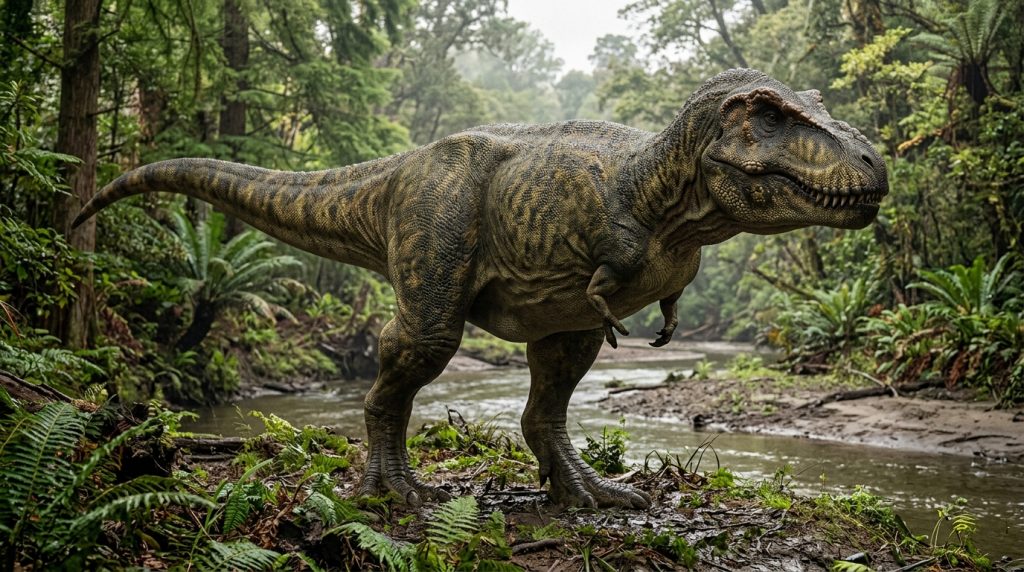
Tyrannosaurus Rex: Everything You Need to Know About the Tyrant King
No prehistoric animal has captured human imagination quite like Tyrannosaurus rex. Since its formal scientific naming in 1905,…

Triassic vs Jurassic vs Cretaceous: What Changed Between the Dinosaur Periods?
When the public imagines the prehistoric world, they frequently picture a single, sprawling primeval jungle where a Stegosaurus…
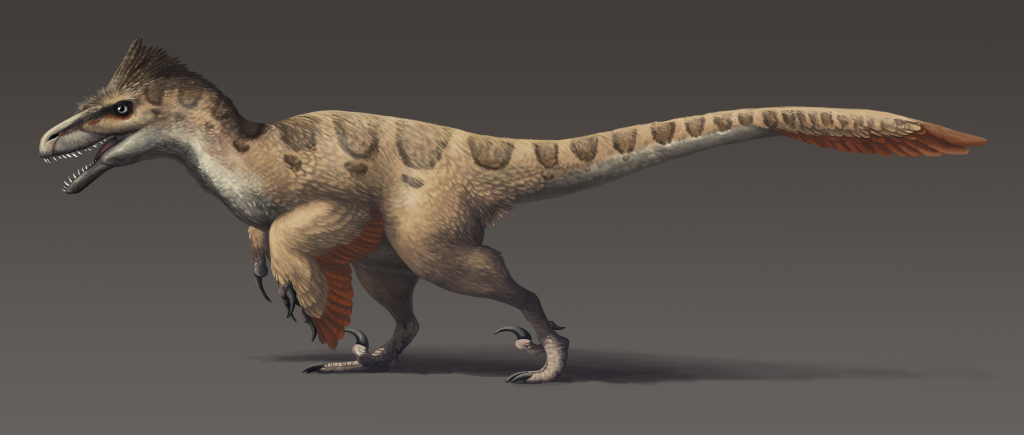
Utahraptor: The Giant Raptor Found in Utah
When pop culture introduced the world to the terrifying “raptors” of cinema in 1993, audiences were terrified by…