Triassic vs Jurassic vs Cretaceous: What Changed Between the Dinosaur Periods?
Explore the dramatic shifts in climate, continents, plant life, and dinosaur anatomy across the three defining chapters of the Mesozoic Era.

When the public imagines the prehistoric world, they frequently picture a single, sprawling primeval jungle where a Stegosaurus ambles past a predatory Tyrannosaurus rex while a long-necked sauropod drinks from a nearby lake. In the reality established by modern paleontology and chronostratigraphy, this scene is an evolutionary impossibility. The Mesozoic Era—spanning from approximately 251.9 to 66.0 million years ago—was not a static landscape, but an immense 186-million-year odyssey of shifting tectonic plates, swinging global climates, revolutionary botanical transformations, and relentless species turnover.
To understand the dinosaur dynasty, one must understand how fundamentally the three Mesozoic periods differed from one another. A visitor stepping out of a time machine in the Late Triassic, the Late Jurassic, and the Late Cretaceous would find three completely distinct worlds. Here, we examine the geological, climatic, floral, and anatomical shifts that defined the Triassic, Jurassic, and Cretaceous periods, and how Earth itself drove the evolution of the dinosaurs.
Continents in Motion: From Pangaea to Fragmented Worlds
The geography of our planet governs oceanic circulation, regional weather patterns, and the biological isolation of terrestrial animal populations. Across the Mesozoic Era, Earth’s landmasses underwent one of the most radical plate-tectonic realignments in geological history.
The Triassic Supercontinent
Throughout the Triassic Period (251.9–201.4 Ma), virtually all of Earth’s continental crust was conjoined into the colossal supercontinent Pangaea. Centered roughly along the equator and stretching from pole to pole, Pangaea was enveloped by the global superocean Panthalassa, with an eastern embayment called the Tethys Ocean. Because landmasses were contiguous, early terrestrial organisms faced few insurmountable marine barriers; early archosaurs could theoretically migrate from what is now modern-day Argentina to North America or central Europe without crossing an ocean.
Jurassic Rifting and the Birth of the Atlantic
By the Early Jurassic (~201–175 Ma), tectonic stresses tore Pangaea along ancient rift zones. The supercontinent began fracturing into two enormous continental masses: Laurasia in the northern hemisphere (encompassing ancestral North America, Europe, and Asia) and Gondwana in the southern hemisphere (South America, Africa, Antarctica, India, and Australia). The opening of the Central Atlantic Ocean and the westward expansion of the Tethys Seaway introduced marine moisture into previously barren continental interiors, completely transforming terrestrial hydrology.
Cretaceous Continental Isolation and Island Ecosystems
During the Cretaceous Period (145.0–66.0 Ma), continental fragmentation accelerated dramatically. South America and Africa split apart, widening the South Atlantic Ocean into a recognized marine barrier. India detached from Madagascar and began its rapid northward journey toward Asia. Meanwhile, exceptionally high global sea levels flooded low-lying continental basins, dividing ancestral North America into two distinct landmasses—Laramidia in the west and Appalachia in the east—separated by the shallow Western Interior Seaway. This geographic isolation prevented intercontinental gene flow and catalyzed hyper-localized evolutionary radiation, giving rise to specialized ceratopsian, hadrosaur, and tyrannosaur assemblages.
Paleoclimates: From Scorching Megamonsoons to Polar Greenhouses
Along with changing landmasses came planetary climate regimes that differed profoundly from the modern icehouse Earth.
The Arid Triassic Interior and the Carnian Pluvial Interval
Because Pangaea’s interior lay thousands of kilometers from oceanic shorelines, the Triassic climate was defined by intense aridity. Giant seasonal temperature differentials created fierce “megamonsoons,” alternating between bone-dry droughts and violent flash floods. However, around 234 to 232 million years ago, a protracted climatic event known as the Carnian Pluvial Episode occurred. Triggered by intense volcanic outgassing from the Wrangellia flood basalts, atmospheric greenhouse gases soared, initiating millions of years of global humidity and torrential rainfall. This climatic shock broke the interior droughts, accelerated plant diversification, and spurred the first explosive ecological radiation of early dinosaurs.
The Warm, Humid Jurassic Greenhouse
The rifting of Pangaea permitted warm equatorial marine currents to penetrate deep inland. The Jurassic climate transitioned into an equable, humid greenhouse state. Polar ice caps did not exist; instead, temperate forests extended well into polar latitudes. High atmospheric carbon dioxide levels (estimated between 1,000 and 1,500 ppm) fueled luxuriant botanical growth across sprawling floodplains, providing the immense caloric foundation required to support gigantic herbivorous sauropods.
Cretaceous Sea-Level Highstands and Epicontinental Seas
The Cretaceous was characterized by maximum Mesozoic greenhouse warming, driven by rapid seafloor spreading and voluminous volcanic outgassing. Global sea levels reached up to 100 to 200 meters higher than present day, submerging more than a third of modern land area under shallow, sunlit epicontinental seaways. Toward the end of the period, moderate seasonal cooling occurred in high-latitude regions, yet sub-polar woodlands flourished in both Alaska and the Antarctic circle.
The Green Revolution: How Plants Reshaped Dinosaur Anatomy
One of the most consequential differences between the dinosaur periods lies not in the predators that hunted, but in the plants that grew.
Gymnosperm and Fern Dominance in the Triassic and Jurassic
For the first 120 million years of dinosaur evolution, flowering plants did not exist. Triassic and Jurassic vegetation consisted almost exclusively of gymnosperms—conifers, cycads, ginkgoes, bennettitaleans—alongside horsetails and tree ferns. These plants were fibrous, tough, and heavily defended by structural lignin. To exploit this towering, tough foliage, Jurassic herbivores like Brachiosaurus evolved elongated cervical columns to browse tree canopies, paired with massive fermentation gut chambers and gastroliths (stomach stones) to grind fibrous plant tissue.
The Mid-Cretaceous Angiosperm Radiation
Around 125 to 100 million years ago, in the Early-to-Mid Cretaceous, the botanical world experienced a revolution: the emergence and rapid diversification of angiosperms (flowering plants). Co-evolving with pollinating insects, flowering plants reproduced rapidly and quickly colonized disturbed riverbeds and open floodplains. This green revolution triggered a massive co-evolutionary cascade in dinosaur anatomy. Herbivores no longer required massive long necks to reach conifer crowns; instead, they evolved low-browsing adaptations with sophisticated dental batteries—such as the hundreds of interlocking teeth in hadrosaur jaws and the powerful shearing beaks of ceratopsians like Triceratops—capable of grinding abrasive, fast-growing flowering vegetation.
Dinosaur Evolutionary Milestones: Underdogs, Giants, and Specialized Titans
Over the course of 165 million years, the morphological adaptations of dinosaurs transformed repeatedly to meet environmental challenges.
Triassic Bipedal Pioneers
In the Late Triassic (~231–201 Ma), dinosaurs were far from the dominant animals on Earth. They were small, agile, bipedal archosaurs sharing the landscape with larger predatory pseudosuchians (such as prestosuchids and rauisuchids) and armored aetosaurs. Animals like Coelophysis relied on hollow, lightweight bones and rapid, obligate bipedal running to hunt small vertebrates and evade heavier predators.
Jurassic Sauropod Gigantism and the Rise of Feathers
The extinction of pseudosuchian competitors at the end of the Triassic allowed dinosaurs to rapidly occupy dominant ecological niches in the Early Jurassic. By the Late Jurassic (~155–145 Ma), sauropods like Brachiosaurus and Diplodocus achieved lengths over 25 meters, their skeletons hollowed out by pneumatic air sacs directly connected to high-efficiency avian-style lungs. Armored stegosaurs like Stegosaurus developed dorsal osteoderm plates and thagomizer tail spikes to repel apex predators like Allosaurus. Simultaneously, small maniraptoran theropods evolved pennaceous feathers and powered flight, giving rise to early avialans such as Archaeopteryx.
Cretaceous Peak Diversity: Armor, Horns, and Colossal Tyrannosaurs
The Cretaceous represented the zenith of dinosaur morphological specialization. With continents fragmented, regional biodiversity soared. In South America, titanosaur sauropods like Argentinosaurus exceeded 70 metric tons. In northern Africa, semi-aquatic giants like Spinosaurus hunted prehistoric river systems. In North America and Asia, heavily armored ankylosaurs, frilled ceratopsians, and feathered dromaeosaurs like Velociraptor populated vibrant floodplains. At the apex stood massive tyrannosaurids like Tyrannosaurus rex, possessing stereoscopic vision, bone-crushing jaw bite forces of over 35,000 Newtons, and advanced olfactory systems.
The Cataclysms: Mass Extinctions That Framed the Periods
The boundaries dividing the Triassic, Jurassic, and Cretaceous are not arbitrary lines on a calendar; they represent monumental global extinction events recorded in Earth’s rock layers.
The End-Triassic CAMP Volcanism (201.4 Ma)
The boundary between the Triassic and Jurassic was carved by catastrophic flood basalt eruptions associated with the opening of the Atlantic Ocean—the Central Atlantic Magmatic Province (CAMP). Carbon dioxide and sulfur dioxide emissions triggered rapid climate swings and severe oceanic anoxia. Crurotarsan pseudosuchians were decimated, leaving terrestrial ecological niches vacant for dinosaur expansion.
The K-Pg Asteroid Impact and the Avian Legacy (66.0 Ma)
The Cretaceous Period ended with catastrophic finality 66.0 million years ago when a 10-to-15-kilometer asteroid struck Chicxulub, Mexico, compounded by the outgassing of India’s Deccan Traps. The global thermal pulse, soot fallout, and multi-year impact winter collapsed photosynthesis. Non-avian dinosaurs vanished entirely. However, the dinosaur lineage was not eradicated: small, beaked, seed-eating avian dinosaurs survived, ultimately radiating into more than 10,000 species of modern birds.
Period Comparison Summary
When you explore the fossil record, remember this essential framework:
- Triassic (252–201 Ma): Arid supercontinent Pangaea; small bipedal pioneer dinosaurs evolving alongside diverse archosaur rivals; concluding with CAMP volcanic extinction.
- Jurassic (201–145 Ma): Rifting continents; warm, humid conifer-cycad greenhouse; massive sauropod gigantism, plated stegosaurs, and the origin of avian dinosaurs.
- Cretaceous (145–66 Ma): Fragmented continents and shallow interior seaways; the angiosperm (flower) revolution; horned ceratopsians, duckbilled hadrosaurs, and colossal tyrannosaurs; concluding with the Chicxulub asteroid cataclysm.
Explore the Geological Timeline
To see these periods organized chronologically with specimen records, interactive duration bars, and verified fossil discoveries, visit our complete Dinosaur Timeline: A Journey Through Deep Time, or search the full Dinosaur Species Directory to filter specimens by geological period.

Referenced Dinosaur Species 5 species
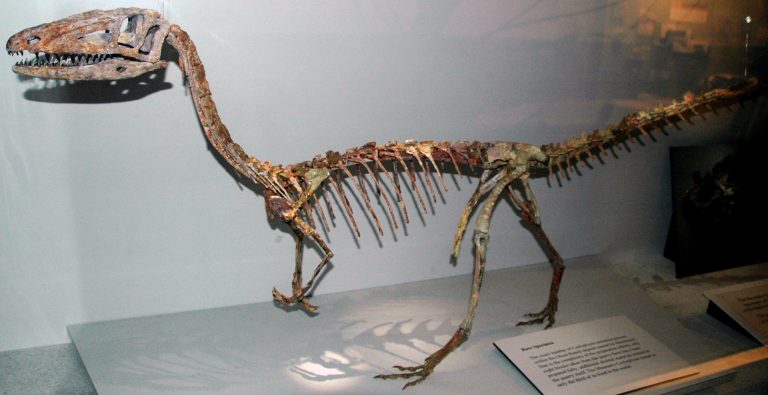
Coelophysis bauri
Coelophysis bauri
A gracile, agile early theropod that flourished across Late Triassic floodplains, hunting small vertebrates and insects with slender grasping jaws and lightweight hollow bones.
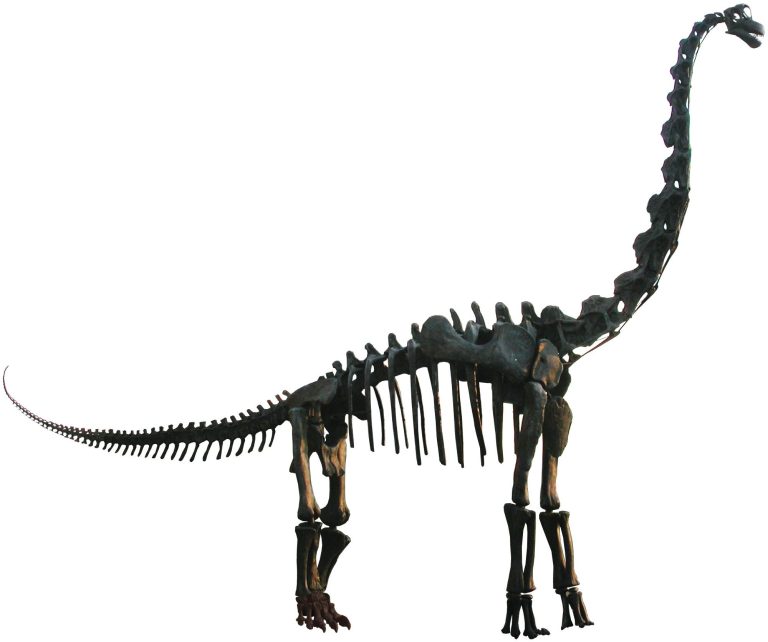
Brachiosaurus altithorax
Brachiosaurus altithorax
A colossal macronarian sauropod with disproportionately long forelimbs and an elevated neck built for high-canopy conifer browsing during the Late Jurassic.
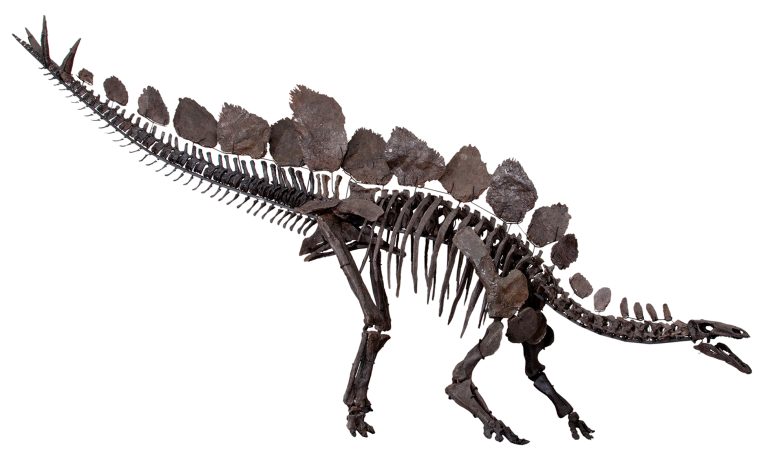
Stegosaurus stenops
Stegosaurus stenops
An iconic plated herbivore possessing alternating osteodermal dorsal plates for thermoregulation or display and four lethal tail spikes (thagomizer) for active defense.
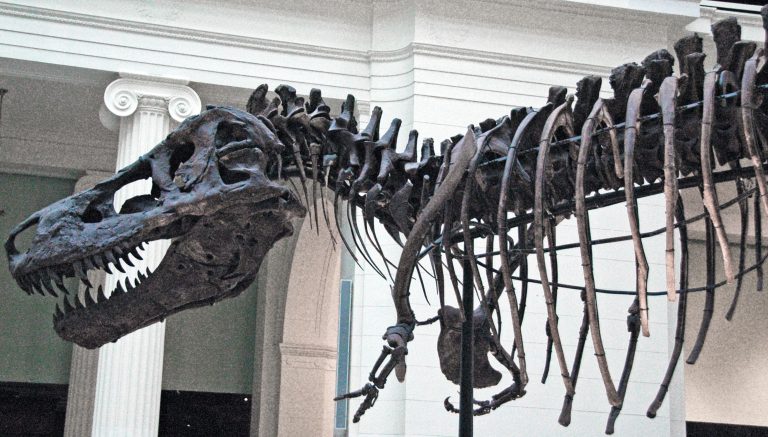
Tyrannosaurus rex
Tyrannosaurus rex
Tyrannosaurus rex was one of the largest terrestrial carnivores of all time, roaming western North America just prior to the Cretaceous-Paleogene extinction event. With an estimated bite force exceeding 35,000 Newtons and acute stereoscopic vision, it sat uncontested at the apex of its ecosystem.
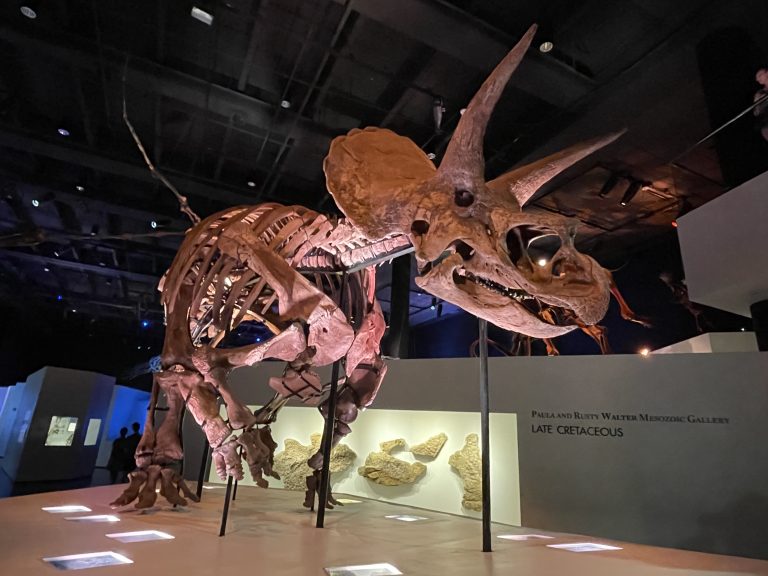
Triceratops horridus
Triceratops horridus
Triceratops horridus is one of the most recognizable horned dinosaurs. Equipped with two brow horns measuring up to 1 meter in length, a shorter nasal horn, and a solid parietal-squamosal frill, it was a dominant herbivore that actively defended against contemporary predators like Tyrannosaurus rex.
Related Paleontological Dispatches
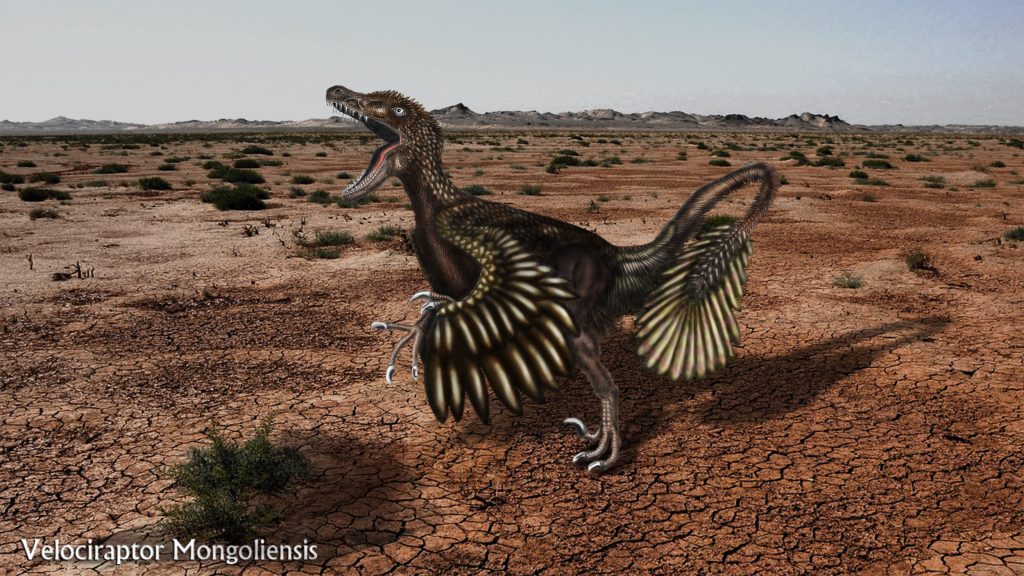
Velociraptor: The Truth Behind the Movie Monster
Ask anyone to describe a Velociraptor, and they will almost certainly picture the terrifying creature from the Jurassic…
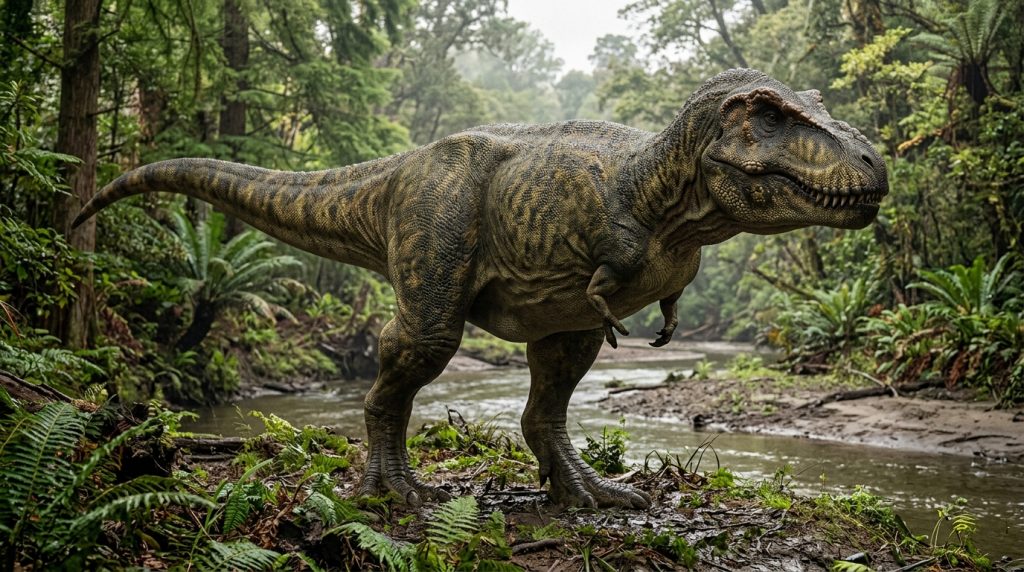
Tyrannosaurus Rex: Everything You Need to Know About the Tyrant King
No prehistoric animal has captured human imagination quite like Tyrannosaurus rex. Since its formal scientific naming in 1905,…
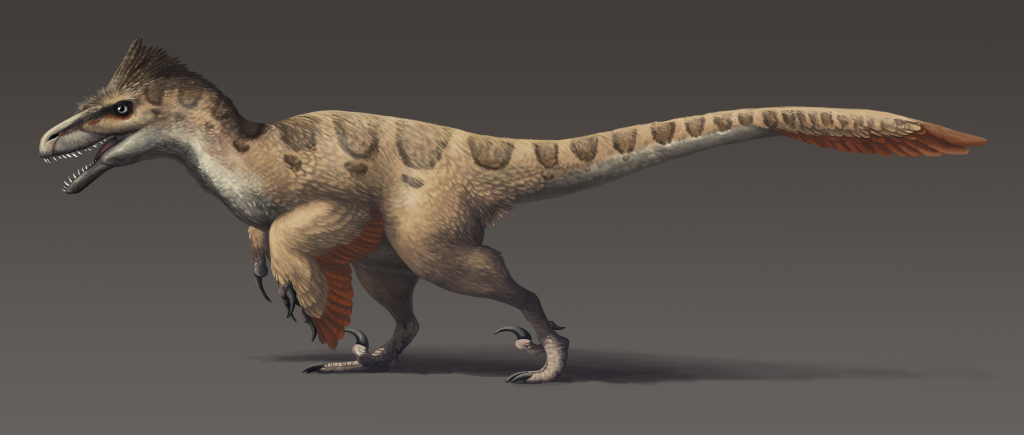
Utahraptor: The Giant Raptor Found in Utah
When pop culture introduced the world to the terrifying “raptors” of cinema in 1993, audiences were terrified by…