How Big Was a T. rex? Size, Weight and Height Compared
How large was the tyrant king really? Explore the definitive scientific measurements of Tyrannosaurus rex: 40-foot lengths, 13-foot hip heights, 9-ton masses, and how 3D laser scans calculate dinosaur weight.
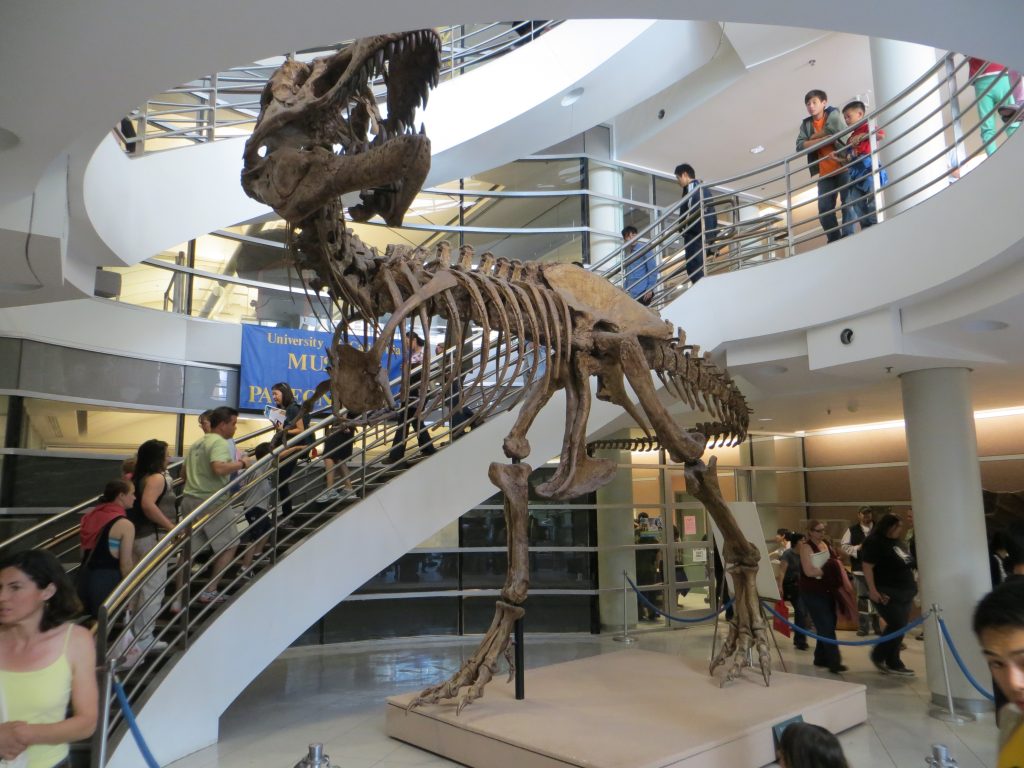
Search the internet for the size of Tyrannosaurus rex, and you will find wildly contradictory numbers. One website claims it weighed 5 tons; another insists 15 tons. Children’s books often describe it standing 20 feet tall, while museum placards state its hips barely reached 12 feet. Why is there so much confusion surrounding the measurements of the world’s most famous dinosaur?
The discrepancy stems from two fundamental factors: posture and mass estimation methodology. You cannot put a nine-ton fossil on a bathroom scale, nor can you measure height accurately if you pose the skeleton in an outdated 19th-century kangaroo posture. Over the past two decades, laser surface scanning, 3D convex-hull digital modeling, and bivariate bone circumference equations have revolutionized how vertebrate paleontologists calculate dinosaur dimensions.
Here is the definitive, peer-reviewed breakdown of how big Tyrannosaurus rex actually was, how its weight is calculated, and how it compares to both modern animals and rival prehistoric giants.
Tyrannosaurus rex Dimensions: Verified Adult Ranges
- Total Body Length: 12.0 to 12.4 meters (39.4 to 40.7 feet)
- Maximum Recorded Length: ~12.5 meters (Scotty / RSM P2523.8)
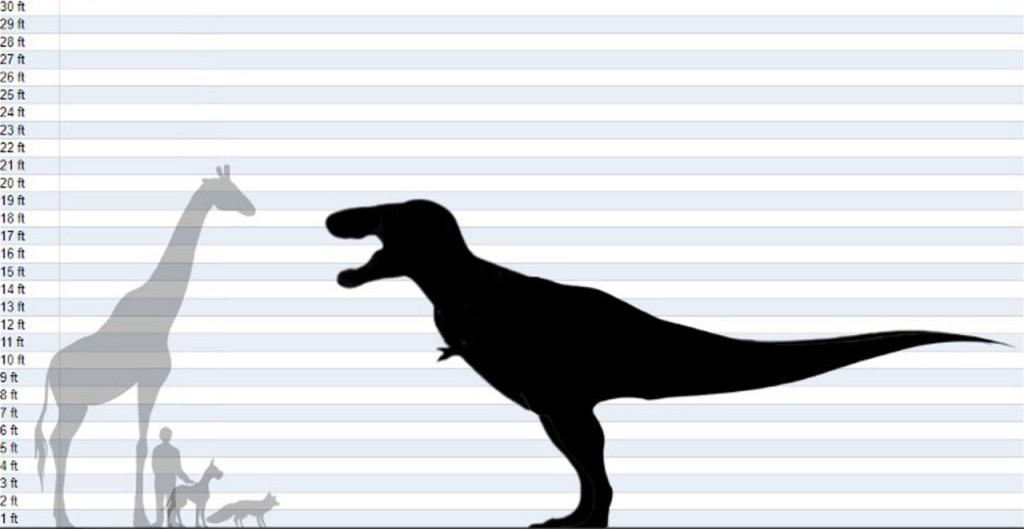
- Standing Hip Height: 3.65 to 3.96 meters (12.0 to 13.0 feet)
- Horizontal Head Clearance: 3.5 to 4.1 meters (11.5 to 13.5 feet)
- Average Adult Body Mass: 8,000 to 9,500 kg (8.8 to 10.5 US tons)
- Skull Length: 1.45 to 1.55 meters (4.75 to 5.1 feet)
- Femur Length (Sue): 138 centimeters (54.3 inches)
1. Linear Dimensions: Length, Hip Height, and the Horizontal Stance
When measuring a dinosaur, length is the most objective linear metric because it is tied directly to the vertebral column. In mature, skeletally adult specimens of Tyrannosaurus rex, total length consistently spans between 12.0 and 12.4 meters (39.4 to 40.7 feet) from the tip of the premaxillary snout to the terminal caudal vertebra of the tail.
Standing height, however, depends entirely on posture. Until the dinosaur renaissance of the 1970s, museums mounted T. rex in a vertical, tripod stance with its tail dragging on the floor, making it appear over 6 meters (20 feet) tall. Biomechanical research proved that this posture would have dislocated the hips and shattered the spinal column.
In life, T. rex held its back almost perfectly horizontal. In this natural stance:
- Height at the Hips: Measures between 3.65 and 3.96 meters (12 to 13 feet), taking into account articular cartilage cushions between the joints.
- Head Elevation: While walking alertly, the head was held roughly level with or slightly above the hips, approximately 3.5 to 4.2 meters off the ground. When foraging or scent-tracking along the ground, its head could lower to within inches of the substrate.
2. How Do Paleontologists Weigh an Extinct Dinosaur?
Dinosaur mass cannot be directly measured; it must be mathematically modeled. Paleontologists rely primarily on two rigorous scientific approaches to calculate body mass, each with distinct strengths and margins of error:
Method 1: Volumetric 3D Laser Scanning (Convex Hulls)
In this digital method (pioneered by researchers like Dr. Karl Bates and Dr. Peter Falkingham), an articulated fossil skeleton is laser-scanned with LiDAR to produce a high-resolution 3D point cloud. Software wraps minimum convex polygons around the ribcage, limbs, and tail to calculate minimum physical volume. Researchers then add realistic layers of muscle, skin, and abdominal tissue, while subtracting negative space for internal air-sac respiratory systems (lungs and pneumatic skeletal cavities). Multiplying total volume by avian muscle density (~1,000 kg/m³) yields mass estimates ranging from 8,400 to 9,500 kg for large adults.
Method 2: Bivariate Limb-Bone Circumference Scaling
Developed by Campione and Evans (2012), this empirical method is based on living terrestrial tetrapods. In all quadrupedal and bipedal animals today, the minimum circumference of the weight-bearing leg bones (the femur in bipeds) correlates directly with body weight. Applying the scaling equation:
Because the femur shaft of adult T. rex specimens exceeds 580 to 590 millimeters in circumference, this equation independently produces mass estimates of 8,800 to 9,300 kg—reinforcing the 3D laser-scan results with remarkable mathematical consistency.
3. The Heavyweight Clash: Comparing Famous Specimens
Not all T. rex fossils are the same size. Like humans or modern predators, individual dinosaurs varied based on nutrition, age, and genetics. The table below compares the verified measurements of famous adult specimens:
| Specimen Nickname | Catalog Number | Locality | Length | Estimated Body Mass | Completeness |
|---|---|---|---|---|---|
| “Scotty” | RSM P2523.8 | Saskatchewan, Canada | ~12.5 m (41.0 ft) | 8,870 – 9,500 kg (9.8 – 10.5 tons) | ~65{349c590a1c7dba0edd042a8cb051d4ef440ecfe2a9c24e1b0b2c894f80ccce3c} complete |
| “Sue” | FMNH PR 2081 | South Dakota, USA | 12.3 m (40.4 ft) | 8,460 – 9,100 kg (9.3 – 10.0 tons) | ~90{349c590a1c7dba0edd042a8cb051d4ef440ecfe2a9c24e1b0b2c894f80ccce3c} complete |
| “Stan” | BHI 3033 | South Dakota, USA | 11.8 m (38.7 ft) | 7,200 – 7,650 kg (7.9 – 8.4 tons) | ~70{349c590a1c7dba0edd042a8cb051d4ef440ecfe2a9c24e1b0b2c894f80ccce3c} complete |
| Holotype | CM 9380 | Montana, USA | 11.9 m (39.0 ft) | 7,400 – 7,800 kg (8.1 – 8.6 tons) | ~15{349c590a1c7dba0edd042a8cb051d4ef440ecfe2a9c24e1b0b2c894f80ccce3c} complete |
| “Jane” (Subadult) | BMRP 2002.4.1 | Montana, USA | ~6.5 m (21.3 ft) | 1,000 – 1,400 kg (1.1 – 1.5 tons) | ~50{349c590a1c7dba0edd042a8cb051d4ef440ecfe2a9c24e1b0b2c894f80ccce3c} complete |
A rigorous study by Persons et al. (2020) demonstrated that “Scotty” possesses the most massive limb bones ever recorded for a carnivorous dinosaur, edging out “Sue” by roughly 400 kilograms to hold the current title of heaviest known theropod skeleton.
4. How Does T. rex Compare to Familiar Objects and Modern Animals?
To grasp the scale of a nine-ton macropredator, relatable real-world benchmarks help contextualize the numbers:
- Compared to African Elephants: A large bull African bush elephant weighs approximately 6,000 kg (6 metric tons). A mature T. rex was equivalent in mass to 1.5 fully grown bull elephants.
- Compared to a City Bus: A standard North American transit bus measures 12.2 meters (40 feet) long. Stretched out head-to-tail, an adult T. rex was slightly longer than a transit bus.
- Compared to Modern Carnivores: The largest living terrestrial carnivore is the polar bear, averaging around 500 kg. A single adult T. rex outweighed 18 polar bears combined.
- Compared to Vehicles: An average mid-sized family SUV weighs approximately 1,800 kg. A 9-ton T. rex outweighed five passenger SUVs standing on a single set of hind legs.
5. T. rex vs. Rival Megatheropods: Who Was Truly the Biggest?
In discussions of dinosaur size, three other giant theropods frequently challenge Tyrannosaurus for the crown: Spinosaurus aegyptiacus, Giganotosaurus carolinii, and Carcharodontosaurus saharicus.
When comparing these behemoths, a critical distinction between length and mass is essential:
- Longest Theropod: Spinosaurus takes first place in total body length, reaching 14.0 to 15.0 meters (46 to 49 feet). However, because its torso was slender, its limbs were short, and its tail was laterally flattened for water propulsion, its estimated mass was between 6,500 and 7,500 kg.
- Longest Terrestrial Theropod: Giganotosaurus from Argentina reached 12.5 to 13.0 meters (41 to 43 feet), slightly exceeding T. rex in length. However, its skull was narrower and its ribcage was significantly more slender.
- Heaviest and Most Robust Theropod: Tyrannosaurus rex remains the undisputed heavyweight champion in overall bulk. Its broad barrel-shaped torso, reinforced gastralia (belly ribs), and colossal leg bone circumferences gave it a body volume and mass (8,500 to 9,500 kg) that comfortably exceeds all other known theropods.
Common Mistakes and Misconceptions About T. rex Size
Misconception 1: “T. rex stood 20 feet tall.”
Reality: This claim relies on the long-discredited tripod posture. In its natural horizontal walking stance, its back reached 12 to 13 feet off the ground at the hips.
Misconception 2: “Because Spinosaurus was longer, it was definitely bigger.”
Reality: In biological science, animal “size” is defined by mass (body weight), not linear length. An anaconda is longer than a jaguar, but a jaguar is far more massive. Similarly, while Spinosaurus was longer, T. rex was significantly heavier and more robustly muscled.
Misconception 3: “Every adult T. rex was identical in size to Sue.”
Reality: Fossil samples show natural variation of 15{349c590a1c7dba0edd042a8cb051d4ef440ecfe2a9c24e1b0b2c894f80ccce3c} to 25{349c590a1c7dba0edd042a8cb051d4ef440ecfe2a9c24e1b0b2c894f80ccce3c} between fully grown individuals. An adult T. rex could range from 7 to nearly 10 metric tons depending on health, food abundance, and genetics.
Frequently Asked Questions
What was the heaviest T. rex ever found?
Specimen RSM P2523.8 (“Scotty”), unearthed in Saskatchewan, Canada. Based on femur circumferences of 590 mm and volumetric 3D scans, Scotty is estimated to have weighed approximately 8,870 kg (19,550 lbs / 9.8 tons), marginally surpassing “Sue”.
How long was an average adult T. rex?
An average adult measured between 12.0 and 12.4 meters (39.4 to 40.7 feet) from snout to tail tip, roughly the length of a full-size 40-foot city transit bus.
Why do different studies give different weights for T. rex?
Because dinosaur mass cannot be weighed directly. Estimates depend on the technique used (laser volume modeling vs. bone circumference equations) and assumptions about internal lung air-sac volume and flesh density.
How big was a baby T. rex when it hatched?
Fossil embryonic teeth and pelvic bones suggest hatchlings emerged from eggs at roughly the size of a modern turkey or goose, weighing only a few kilograms before experiencing a massive 20-year growth trajectory.
Was Giganotosaurus bigger than T. rex?
Giganotosaurus was slightly longer (up to 13 meters), but T. rex had a wider skull, broader chest, thicker leg bones, and greater body mass, making T. rex the heavier and bulkier predator.
Final Takeaway: The Physical Reality of an Apex Titan
When you strip away cinematic exaggeration and examine peer-reviewed anatomical data, Tyrannosaurus rex does not shrink—it becomes more formidable. Stretched across 40 feet of solid bone, muscle, and air sacs, weighing over nine metric tons, and moving with dynamic horizontal balance, T. rex represents the absolute structural biomechanical limit of what terrestrial bipedal carnivores could physically achieve on Earth.
To dive deeper into the tyrant king’s world, explore our detailed Tyrannosaurus Rex Profile, compare it directly against its prey on our Dinosaur Comparison Engine, or read our cornerstone analysis on Tyrannosaurus Rex Paleobiology.
Peer-Reviewed Literature Cited
- Persons, W. S., Currie, P. J., & Erickson, G. M. (2020). An older and exceptionally large adult specimen of Tyrannosaurus rex. The Anatomical Record, 303(4): 656–672. DOI: 10.1002/ar.24118
- Campione, N. E., & Evans, D. C. (2012). A universal scaling relationship for predicting body mass in terrestrial tetrapods. BMC Biology, 10: 60. DOI: 10.1186/1741-7007-10-60
- Bates, K. T., et al. (2009). Estimating mass properties of dinosaurs using laser imaging and 3D computer modelling. PLOS ONE, 4(2): e4532. DOI: 10.1371/journal.pone.0004532
- Sellers, W. I., et al. (2012). Minimum convex hull method as an alternative to volume reconstruction for estimating body mass in fossil vertebrates. Biology Letters, 8(5): 872–876. DOI: 10.1098/rsbl.2012.0263

Referenced Dinosaur Species 5 species
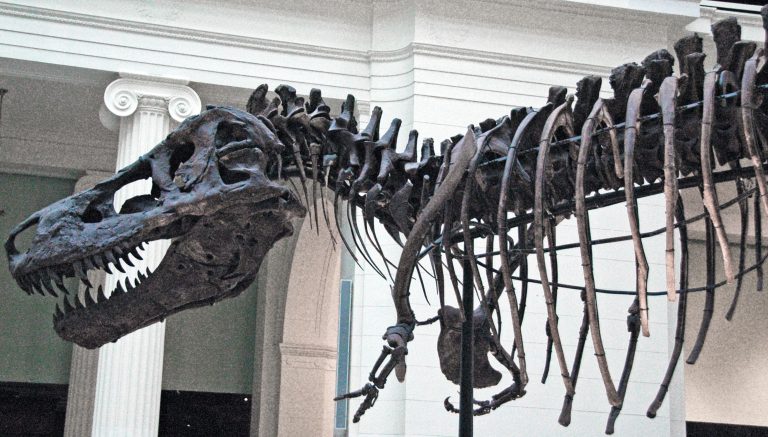
Tyrannosaurus rex
Tyrannosaurus rex
Tyrannosaurus rex was one of the largest terrestrial carnivores of all time, roaming western North America just prior to the Cretaceous-Paleogene extinction event. With an estimated bite force exceeding 35,000 Newtons and acute stereoscopic vision, it sat uncontested at the apex of its ecosystem.
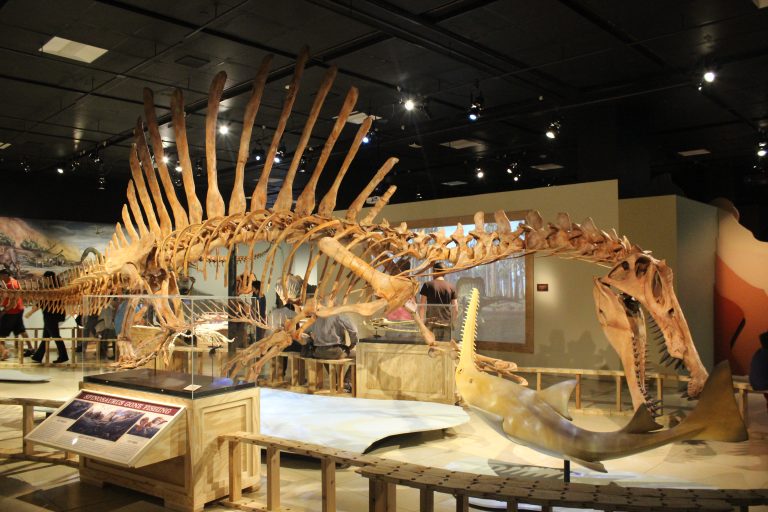
Spinosaurus aegyptiacus
Spinosaurus aegyptiacus
A colossal semi-aquatic predatory theropod equipped with a massive dorsal neural sail, crocodyliform snout, and paddle-like tail adapted for pursuing giant Cretaceous fish.
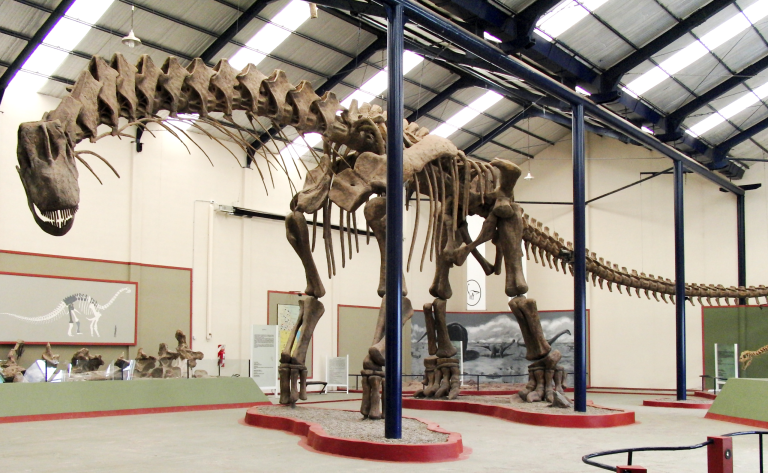
Argentinosaurus huinculensis
Argentinosaurus huinculensis
One of the largest land animals in Earth history, this colossal titanosaur shook the Cretaceous plains of South America with dorsal vertebrae measuring over 1.5 meters high.
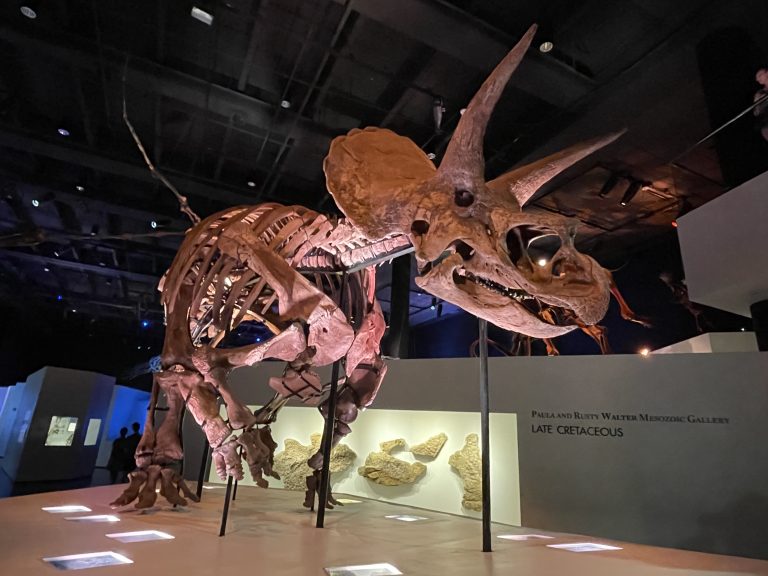
Triceratops horridus
Triceratops horridus
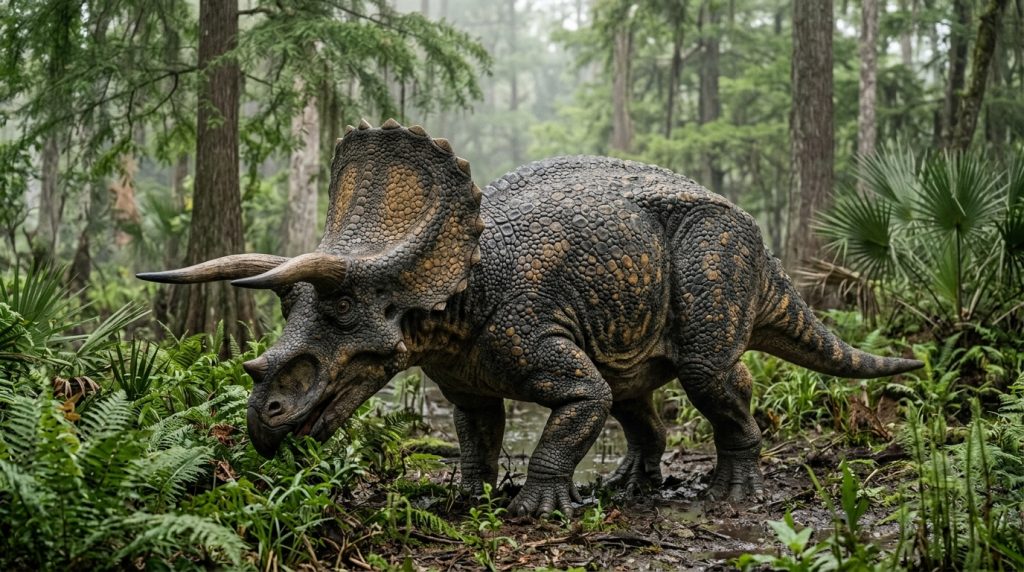
Triceratops horridus is one of the most recognizable horned dinosaurs. Equipped with two brow horns measuring up to 1 meter in length, a shorter nasal horn, and a solid parietal-squamosal frill, it was a dominant herbivore that actively defended against contemporary predators like Tyrannosaurus rex.
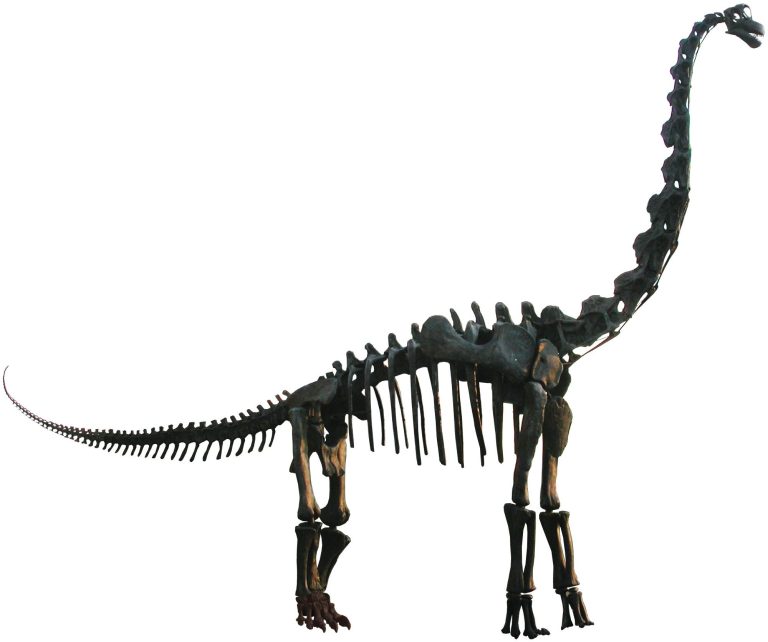
Brachiosaurus altithorax
Brachiosaurus altithorax
A colossal macronarian sauropod with disproportionately long forelimbs and an elevated neck built for high-canopy conifer browsing during the Late Jurassic.
Related Paleontological Dispatches
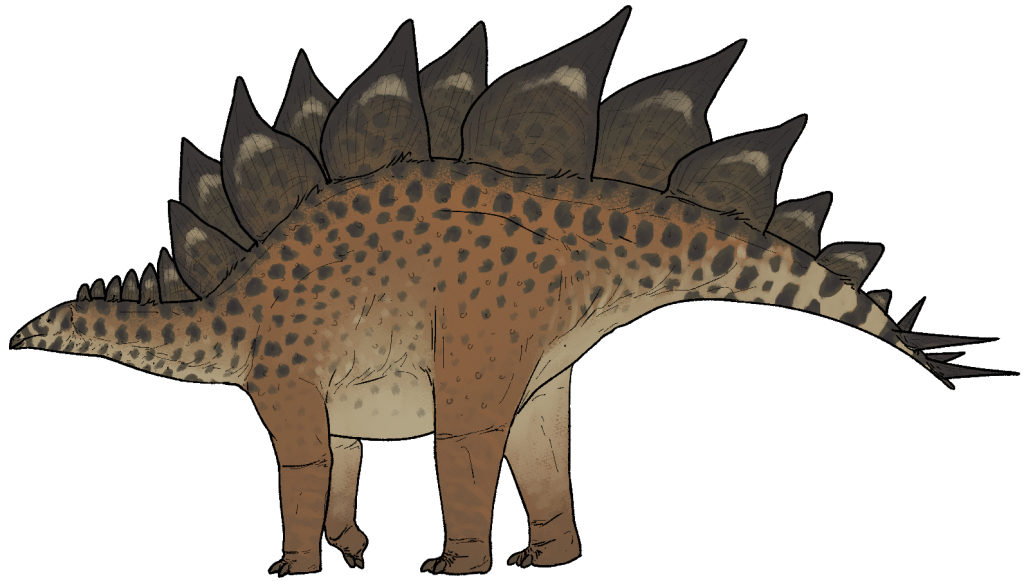
Stegosaurus: Why It Had Back Plates and a Spiked Tail
With its tiny head, towering double row of kite-shaped plates, and a tail bristling with four lethal spikes,…
Triceratops: Why It Had Three Horns and a Huge Frill
For more than a century, popular books and films have depicted Triceratops as nature’s ultimate prehistoric battle tank:…

Did T. rex Have Feathers? What the Fossils Really Say
Over the past three decades, popular depictions of Tyrannosaurus rex have swung between two radical extremes. For nearly…