Tyrannosaurus rex
Tyrannosaurus rex
Tyrannosaurus rex was one of the largest terrestrial carnivores of all time, roaming western North America just prior to the Cretaceous-Paleogene extinction event. With an estimated bite force exceeding 35,000 Newtons and acute stereoscopic vision, it sat uncontested at the apex of its ecosystem.

Specimen Field Matrix
Empirical morphological and stratigraphical recordsPaleontological Overview
Tyrannosaurus rex stands as the consummate icon of vertebrate paleontology. Reaching lengths exceeding 12 meters and standing nearly 4 meters at the hips, this colossal coelurosaurian theropod roamed the humid floodplain forests and subtropical river valleys of western North America during the final two million years of the Cretaceous Period.
Biomechanical studies demonstrate that T. rex possessed one of the greatest bite forces ever calculated for a terrestrial animal—estimated between 35,000 and 57,000 Newtons. Unlike the slicing, blade-like dentition of earlier carcharodontosaurids, Tyrannosaurus was equipped with robust, conical teeth anchored deep within reinforced jaw bones. These “lethal bananas” functioned as bone-crushing chisels capable of pulverizing the thick armor and ribs of adult ceratopsians and hadrosaurs.
Neurological endocasts further reveal that Tyrannosaurus was far from an unthinking brute. Its enlarged olfactory bulbs provided an extraordinary sense of smell comparable to that of modern turkey vultures, while stereoscopic forward-facing eyes afforded binocular depth perception that surpassed modern raptorial birds. With acute sensory hardware and unmatched crushing power, Tyrannosaurus rex commanded the summit of late Mesozoic food webs.
Human Scale Comparison
Proportional anatomical comparison between an average adult human (1.8 m / 5.9 ft) and Tyrannosaurus rex (12.3 m / 40.4 ft length, 3.7 m / 12.1 ft standing height).
Where & When It Lived
Geographic Range & Habitat
- Fossil Deposit Localities:
- Western North America (Montana, South Dakota, Wyoming, Alberta, Saskatchewan)
- Geological Formations:
- Hell Creek Formation, Lance Formation, Scollard Formation
Fossil specimens of this species have been recovered from terrestrial floodplains, ancient river channels, and coastal sandstone facies deposited during continental rifting and tectonic reconfigurations.
Geologic Epoch & Chronology
Radiometric dating of volcanic ash layers (bentonite horizons) places this taxon between 68 and 66 million years before the present.
Remarkable Adaptations & Facts
-
Its serrated teeth reached up to 30 centimeters (12 inches) long including the root, designed to puncture flesh and shatter bone.
-
Endocranial reconstructions indicate acute olfactory bulbs, granting T. rex a sense of smell comparable to modern vultures.
-
Its forward-facing eyes provided binocular depth perception surpassing that of modern eagles and hawks.
-
Despite measuring under 1 meter in length, each two-clawed arm possessed robust muscle attachment scars capable of lifting over 180 kilograms.
Specimen & Life Restoration Gallery
Peer-Reviewed References & Institutional Literature
Related Dinosaurs & Contemporaries
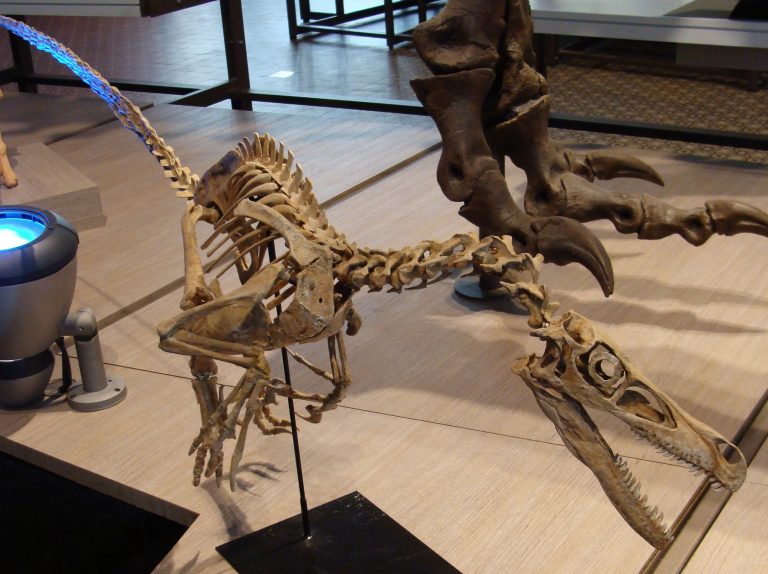 Cretaceous
Velociraptor mongoliensis
Velociraptor mongoliensis
A turkey-sized feathered dromaeosaurid predator of the Gobi Desert, renowned for its hyperextensible sickle-shaped second toe…
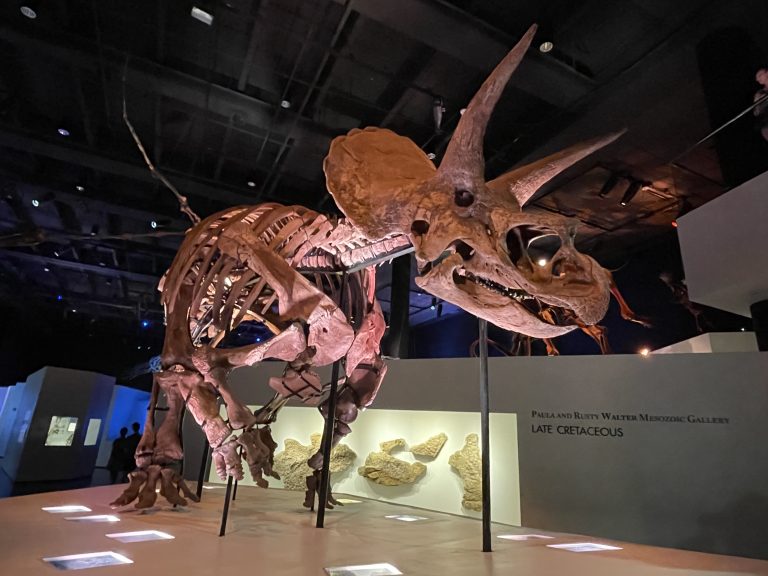 Cretaceous
Triceratops horridus
Triceratops horridus
Triceratops horridus is one of the most recognizable horned dinosaurs. Equipped with two brow horns measuring…
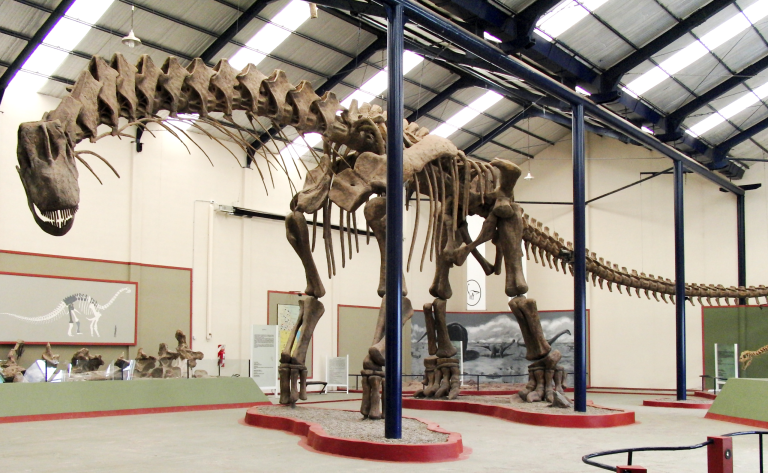 Cretaceous
Argentinosaurus huinculensis
Argentinosaurus huinculensis
One of the largest land animals in Earth history, this colossal titanosaur shook the Cretaceous plains…