Kank australis: The ‘Heron Raptor’ of Late Cretaceous Patagonia
Described from the Chorrillo Formation in May 2026, Kank australis reveals an agile, fish-hunting unenlagiid that roamed the southern tip of South America right before the end-Cretaceous extinction.
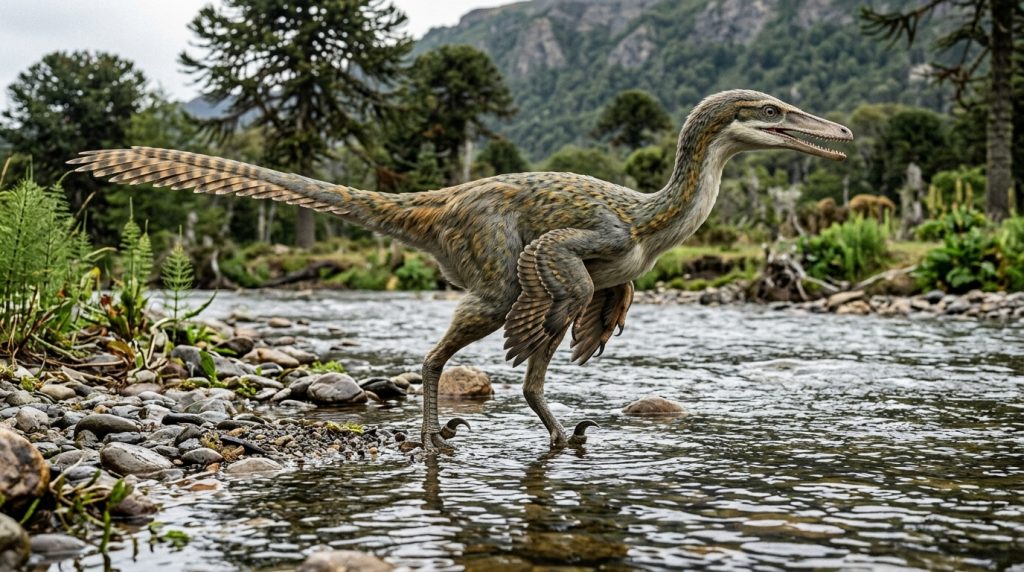
When paleontologists announced the discovery of Kank australis from the windswept badlands of southwestern Patagonia in May 2026, popular headlines immediately christened the creature a “new Patagonian raptor.” Yet this fascinating predator looked and hunted nothing like the pack-hunting movie monsters of cinema. Belonging to the enigmatic Gondwanan clade Unenlagiidae, Kank was a slender, bird-like carnivore equipped with an S-curved, shock-absorbing neck, delicate wading limbs, and unserrated, fluted teeth designed to snatch slippery aquatic prey from Late Cretaceous rivers—behaving more like a prehistoric heron than a terrestrial slasher.
?? Specimen At-A-Glance: Kank australis
1. What Is Kank australis? An Ancestral Bird of Patagonian Lore
The naming of Kank australis reflects a deep cultural reverence for the indigenous heritage of southern South America. The generic name, Kank, derives from the mythology of the Aonikenk people (the southern Tehuelche), the indigenous inhabitants of southern Patagonia. In Aonikenk cosmology, Kank is the revered “elder Rhea”—a legendary ancestral flightless bird whose mythic three-toed footprints left impressions across the night sky, forming the constellation known today as the Southern Cross (Crux). The specific epithet, australis (Latin for “southern”), honors the specimen’s high-latitude geographic origin near the sub-Antarctic rim of the Americas.
The monograph establishing the new dinosaur was published on May 28, 2026, in the Journal of Vertebrate Paleontology by an international research team led by Dr. Matías J. Motta of the Laboratorio de Anatomía Comparada y Evolución de los Vertebrados (LACEV) at the Museo Argentino de Ciencias Naturales (MACN-CONICET) in Buenos Aires, alongside coauthors Alexis M. Aranciaga Rolando, Sebastián Rozadilla, Federico L. Agnolín, Federico Brissón Egli, Gerardo P. Álvarez Herrera, Nicolás R. Chimento, Gastón Lo Coco, Takanobu Tsuihiji, Makoto Manabe, Diego Pol, and Fernando E. Novas.
By formally describing Kank, the team filled a pivotal gap in South American vertebrate paleontology, revealing that the unenlagiid lineage—often viewed as an Early or mid-Cretaceous radiation—flourished at the southernmost tip of Patagonia right up until the final moments of the dinosaur era.
2. The “Raptor” Dilemma: Unenlagiids Versus Hollywood Dromaeosaurs
To the general public, the word “raptor” evokes a terrifying image: a heavy-jawed, pack-hunting terrestrial biped armed with serrated flesh-slicing teeth and a massive scythe-like killing claw, immortalized by pop culture’s depiction of Velociraptor and Deinonychus. However, in modern vertebrate paleontology, the term is frequently applied across a much wider phylogenetic umbrella—and South America’s “raptors” took a radically different evolutionary turn.
Kank australis belongs to the Unenlagiidae (often classified as a distinct family or a specialized subfamily, Unenlagiinae, within Dromaeosauridae). While northern Laurasian dromaeosaurids adapted for grappling and subduing large herbivorous dinosaurs on dry land, southern Gondwanan unenlagiids evolved into gracile, avian-proportioned shoreline specialists.
| Anatomical Feature | Laurasian Dromaeosaurids (e.g., Velociraptor) | Patagonian Unenlagiids (e.g., Kank, Buitreraptor) |
|---|---|---|
| Snout & Jaw Profile | Deep, heavily reinforced, laterally compressed skull | Long, shallow, low, highly elongated rostral profile |
| Dental Architecture | Serrated ziphodont teeth designed for slicing flesh | Smooth, unserrated, fluted conical teeth designed for piercing |
| Cervical Column (Neck) | Short, robust, muscular neck for wrestling prey | Elongated, highly pneumatized, flexible S-curved striking neck |
| Primary Foraging Niche | Terrestrial macro-predator (mammals, ceratopsians, hadrosaurs) | Semiaquatic / riverine piscivore & small vertebrate hunter |
While Kank retained the classic paravian sickle claw on the second toe of each foot, calling it a “raptor” without qualification obscures its unique biology. Rather than a terrestrial pack-slasher, Kank represents a triumph of convergent evolution toward a modern wading bird ecomorphology.
3. The Discovery at Estancia La Anita: Deep in Southern Patagonia
The fossil remains of Kank australis were unearthed during systematic paleontological field expeditions at Estancia La Anita, located approximately 30 kilometers southwest of El Calafate in Santa Cruz Province, Argentina. This remote southern region, dominated today by chilly Patagonian steppe and glacier-fed glacial lakes, has emerged over the last decade as one of the world’s most critical windows into the twilight of the dinosaurs.
The fossil-bearing strata belong to the Chorrillo Formation, a Late Cretaceous geological unit dating to the Maastrichtian stage (~70 to 68 million years ago). Around 70 million years ago, this landscape looked dramatically different: it was a warm, humid alluvial floodplain traversed by sluggish meandering rivers, oxbow lakes, and coastal lagoons. The surrounding hills were cloaked in dense forests of podocarp conifers, araucarias, southern beeches (Nothofagus), and primitive flowering plants.
During the dry seasons, sand and silt bars accumulated in river bends. Small carcasses washing down from upstream tributaries were rapidly enveloped in fine fluvial sands, preserving fragile bones that would otherwise have been pulverized by river currents or crushed by scavengers.
4. What the Bones Reveal: What Was Actually Discovered?

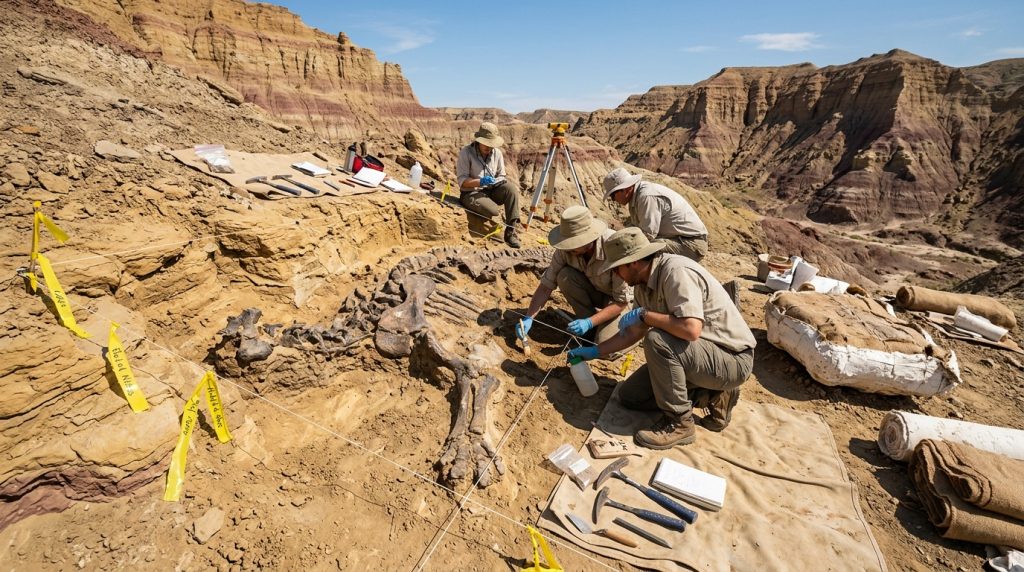
Responsible scientific reporting requires careful distinction between what was physically dug from the ground and what is reconstructed based on anatomical relatives. Specimen MPM-PV-23106-A (accessioned at the Museo Regional Provincial Padre Manuel Jesús Molina in Río Gallegos) serves as the primary holotype. The known fossil material comprises:
- Holotype Vertebra (MPM-PV-23106-A): A beautifully preserved cervical-dorsal transition vertebra. The centrum features dramatic lateral pneumatic excavations (pleurocoels) that connected to respiratory air sacs in life, making the bone exceptionally lightweight yet mechanically resilient.
- Associated Material: Found in direct spatial association with the holotype vertebra were three pedal phalanges (toe bones) and five diagnostic teeth.
- Referred Specimens: Additional elements from the Chorrillo Formation attributed to the taxon include a left pedal phalanx (MPM-PV-22876), an isolated pedal ungual (sickle claw of digit II), shed teeth, and a dorsal vertebral centrum previously thought to belong to a megaraptoran theropod.
Although an entire articulated skeleton was not recovered, these elements preserve unmistakable unenlagiid autapomorphies (unique anatomical hallmarks). In theropod paleontology, vertebral pneumatization patterns and tooth morphology are among the most phylogenetically informative markers in the entire skeleton.
5. Anatomy of a Piscivore: The ‘Heron Dinosaur’ Hypothesis
Why did Dr. Motta and his coauthors compare Kank australis to a modern heron? The conclusion stems directly from two interlocking anatomical systems: the cervical column and the dentition.
First, the cervical vertebrae of Kank exhibit elongated centra and specialized articular processes that permitted extreme vertical flexion while limiting lateral twisting. In living birds, this specific osteology allows herons and egrets to fold their long necks into a tight “S” shape and then suddenly catapult the head forward with blinding speed to impale or seize fish underwater. The biomechanics of Kank’s neck strongly suggest an identical spring-loaded striking mechanism.
Second, the teeth recovered from the Chorrillo Formation are completely devoid of denticles (the serrations found in meat-eating theropods). Instead, each tooth is:
- Conical, slender, and slightly recurved backwards.
- Labiolingually compressed with distinct longitudinal apicobasal ridges (flutes) running along the enamel crown.
- Smooth on the anterior and posterior carinae (cutting edges).
In aquatic predators—from spinosaurid dinosaurs and marine reptiles to modern piscivorous crocodilians—conical, fluted, unserrated teeth serve a singular function: piercing and trapping wet, slippery prey without letting it slide free. A serrated tooth is built to saw through muscle and hide; an unserrated, grooved tooth is built to hold wriggling fish.
Standing approximately 1 meter tall at the hips, measuring 2.5 to 3.0 meters in total length, and weighing roughly 35 to 50 kilograms, Kank would have stalked the gravel shallows on long, slender legs, peering into clear river pools before striking with deadly, rapid precision.
6. The Chorrillo Ecosystem: Who Else Lived in Late Cretaceous Patagonia?
Kank australis was not hunting in isolation. The Chorrillo Formation preserves an astonishingly diverse high-latitude ecosystem that paints a vivid picture of southern Gondwana on the eve of extinction:
- Colossal Herbivores: The river valleys were roamed by Nullotitan glaciaris, a colossal titanosaurian sauropod measuring over 25 meters in length, and herds of the basal iguanodontian ornithopod Isasicursor santacrucensis.
- Apex Predators: The supreme terrestrial carnivore of the ecosystem was not a tyrannosaur, but the terrifying megaraptoran Maip macrothorax—a 9-meter apex predator armed with massive muscular arms and 35-centimeter hand claws that dominated open dry ground.
- Aquatic Prey Base: The rivers teemed with large dipnoan lungfish, lepisosteid gars, sideneck freshwater turtles, and frogs, providing an abundant and continuous buffet for specialized shoreline piscivores like Kank.
- Coexisting Paravians: Small unenlagiid and alvarezsaurid theropods foraged in the underbrush, alongside primitive mammals like the gondwanatherian Magallanodon.
In this crowded Late Cretaceous theater, Kank avoided direct competition with titanic megaraptorans by occupying a distinct ecological niche: the river’s edge. By exploiting aquatic food sources that heavy terrestrial carnivores could not easily catch, Kank thrived in a specialized predatory guild.
7. Evolutionary & Biogeographical Significance: The Antarctic Connection
Beyond its feeding habits, Kank australis carries profound evolutionary significance for paleobiogeography. For decades, the fossil record of unenlagiid theropods was concentrated almost entirely in northern and central Patagonia—in the Neuquén and Río Negro basins—dominated by mid-Cretaceous forms like Buitreraptor (Turonian, ~90 Ma) and Unenlagia (Cenomanian, ~93 Ma).
Meanwhile, thousands of kilometers to the south, paleontologists exploring the frozen coastlines of the Antarctic Peninsula (such as Seymour Island’s Maastrichtian Cape Lamb Member) had discovered isolated paravian teeth and fragmentary limb bones that hinted at the presence of bird-like theropods near the South Pole, but lacked identifiable genera.
The Southern Bridge: Unenlagiids at the End of the Mesozoic
Kank australis provides the definitive missing geographic and temporal stepping stone. Discovered at 50° South latitude in Santa Cruz Province and dated to ~70–68 Ma, it demonstrates that unenlagiids were not confined to warm northern basins, nor did they decline as the Cretaceous progressed. Instead, they thrived in cool-temperate sub-Antarctic environments, likely maintaining a contiguous faunal corridor between Patagonia and Antarctica via the then-connected Antarctic Peninsula land bridge.
8. What Scientists Still Do Not Know
Rigorous science is grounded in acknowledging limits. In the case of Kank australis, several key anatomical and biological questions await future fossil discoveries:
- Complete Skull Morphology: Because only isolated teeth and fragmentary cranial bits are known, the exact rostral length, cranial cresting (if any), and braincase volume remain inferences based on relatives like Buitreraptor.
- Forelimb Proportions: While unenlagiids like Unenlagia and Buitreraptor possessed relatively long, wing-like forelimbs, giant relatives like Austroraptor evolved strangely reduced arms. Whether Kank retained long avian wings or had begun reducing its forelimbs is unknown.
- Direct Integumentary Evidence: The fluvial sandstones of the Chorrillo Formation did not preserve feather impressions. While phylogenetic brackets within Paraves make pennaceous plumage almost certain, the exact feather colors, crest feathers, or wing plumage cannot be verified from bone alone.
- Dietary Breadth: While the neck and teeth indicate fish-eating, modern herons are opportunistic generalists that also consume frogs, snakes, small mammals, and crustaceans. Future isotopic or coprolite analyses will be needed to measure the exact ratio of aquatic vs. terrestrial food in Kank’s diet.
9. What Most People Get Wrong About Kank australis
? Misconception 1: “It was a pack-hunting Velociraptor clone.”
The Reality: Kank belongs to the Unenlagiidae, a southern paravian lineage that diverged tens of millions of years earlier. With its elongated wading neck and toothless-looking fluted dental battery, it lived as a solitary riverside fisher, not a pack hunter tackling large ceratopsians.
? Misconception 2: “Raptor means modern bird of prey.”
The Reality: In modern zoology, “raptors” are diurnal birds of prey (hawks, eagles, falcons). In paleontology, “raptor” is an informal colloquialism applied to paravian theropods with curved sickle claws. Kank did not fly, nor did it swoop down from the skies.
? Misconception 3: “Paleontologists found a complete mummified skeleton.”
The Reality: The discovery consists of a diagnostic holotype vertebra (MPM-PV-23106-A) accompanied by associated toe bones, teeth, and an isolated sickle claw. Full-body reconstructions are based on rigorous anatomical comparisons with related unenlagiids.
? Misconception 4: “Unenlagiids died out long before the asteroid hit.”
The Reality: The presence of Kank in the Maastrichtian Chorrillo Formation (~70–68 Ma) demonstrates that unenlagiids were thriving right up to the boundary of the end-Cretaceous mass extinction event.
10. Frequently Asked Questions
What kind of dinosaur is Kank australis?
Kank australis is a species of unenlagiid theropod dinosaur—a slender, bird-like predatory paravian related to dromaeosaurids. It lived in southwestern Patagonia during the Late Cretaceous period approximately 70 to 68 million years ago.
Why is Kank australis nicknamed the ‘Heron Raptor’?
Researchers nicknamed it after modern herons because of its specialized neck vertebrae, which allowed it to fold its neck into an S-curve and catapult its head forward to snap up fish. This hunting method, combined with unserrated fluted teeth, indicates a lifestyle centered around wading in shallow rivers and ambushing aquatic prey.
Where was Kank australis discovered?
The fossils were discovered at Estancia La Anita, southwest of the city of El Calafate in Santa Cruz Province, southern Patagonia, Argentina. They were recovered from the Maastrichtian-aged Chorrillo Formation.
How big was Kank australis?
Kank australis is estimated to have measured between 2.5 and 3.0 meters (8.2 to 10 feet) in total length, standing about 1 meter tall at the hips with an estimated live weight of 35 to 50 kilograms (77 to 110 pounds).
What does the name Kank mean?
In the mythology of the indigenous Aonikenk (Tehuelche) people of Patagonia, “Kank” is the elder Rhea bird whose footsteps formed the Southern Cross constellation. The species name australis means “southern” in Latin, referring to its discovery in southern Patagonia.
11. Final Takeaway: The Forgotten Reign of Southern Paravians
The discovery of Kank australis is a timely reminder that the prehistoric world was far more ecologically diverse than conventional dinosaur tropes suggest. While northern continents produced famous sickle-clawed predators like Velociraptor, the southern continents of Gondwana fostered an entirely distinct lineage of long-necked, fish-striking shoreline hunters that perfected their craft over tens of millions of years.
By tracking down these delicate, air-filled bones in the remote badlands of Santa Cruz Province, Argentine paleontologists have not only honored the indigenous lore of Patagonia, but also illuminated the vibrant river ecosystems that flourished at the very edge of the world just before the Mesozoic came to an end.
Explore the Age of Dinosaurs Encyclopedia
Compare theropods in our interactive comparison engine, journey through deep time on our geological timeline, or explore other South American fossil giants.
Scientific Sources & Peer-Reviewed Literature

Referenced Dinosaur Species 3 species
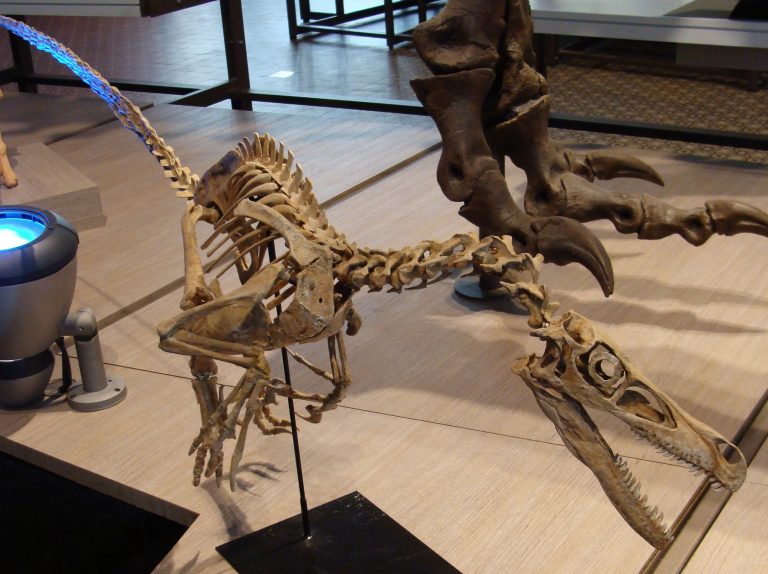
Velociraptor mongoliensis
Velociraptor mongoliensis
A turkey-sized feathered dromaeosaurid predator of the Gobi Desert, renowned for its hyperextensible sickle-shaped second toe claw and acute binocular hunting vision.
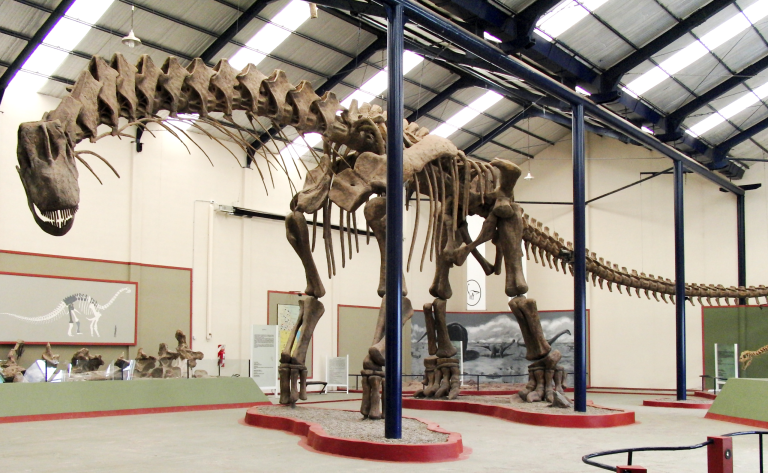
Argentinosaurus huinculensis
Argentinosaurus huinculensis
One of the largest land animals in Earth history, this colossal titanosaur shook the Cretaceous plains of South America with dorsal vertebrae measuring over 1.5 meters high.
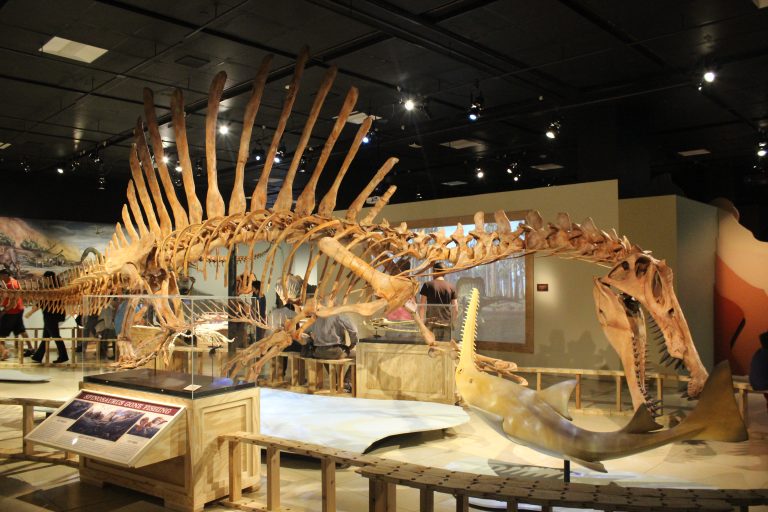
Spinosaurus aegyptiacus
Spinosaurus aegyptiacus
A colossal semi-aquatic predatory theropod equipped with a massive dorsal neural sail, crocodyliform snout, and paddle-like tail adapted for pursuing giant Cretaceous fish.
Related Paleontological Dispatches
Dinosaur News This Month: What Paleontologists Just Announced
Welcome to the October 2026 edition of Paleontological Dispatches, your curated, scientifically verified monthly roundup of what researchers…
The 10 Biggest Dinosaur Discoveries of the Last 5 Years
The last five years (2021–2026) represent one of the most prolific and intellectually transformative golden ages in the…

Why It Can Take 20 Years to Name a New Dinosaur
Whenever headlines announce that paleontologists have unveiled a spectacular new dinosaur species, the public naturally envisions a researcher…