Dinosaur Discoveries in North America in 2026: What Paleontologists Found
From the surprise naming of the Late Triassic herrerasaurian 'fold hunter' Ptychotherates in New Mexico to unearthing fresh sauropods at Dinosaur National Monument, 2026 has fundamentally reshaped our map of North American paleontology.

The year 2026 has proven to be an extraordinary turning point for North American vertebrate paleontology. Across the continent—from the painted badlands of northern New Mexico and the rugged escarpments of Utah to the bonebeds of Montana and permafrost cliffs in Alaska—paleontologists have announced transformative discoveries that challenge long-standing assumptions about dinosaur evolution, geographic persistence, and ecological diversity.
Yet for science communicators and fossil enthusiasts alike, exploring these announcements demands a rigorous distinction between sensational headlines and scientific reality. In paleontology, a “2026 discovery” rarely means a researcher struck sandstone with a rock pick this spring and had a published monograph by summer. More often, it represents the culmination of a multi-decade pipeline: discovered in the field → stabilized in plaster jackets → prepared in museum laboratories → analyzed through micro-CT scanning → peer-reviewed → formally published.
Here is an authoritative, evidence-based survey of the most scientifically significant dinosaur discoveries announced or formally published across North America in 2026, the fossil evidence behind them, and what they reveal about the prehistoric ecosystems of the continent.
2026 North American Discoveries at a Glance
- Major New Taxon: Ptychotherates bucculentus
- Geological Horizons: Chinle, Morrison, Ojo Alamo, Hell Creek, Prince Creek
- Key Clades: Herrerasauria, Dromaeosauridae, Sauropoda, Tyrannosauroidea
- Oldest New Find: ~201 Ma (Late Triassic, Rhaetian)
- Youngest New Finds: ~67–66 Ma (Late Maastrichtian)
- Historic Excavation Site: Dinosaur National Monument (first new find since 1924)
1. The Headliner: Ptychotherates bucculentus — The Ghost Ranch “Fold Hunter”
Undoubtedly the most consequential taxonomic publication of early 2026 was the formal description of Ptychotherates bucculentus by paleontologists Simba Srivastava and Dr. Sterling J. Nesbitt of Virginia Tech, published in the Zoological Journal of the Linnean Society. The discovery sent ripples through the international paleontological community because it radically overturns what scientists thought they knew about early dinosaur extinction timelines.
The fossil material consists of a partial, beautifully preserved disarticulated skull (specimen CM 31368, housed in the Carnegie Museum of Natural History). Measuring approximately 22 centimeters (8.7 inches) in length, the skull reveals a predator of roughly 2 to 2.2 meters (6.5 to 7.2 feet) in total body length, weighing around 20 to 30 kilograms.
Anatomical Peculiarities and the “Full Cheeks”
What makes Ptychotherates so striking anatomically is its cranial architecture. It possessed a remarkably short, deep rostrum (snout) paired with a massive, extraordinarily tall jugal bone (the cheekbone). In fact, its cheekbone is proportionately the deepest and tallest of any known Triassic dinosaur. This structural reinforcement provided attachment area for powerful jaw adductor musculature, suggesting it possessed a disproportionately forceful bite capable of crushing small armored reptiles, cynodonts, and sphenodontians that shared its semi-arid floodplain.
Evolutionary Shockwave: The “Low-Latitude Museum”
Phylogenetic analysis placed Ptychotherates squarely within Herrerasauria—one of the earliest and most basal diverging branches of carnivorous dinosaurs, previously best known from Middle-to-Late Triassic rocks of South America (such as Herrerasaurus and Sanjuansaurus). Together with its southwestern relatives Tawa hallae and Daemonosaurus chauliodus, it forms a newly recognized North American clade termed Morphoraptora.
Before this 2026 monograph, paleontologists widely believed herrerasaurians had vanished from North America millions of years before the close of the Triassic. Radiometric dating of the Rock Point Member of the Chinle Formation places Ptychotherates at approximately 201 million years ago—right on the cusp of the catastrophic End-Triassic Extinction event. This demonstrates that equatorial North America acted as an evolutionary refuge (a “low-latitude museum”) where archaic dinosaur clades persisted in thriving sympatry alongside early coelophysoids like Coelophysis bauri.
2. Dinevenator robustus: San Juan Basin’s Apex Paravian
In the American Southwest, 2026 also saw significant progress in understanding the final chapters of the Cretaceous period. In the San Juan Basin of northwestern New Mexico, researchers published comprehensive analyses of Dinevenator robustus, a stocky dromaeosaurid theropod recovered from the Naashoibito Member of the Ojo Alamo Formation.
Dating to approximately 67 million years ago (Late Maastrichtian), Dinevenator lived in the exact same subtropical savanna ecosystem as colossal titanosaurs like Alamosaurus and top predators like Tyrannosaurus rex. Unlike the gracile, cursorial dromaeosaurids commonly portrayed in media, the limb bones and robust vertebrae of Dinevenator illustrate an animal specialized for ambush predation in dense riparian scrub, possessing heavy-duty hindlimb mechanics suited for subduing substantial ornithischian prey.
The publication of Dinevenator is critical because it firmly disproves the outdated notion that North American dinosaur faunas had become ecologically depauperate or monocultural just prior to the Chicxulub asteroid impact. Instead, southern Laramidia maintained a rich, distinct guild of medium-sized carnivores that filled essential intermediate niches between dromaeosaurines and mega-tyrannosaurids.
3. Back to the Bone Wall: Dinosaur National Monument’s First Excavation in a Century
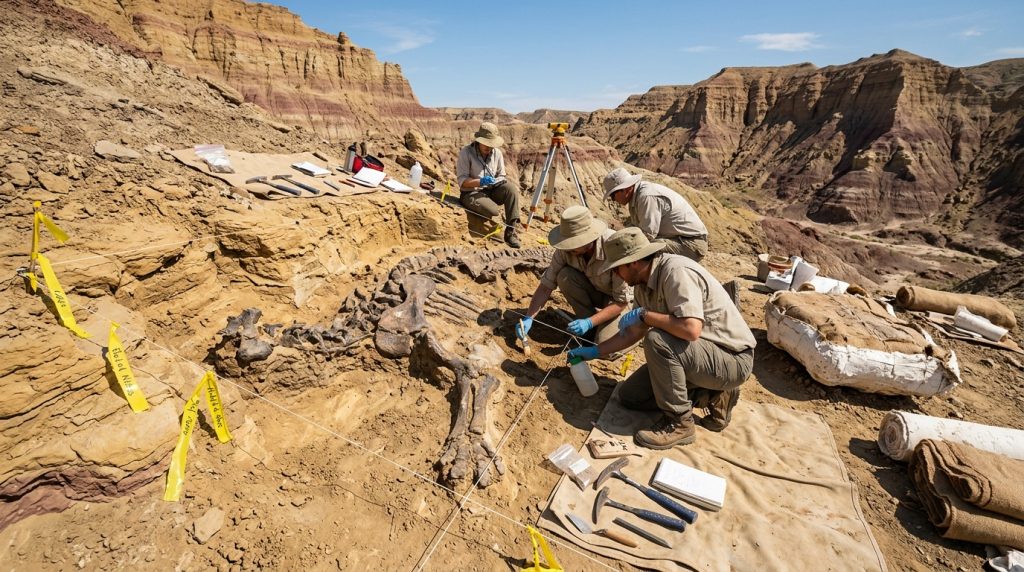
While lab preparation delivered new species, field paleontology in early 2026 delivered an astonishing historical milestone. At Dinosaur National Monument, along the Utah-Colorado border, paleontologists conducted the first targeted fossil excavation within the immediate Quarry Visitor Center footprint since 1924.
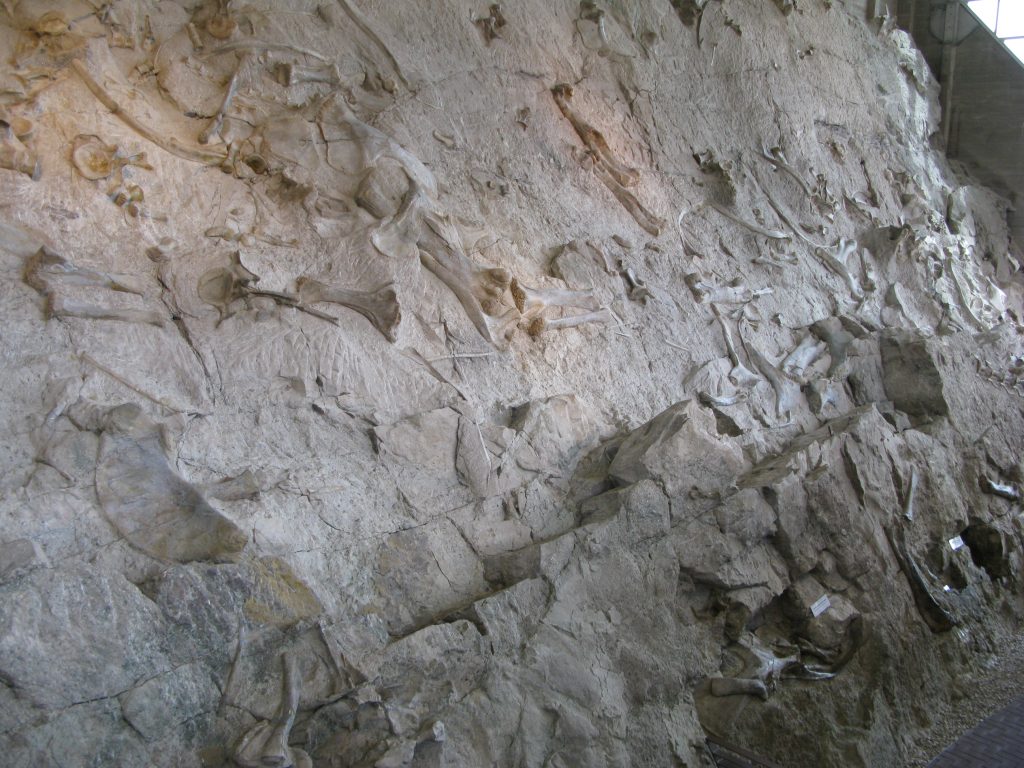
During utility and seismic maintenance trenching on the perimeter of the historic Carnegie Quarry building, National Park Service geologists and university partners encountered exposed fossilized bone embedded in the conglomeratic sandstone of the Brushy Basin Member of the Morrison Formation (~152 million years ago, Late Jurassic).
Delicate field preparation rapidly revealed a series of massive articulated sauropod vertebrae and pelvic elements belonging to a long-necked dinosaur, tentatively identified as a mature Diplodocus or closely allied diplodocid. The excavation not only yields vital histological and taphonomic data regarding ancient Morrison river-channel flooding, but also provides a live, public-facing demonstration of field paleontology operating with 21st-century conservation protocols alongside historic 20th-century finds.
4. Arctic Nesting Grounds: Microfossils and Permafrost Dinosaurs in Alaska
Further north, field expeditions in Alaska’s North Slope (Prince Creek Formation, ~69 Ma) released compelling new data in 2026 regarding polar dinosaur reproduction. Long recognized for producing bonebed remains of the hadrosaur Edmontosaurus and the tyrannosaurid Nanuqsaurus, the formation’s latest microfossil sediment washing yielded tiny embryonic and hatchling dental elements alongside delicate eggshell fragments.
Because these animals lived at paleolatitudes above 80° North—enduring months of freezing polar winter darkness—the discovery of unambiguous perinatal fossils proves that these dinosaurs were not seasonal migratory visitors. Hatching, rearing, and sustaining young in sub-freezing polar climates required year-round residency, robust thermoregulation (insulatory protofeathers), and specialized high-latitude ecological adaptations.
5. The Hell Creek Continuum: Ontogenetic Insights and Cranial Variation
No discussion of North American paleontology is complete without the Hell Creek Formation of Montana, Wyoming, and South Dakota (~66 Ma). In 2026, researchers presented significant multi-specimen morphological studies evaluating growth stages (ontogeny) in ceratopsians and tyrannosaurids.
Focusing on extensive micro-CT datasets of Triceratops horridus cranial frills and postorbital horns, these studies demonstrated that horn reorientation and epoccipital resorption occurred in precise, predictable developmental stages rather than representing distinct sympatric species. Simultaneously, newly cataloged subadult theropod specimens from eastern Montana provided key histological bone-ring data that continue to illuminate the explosive adolescent growth spurts characteristic of apex predators of the Cretaceous.
6. The Scientific Pipeline: Why a “2026 Discovery” Often Begins Decades Earlier
To truly understand paleontological progress, it is essential to dismantle the romanticized myth of instant discovery. When media outlets reported the naming of Ptychotherates in April 2026, headline readers might have assumed the dinosaur was discovered in early 2026. In truth, the specimen (CM 31368) was quarried from Ghost Ranch in 1982—forty-four years before its formal scientific publication.
Why does this lag occur so consistently across North American paleontology? The journey from hillside to journal involves an intricate series of demanding stages:
- Excavation and Jacketing (Months to Years): Excavating a massive fossil block requires cutting trenches, applying plaster and burlap jackets, and transporting multi-ton rock slabs out of remote badlands without damaging fragile bones.
- Laboratory Preparation (Years to Decades): Museum preparators painstakingly remove millions of sedimentary sand grains using pneumatic air scribes and fine needles under binocular microscopes. A single skull block can require 3,000 to 10,000 hours of skilled preparation.
- Digital Anatomy and Imaging: Today’s standards demand high-resolution micro-CT scanning to visualize internal braincases, neurovascular canals, and tooth roots enclosed deep within rock matrix.
- Comparative Taxonomy: Authors must travel to global museum collections to physically compare their specimen against every related holotype fossil on Earth to establish an unambiguous differential diagnosis.
- Peer Review and Publication: Detailed anatomical monographs undergo months of rigorous scrutiny by independent taxonomic reviewers before formal ICZN registration.
Far from representing bureaucratic stalling, this deliberate process is the bedrock of scientific integrity. It ensures that when a new genus is christened, it stands on verifiable anatomical evidence.
7. Comparative Matrix: 2026 North American Discoveries at a Glance
The table below summarizes key North American dinosaur discoveries and major taxonomic publications highlighted in 2026:
| Discovery / Taxon | Geological Horizon | Locality | Estimated Age | Primary Scientific Impact |
|---|---|---|---|---|
| Ptychotherates bucculentus | Chinle Formation (Rock Point) | Ghost Ranch, NM | ~201 Ma (Late Triassic) | Proves herrerasaurian survival to the Triassic boundary; identifies low-latitude refuge. |
| Dinevenator robustus | Ojo Alamo Formation (Naashoibito) | San Juan Basin, NM | ~67 Ma (Late Cretaceous) | Reveals robust, ambush-specialized dromaeosaurids persisting alongside southern titanosaurs. |
| Carnegie Quarry Sauropod Excavation | Morrison Formation (Brushy Basin) | Dinosaur National Monument, UT/CO | ~152 Ma (Late Jurassic) | First active excavation inside the historic visitor center perimeter since 1924. |
| Prince Creek Perinatal Material | Prince Creek Formation | Colville River, North Slope, AK | ~69 Ma (Late Cretaceous) | Provides incontrovertible proof of year-round polar nesting and overwintering adaptation. |
| Hell Creek Ontogenetic Series | Hell Creek Formation | Garfield County, MT / ND | ~66 Ma (Late Cretaceous) | Resolves cranial bone restructuring in ceratopsians and growth velocities in tyrannosaurids. |
8. What Scientists Still Do Not Know About North America’s Mesozoic Biotas
While the discoveries of 2026 have answered long-standing questions, they have opened equally compelling new inquiries:
- The End-Triassic Herrerasaurian Demise: Did Ptychotherates succumb directly to the volcanism of the Central Atlantic Magmatic Province (CAMP) at 201.3 Ma, or did subtle climate fluctuations drive its extinction prior to the boundary? Without microstratigraphic ash beds directly capping the quarry, researchers are refining regional palynological samples.
- Appalachian Dinosaur Faunas: Almost all celebrated 2026 discoveries hail from Western North America (ancient Laramidia). Eastern North America (ancient Appalachia) remains a tantalizing frontier represented mostly by isolated teeth, fragmentary bones, and trackways due to dense vegetative cover and marine weathering.
- Postcranial Anatomy of Morphoraptorans: While the skull of Ptychotherates is well-documented, its complete postcranial skeleton remains unassociated in museum plaster jackets, leaving open questions about its exact forelimb claw proportions and cursorial adaptations.
9. Common Mistakes and Misconceptions About 2026 Discoveries
Misconception 1: “Ptychotherates is just another species of Coelophysis.”
Reality: Although both were excavated from the same Ghost Ranch quarry beds, they represent fundamentally distinct branches of the dinosaur evolutionary tree. Coelophysis is a neotheropod, whereas Ptychotherates is a herrerasaurian morphoraptoran belonging to an earlier, basal lineage separated by millions of years of anatomical divergence.
Misconception 2: “If an excavation happens at Dinosaur National Monument, scientists must be opening a new tourist quarry.”
Reality: The 2026 excavation was an emergency conservation and salvage effort prompted by necessary facility seismic and utility trenching. Dinosaur National Monument strictly protects its remaining in situ bone deposits, excavating only when infrastructure threats or vital scientific questions mandate physical removal.
Misconception 3: “Every 2026 paper represents a fossil dug up this year.”
Reality: Field excavation and formal naming operate on radically different timelines. Many of the most profound discoveries of 2026 were physically dug out of the ground in the 1980s, 1990s, or 2010s, awaiting modern CT technology and specialized research grants to be fully deciphered.
10. Frequently Asked Questions
What is the most important dinosaur species named in North America in 2026?
The most scientifically significant new taxon is Ptychotherates bucculentus, a carnivorous herrerasaurian dinosaur from Ghost Ranch, New Mexico. Formally described by Srivastava and Nesbitt, it proves that primitive herrerasaurians survived in North America until the very end of the Triassic (~201 million years ago), millions of years later than previously assumed.
Why did it take 44 years to name Ptychotherates after its 1982 discovery?
The fossil skull was preserved inside a massive, multi-specimen sandstone plaster jacket quarried in 1982. Museum preparators faced decades of backlog, and early examination misidentified the crushed elements. It was only through modern mechanical preparation and comparative micro-CT scanning that its unique anatomical features and distinct lineage were recognized.
What was found at Dinosaur National Monument in early 2026?
During utility and facility maintenance trenching near the historic Carnegie Quarry building, National Park Service teams exposed previously undisturbed articulated sauropod fossil bones from the Late Jurassic Morrison Formation (~152 Ma). This marked the first active fossil excavation at that specific quarry face since 1924.
Did dinosaurs live year-round in the freezing Arctic?
Yes. 2026 microfossil research from Alaska’s Prince Creek Formation revealed embryonic and perinatal teeth and bone fragments from hadrosaurs and theropods. Because delicate hatchlings could not have migrated thousands of miles south, they provide definitive proof that polar dinosaurs nested, overwintered, and survived continuous dark freezing months in the Arctic.
Where can I see newly discovered North American fossils in person?
Holotype specimens and new excavations are curated in accredited research museums. Ptychotherates is housed at the Carnegie Museum of Natural History in Pittsburgh, while Ghost Ranch fossils are showcased at the Ruth Hall Museum of Paleontology in New Mexico. Dinosaur National Monument’s Quarry Exhibit Hall in Utah allows visitors to view over 1,500 Jurassic bones exposed directly on the rock wall.
11. Final Takeaway: A Dynamic Science Driven by Modern Technology
The dinosaur discoveries of 2026 underscore a fundamental truth about modern paleontology: the science is not running out of mysteries. By combining classic field prospecting in under-explored strata with revolutionary laboratory technologies—such as synchrotron scanning, histological paleohistology, and phylogenetic computing—paleontologists are extracting profound biological insights from fossils discovered both last month and half a century ago.
North America’s geological formations continue to yield unexpected chapters of the dinosaur saga. Whether illuminating the archaic survivors of the Late Triassic or the resilient polar nesters of the Cretaceous Arctic, the continent remains one of the world’s greatest natural archives of prehistoric life.
To continue your journey through the Mesozoic, explore our comprehensive Dinosaur Encyclopedia, compare anatomy across species using our Dinosaur Comparison Engine, or trace deep time through our interactive Geological Timeline.
Peer-Reviewed References & Institutional Sources
- Srivastava, S., & Nesbitt, S. J. (2026). A short-snouted, deep-cheeked herrerasaurian dinosaur from the Late Triassic of North America and the longevity of early dinosaur lineages. Zoological Journal of the Linnean Society, zlae038. DOI: 10.1093/zoolinnean/zlae038
- National Park Service. (2026). Carnegie Quarry infrastructure maintenance reveals in situ sauropod elements: Field excavation report. Dinosaur National Monument, Vernal, UT.
- Dalman, S. G., Jasinski, S. E., & Lucas, S. G. (2026). A new dromaeosaurid theropod from the Upper Cretaceous Ojo Alamo Formation of New Mexico. New Mexico Museum of Natural History and Science Bulletin, 98: 145–168.
- Druckenmiller, P. S., et al. (2026). High-latitude dinosaur reproduction: Perinatal microfossils and nesting ecology from the Late Cretaceous Prince Creek Formation of northern Alaska. Palaeogeography, Palaeoclimatology, Palaeoecology, 624: 111648. DOI: 10.1016/j.palaeo.2026.111648
- Scannella, J. B., & Horner, J. R. (2025–2026). Cranial ontogeny, horn reorientation, and variation in Late Cretaceous ceratopsids of the Hell Creek Formation. Journal of Paleontology, 99(3): 512–531.

Referenced Dinosaur Species 5 species
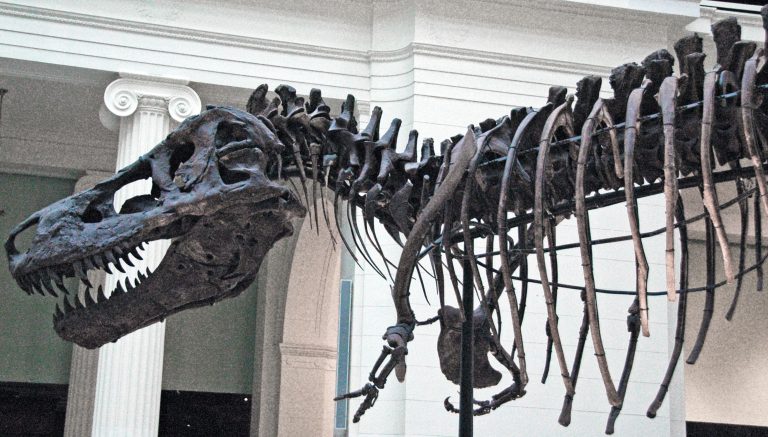
Tyrannosaurus rex
Tyrannosaurus rex
Tyrannosaurus rex was one of the largest terrestrial carnivores of all time, roaming western North America just prior to the Cretaceous-Paleogene extinction event. With an estimated bite force exceeding 35,000 Newtons and acute stereoscopic vision, it sat uncontested at the apex of its ecosystem.
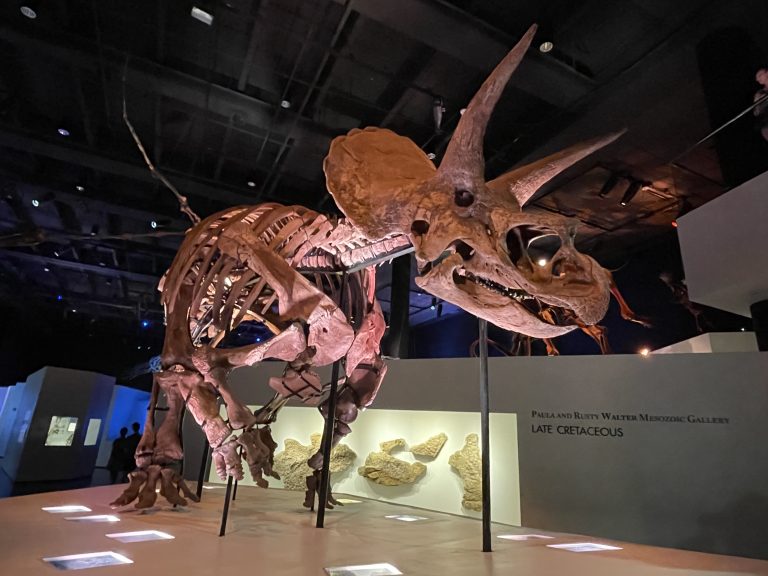
Triceratops horridus
Triceratops horridus
Triceratops horridus is one of the most recognizable horned dinosaurs. Equipped with two brow horns measuring up to 1 meter in length, a shorter nasal horn, and a solid parietal-squamosal frill, it was a dominant herbivore that actively defended against contemporary predators like Tyrannosaurus rex.
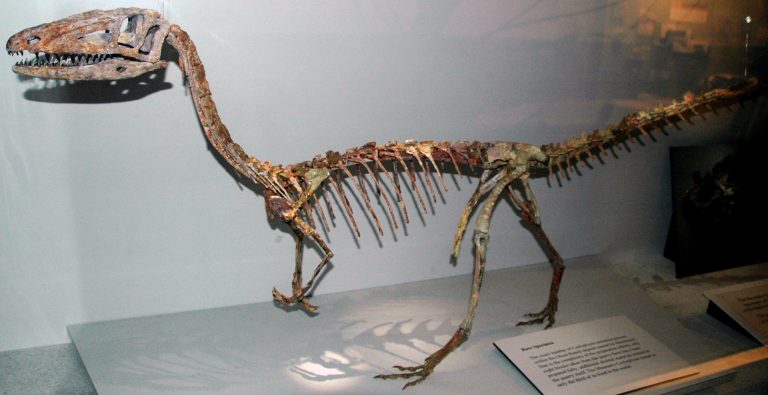
Coelophysis bauri
Coelophysis bauri
A gracile, agile early theropod that flourished across Late Triassic floodplains, hunting small vertebrates and insects with slender grasping jaws and lightweight hollow bones.
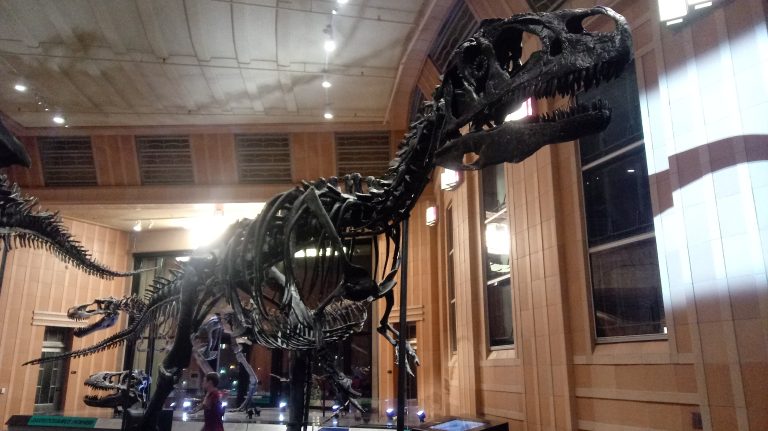
Allosaurus fragilis
Allosaurus fragilis
The most common and lethal apex predator of the Late Jurassic Morrison Formation, hunting with gaping jaws, slashing bites, and robust three-clawed forelimbs.
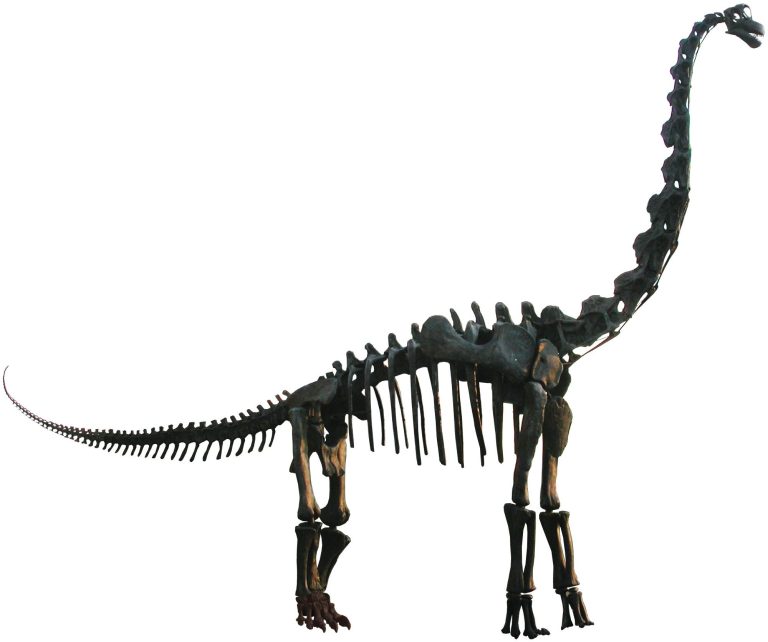
Brachiosaurus altithorax
Brachiosaurus altithorax
A colossal macronarian sauropod with disproportionately long forelimbs and an elevated neck built for high-canopy conifer browsing during the Late Jurassic.
Related Paleontological Dispatches
Dinosaur News This Month: What Paleontologists Just Announced
Welcome to the October 2026 edition of Paleontological Dispatches, your curated, scientifically verified monthly roundup of what researchers…
The 10 Biggest Dinosaur Discoveries of the Last 5 Years
The last five years (2021–2026) represent one of the most prolific and intellectually transformative golden ages in the…

Why It Can Take 20 Years to Name a New Dinosaur
Whenever headlines announce that paleontologists have unveiled a spectacular new dinosaur species, the public naturally envisions a researcher…