Diplodocus: How Long Was This Whip-Tailed Giant?
A scientific investigation into the true dimensions of Diplodocus: dissecting the 24-to-33-meter length estimates, the Seismosaurus synonymy, and the physics of its iconic whiplash tail.
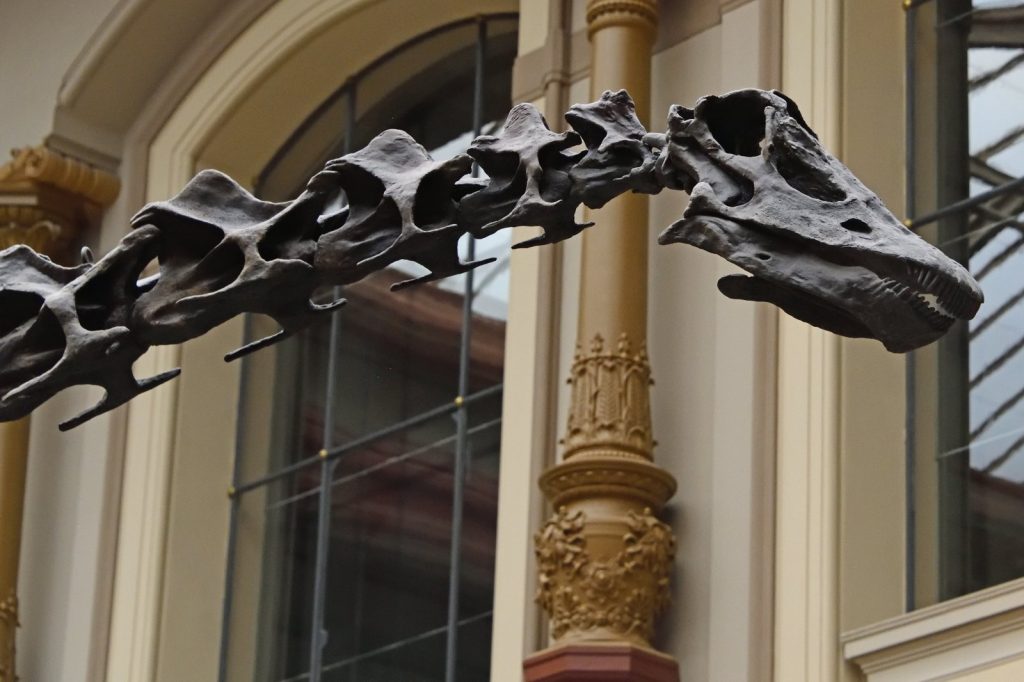
Among all the colossal dinosaurs unearthed from the Late Jurassic rock strata of western North America, Diplodocus has long captivated the human imagination as the quintessential long-necked titan. With an ultra-elongated neck counterbalanced by an extraordinarily slender, tapering tail composed of up to 80 vertebrae, Diplodocus achieved lengths that few land animals have ever approached. Yet in popular literature and natural history museums, published length figures for Diplodocus fluctuate wildly—from conservative estimates of 24 meters (79 feet) to sensational claims exceeding 33 meters (108 feet). How long was this whip-tailed giant really? By analyzing complete skeletal holotypes, resolving historical taxonomic misidentifications, and examining modern biomechanical simulations of its whip-like tail, paleontologists can now separate empirical measurements from sensational mythology.
Key Paleontological Takeaways
- Defensible Length Ranges: The classic, well-represented species Diplodocus carnegii reached approximately 24.0 to 26.0 meters (79 to 85 feet). The colossal referred species Diplodocus hallorum (formerly Seismosaurus) reached approximately 30.0 to 33.5 meters (98 to 110 feet).
- The “Seismosaurus” Correction: Original 1991 claims that Seismosaurus reached an astonishing 39 to 52 meters were debunked when anatomical audits revealed vertebrae had been reconstructed out of sequence; restudy proved it was a gigantic individual of Diplodocus.
- Remarkably Lightweight Build: Despite exceeding the length of a tennis court, Diplodocus carnegii was an evolutionary featherweight, weighing only 11.0 to 15.0 metric tons—less than half the mass of a comparable-length Brachiosaurus.
- The Supersonic Tail Myth Debunked: While early 1997 physics models suggested the tail tip could exceed Mach 1 to create a 200-decibel sonic boom, recent 2022 multi-body stress simulations prove that supersonic speeds would rupture living vertebrae and soft tissue; maximum realistic tip speeds reached roughly 33 m/s (~120 km/h).
1. Deconstructing the Length of Diplodocus: Species, Specimens, and Measurements
When asking “how long was Diplodocus?”, paleontologists must first specify which specimen and species is being measured. Discovered during the intense “Bone Wars” of the late 19th century and formally named by Othniel Charles Marsh in 1878, Diplodocus is known from dozens of fossil discoveries across the Late Jurassic Morrison Formation (dating to roughly 154 to 150 million years ago).
The table below summarizes well-supported scientific measurements across primary Diplodocus specimens and species:
| Taxon / Specimen Designation | Key Fossil Material | Defensible Length Range | Estimated Living Mass | Taxonomic Status |
|---|---|---|---|---|
| Diplodocus carnegii (CM 84, “Dippy”) | Nearly complete articulated skeleton (Sheep Creek, WY) | 24.0 – 26.2 m (79–86 ft) | 11.5 – 14.8 metric tons | Valid, primary benchmark species |
| Diplodocus hallorum (NMMNH P-3690) | Partial postcranial skeleton (Sandoval County, NM) | 30.0 – 33.5 m (98–110 ft) | 20.0 – 25.0 metric tons | Valid species (formerly Seismosaurus) |
| Diplodocus longus (YPM 1920) | Fragmentary caudal vertebrae (Cañon City, CO) | Indeterminate (~24–26 m) | ~12.0 metric tons | Nomen dubium (Tschopp et al., 2015) |
The Dippy Standard: Measuring CM 84
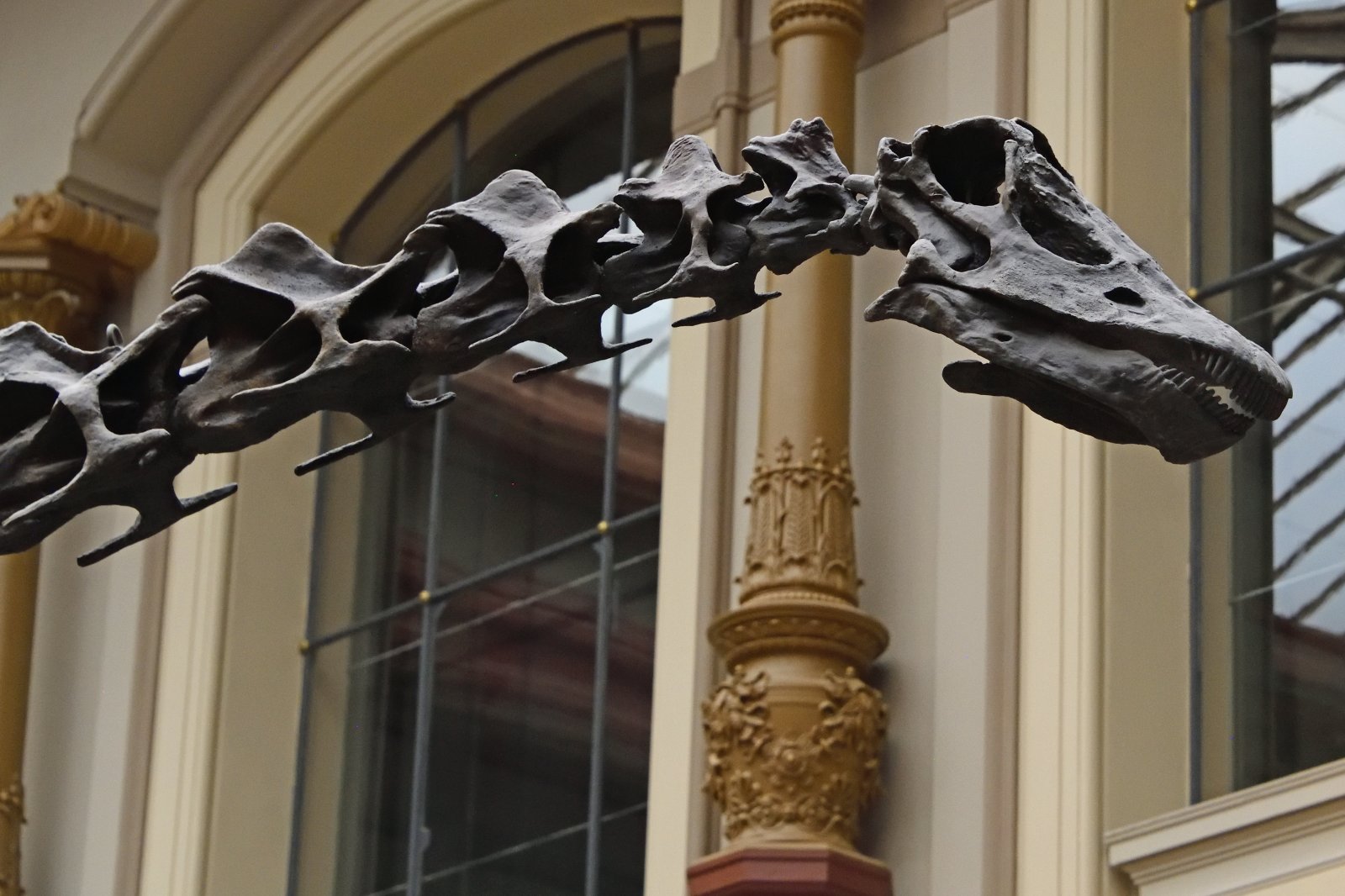
The international benchmark for Diplodocus length is specimen CM 84, excavated in 1899 by the Carnegie Museum of Natural History in Pittsburgh and named Diplodocus carnegii in honor of industrialist Andrew Carnegie. Carnegie commissioned ten plaster casts of this magnificent skeleton and donated them to leading natural history museums across the globe—including London, Berlin, Paris, Vienna, and Madrid—making “Dippy” the most viewed dinosaur skeleton in human history.
When measured along the curvature of the articulated vertebral column, Dippy spans 26.2 meters (86 feet). However, paleontologists emphasize that this measurement includes plaster-reconstructed vertebrae: while CM 84 preserved most of the neck, dorsal column, and proximal tail, its distal whiplash tail was supplemented using elements from other sauropod specimens (such as CM 94). In living diplodocids, intervertebral cartilage discs added another 5{349c590a1c7dba0edd042a8cb051d4ef440ecfe2a9c24e1b0b2c894f80ccce3c} to 8{349c590a1c7dba0edd042a8cb051d4ef440ecfe2a9c24e1b0b2c894f80ccce3c} to the skeletal length, making 25 to 26 meters a rock-solid scientific estimate for mature adults of this species.
The “Seismosaurus” Sensation and Downsizing
In 1991, paleontologist David Gillette described a gigantic sauropod excavated from New Mexico, christening it Seismosaurus halli—the “earth-shaking lizard.” Initial press releases and popular books claimed the animal stretched an astonishing 39 to 52 meters (130 to 170 feet) in total length and weighed up to 100 metric tons, making it the longest vertebrate ever discovered.
However, subsequent detailed anatomical restudies conducted by Spencer Lucas, John Foster, and colleagues in 2004 and 2006 revealed a major taphonomic error: the original excavators had misidentified the position of several caudal vertebrae. Vertebrae numbered 20 to 27 in the tail series had been mistakenly reconstructed as positions 12 to 19. When the vertebrae were placed in their anatomically correct sequence, the artificial elongation vanished. Furthermore, osteological comparisons proved that the specimen was anatomically indistinguishable from Diplodocus, leading to its formal reclassification as Diplodocus hallorum.
Even downsized, Diplodocus hallorum remains an authentic colossus: measuring approximately 30.0 to 33.5 meters (98 to 110 feet), it stands among the longest individual dinosaurs verified by associated fossil skeletal material.
2. The Length vs. Mass Paradox: An Evolutionary Featherweight
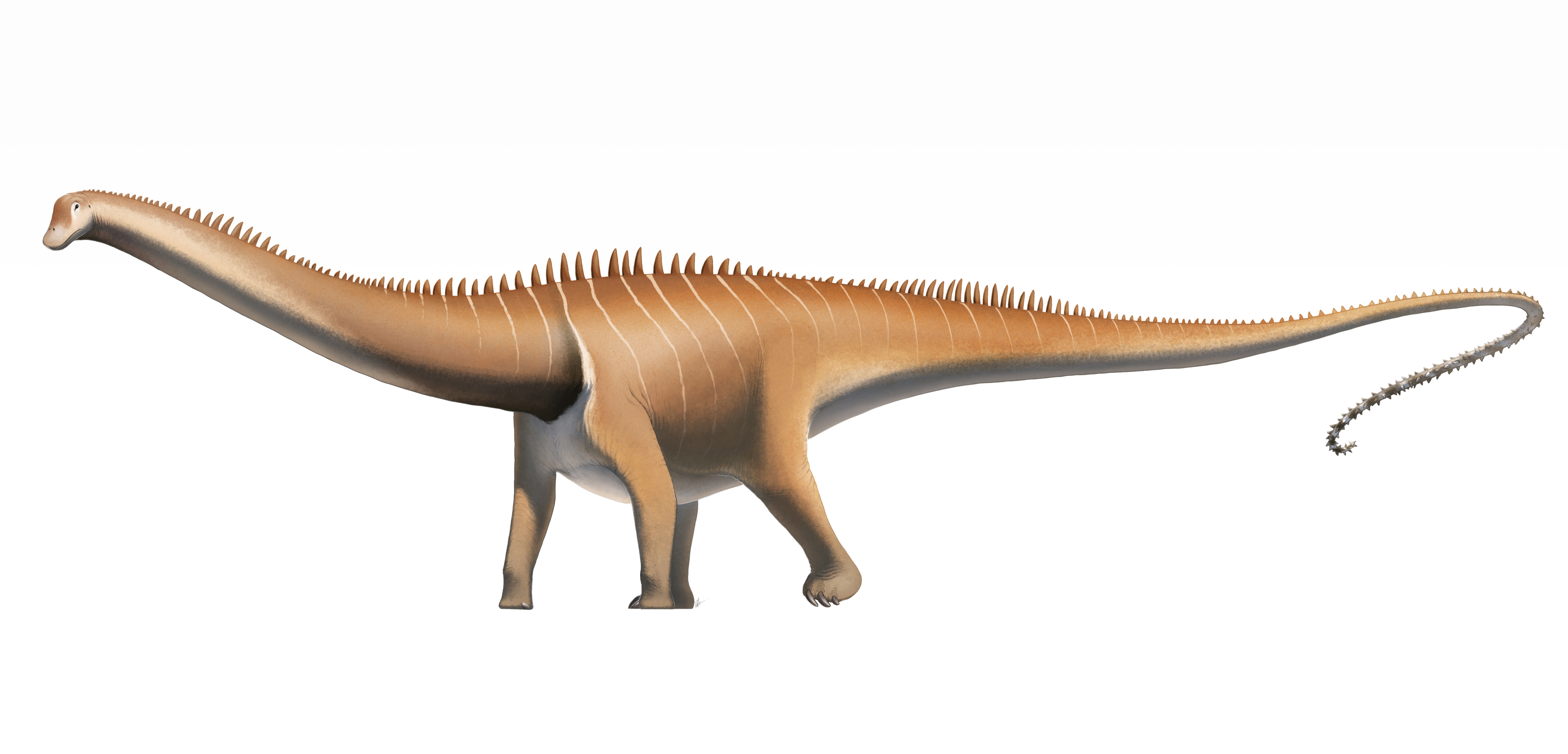
One of the most striking aspects of Diplodocus biology is the dramatic divergence between its linear length and its volumetric body mass. In modern mammals and most dinosaurs, an increase in length results in an exponential cubic increase in weight. Diplodocus completely defied this rule.
Consider a comparison between contemporary Late Jurassic Morrison Formation sauropods:
- Brachiosaurus altithorax: Measures roughly 26 meters in total length—virtually identical to Diplodocus carnegii—yet weighed an estimated 35.0 to 45.0+ metric tons.
- Camarasaurus supremus: Stretched only 15 to 18 meters in length, yet weighed between 18.0 and 22.0 metric tons—significantly heavier than Diplodocus.
- Diplodocus carnegii: At 26 meters in length, rigorous 3D convex hull volumetric modeling (Bates et al., 2016) calculates a body mass of only 11.5 to 14.8 metric tons.
How did Diplodocus achieve such monumental length while remaining so slender? The secret lies in its skeletal architecture. Its neck and torso vertebrae were profoundly excavated by lateral cavities (pleurocoels) and internal pneumatic chambers connected to an avian-style respiratory air-sac system. Its ribcage was relatively narrow, its limb bones were slender and columnar, and more than 60{349c590a1c7dba0edd042a8cb051d4ef440ecfe2a9c24e1b0b2c894f80ccce3c} of its total body length was composed of an extremely thin neck and an ultra-gracile, tapering tail.
3. Anatomy of the Whip Tail: 80 Vertebrae and the Whiplash Tip
The defining anatomical signature of Diplodocus is its extraordinary tail. While many sauropods possessed tails composed of 40 to 50 vertebrae, Diplodocus possessed an astonishing series of 70 to 80 caudal vertebrae, accounting for nearly 13 to 14 meters of the animal’s total length.
A. The “Double Beam” Chevrons
Beneath the middle caudal vertebrae lie specialized Y-shaped bones called chevrons (haemal arches). In Diplodocus, these chevrons possess unique anterior and posterior extensions, forming a skid-like “double beam” profile that inspired O.C. Marsh’s genus name. These double beams served as structural skids, protecting the caudal blood vessels and nerves from being crushed whenever the heavy tail rested on or was dragged across the ground.
B. The Distal Whiplash
Toward the rear third of the tail, the anatomy undergoes a dramatic transformation. The vertebrae lose their neural spines, transverse processes, and chevrons, simplifying into smooth, elongated, cylindrical rods of bone. Connected by tight fibrous ligaments and thin muscular sheaths, the final 30 to 40 vertebrae formed an extremely flexible, whip-like cord measuring only a few centimeters in diameter at the terminal tip.
4. The Supersonic Whip Debate: Sonic Boom Weapon or Biological Impossibility?
In 1997, computer scientist Nathan Myhrvold and paleontologist Philip Currie published an influential paper in Paleobiology proposing that the tail of Diplodocus was capable of supersonic motion. Modeling the tail after a bullwhip, they calculated that a wave traveling down the diminishing mass of the caudal column would accelerate exponentially toward the tip, breaking the sound barrier (>340 m/s / ~1,225 km/h / Mach 1) and generating a thunderous 200-decibel sonic crack.
For two decades, the “supersonic sauropod” hypothesis was widely accepted in popular documentaries and museum exhibits, portrayed as an acoustic weapon used to intimidate predators like Allosaurus or communicate across vast distances.
The 2022 Biomechanical Refutation (Conti et al.)
In 2022, an international team led by Simone Conti published a comprehensive multi-body dynamics and material-stress analysis in Scientific Reports (DOI: 10.1038/s41598-022-21633-2) that conclusively overturned the supersonic hypothesis:
- Tensile Rupture Limits: Unlike a synthetic bullwhip made of braided leather, a dinosaur tail consists of living vertebrae, intervertebral discs, articular cartilage, tendons, and vascularized skin. Conti’s models proved that accelerating the tail tip to supersonic speeds generated rotational stress and tensile forces exceeding 300 MegaPascals—far beyond the structural failure limit of vertebrate bone, ligaments, and skin.
- Catastrophic Disarticulation: Attempting to produce a supersonic crack would have violently disarticulated the distal vertebrae, ripping the tail tip to shreds.
- Realistic Velocity Limits: The realistic maximum tip speed achievable without causing structural tissue failure was calculated at approximately 33 meters per second (roughly 120 km/h or 74 mph).
While 33 m/s is well below the speed of sound, a 13-meter whip swinging at 120 km/h was still a formidable deterrent. Delivering a sharp, stinging blow across the flanks or snout of an approaching Allosaurus, the tail functioned as an effective weapon, while also serving as a tactile probe to maintain spatial awareness within dense sauropod herds.
5. Posture and Feeding: Sweeping the Jurassic Lowlands
Early 20th-century museum mounts frequently posed Diplodocus with its neck arched high in a swan-like vertical curve. Modern functional morphology has thoroughly discarded this depiction.
Studies of Neutral Articular Posture (NAP) conducted by Kent Stevens and J. Michael Parrish (1999) demonstrated that the zygapophyses (interlocking joints) of the cervical vertebrae naturally held the neck in a gentle, downward-sloping or nearly horizontal trajectory. Rather than browsing tree canopies like Brachiosaurus, Diplodocus operated like a colossal vacuum cleaner, sweeping its 6-meter neck across wide horizontal swathes to harvest low-lying ferns, cycads, and horsetails without having to move its massive torso.
Its jaws were fitted exclusively with narrow, pencil-shaped teeth clustered at the front of the snout. Microscopical dental microwear analysis shows horizontal scratching patterns, confirming that Diplodocus did not chew woody branches. Instead, it used its rake-like dentition to strip delicate foliage off conifer stems, swallowing leaves whole to be fermented in its vast digestive tract.
Common Misconceptions About Diplodocus
- Misconception 1: “Diplodocus held its head high in the treetops like a giraffe.”
- The cervical vertebrae of Diplodocus lacked the anatomical flexibility required for sharp vertical elevation. Raising its head high above its shoulders would have severely pinched the cervical joints and required immense cardiovascular blood pressures that its anatomy was not equipped to sustain. It browsed predominantly below 4 to 5 meters.
- Misconception 2: “Seismosaurus was an independent species that measured 50 meters long.”
- As detailed by Lucas et al. (2006), the 50-meter figure was the result of displaced caudal vertebrae during excavation. When corrected, the specimen measured approximately 30 to 33.5 meters and was officially subsumed into the genus Diplodocus as Diplodocus hallorum.
- Misconception 3: “Diplodocus dragged its tail along the ground while walking.”
- In hundreds of preserved sauropod trackways discovered in the Morrison Formation and worldwide, tail-drag impressions are virtually nonexistent. Powerful dorsal tendons and back musculature held the long tail horizontally suspended above the ground to counterbalance the neck during locomotion.
Frequently Asked Questions
How long was Diplodocus?
Adults of the primary species, Diplodocus carnegii, measured between 24.0 and 26.2 meters (79 to 86 feet) long. The larger species, Diplodocus hallorum, reached approximately 30.0 to 33.5 meters (98 to 110 feet) in total length.
Why was Diplodocus so light compared to other sauropods?
Diplodocus had extensive skeletal pneumaticity, meaning its neck and back vertebrae were honeycombed with internal air chambers connected to respiratory air sacs. Additionally, its ribcage was narrow, its legs were slender, and over 60{349c590a1c7dba0edd042a8cb051d4ef440ecfe2a9c24e1b0b2c894f80ccce3c} of its length was composed of a whip-thin neck and tail.
Could the tail of Diplodocus really crack the sound barrier?
No. Recent 2022 biomechanical simulations published in Scientific Reports proved that breaking the sound barrier would generate destructive tensile stress that would shatter vertebrae and tear skin. The tail likely reached top speeds of roughly 33 m/s (120 km/h)—still fast enough to deter predators.
What did Diplodocus eat?
Diplodocus ate ferns, cycads, horsetails, and conifer foliage growing low to medium heights. It used its pencil-shaped teeth like a comb to strip leaves from branches, swallowing food whole without chewing.
Could Diplodocus rear up on its hind legs?
Because its center of mass was located over its hips and its hindquarters were heavily built, some paleontologists believe Diplodocus could occasionally rear into a tripod stance supported by its tail to browse medium trees or intimidate rivals, though it primarily fed on all fours.
Final Takeaway: The Ultimate Expression of Mesozoic Length
Diplodocus achieved one of the most remarkable evolutionary feats in the history of terrestrial life: extending an animal’s reach to over 30 meters while keeping structural body mass low and energetically efficient. Through pneumatic skeletal weight-saving, a horizontal low-browsing feeding envelope, and an iconic whiplash tail that served as defense and communication alike, Diplodocus defined the majesty of the Late Jurassic Morrison world.
Peer-Reviewed Literature Cited
- Conti, S., et al. (2022). Multibody analysis and soft tissue damage indicate that sauropod tails were not supersonic whips. Scientific Reports, 12, 21245. doi:10.1038/s41598-022-21633-2
- Lucas, S. G., et al. (2006). Taxonomic status of Seismosaurus hallorum, a Late Jurassic sauropod dinosaur from New Mexico. New Mexico Museum of Natural History and Science Bulletin, 36, 149–161.
- Tschopp, E., et al. (2015). A specimen-level phylogenetic analysis and taxonomic revision of Diplodocidae (Dinosauria, Sauropoda). PeerJ, 3, e857. doi:10.7717/peerj.857
- Bates, K. T., et al. (2016). Temporal and phylogenetic evolution of body size and musculoskeletal anatomy in sauropod dinosaurs. Royal Society Open Science, 3(3), 150658. doi:10.1098/rsos.150658
- Stevens, K. A., & Parrish, J. M. (1999). Neck posture and feeding habits of two Jurassic sauropod dinosaurs. Science, 284(5415), 798–800. doi:10.1126/science.284.5415.798
- Myhrvold, N. P., & Currie, P. J. (1997). Supersonic sauropods? Tail dynamics in diplodocids. Paleobiology, 23(4), 393–409. doi:10.1017/S009483730001980X
- Hatcher, J. B. (1901). Diplodocus (Marsh): its osteology, taxonomy, and probable habits. Memoirs of the Carnegie Museum, 1, 1–63.
Scientific Sources & Peer-Reviewed Literature

Referenced Dinosaur Species 3 species
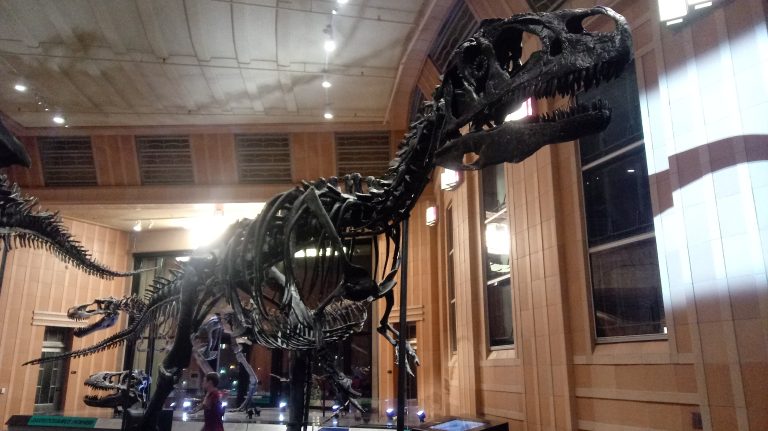
Allosaurus fragilis
Allosaurus fragilis
The most common and lethal apex predator of the Late Jurassic Morrison Formation, hunting with gaping jaws, slashing bites, and robust three-clawed forelimbs.
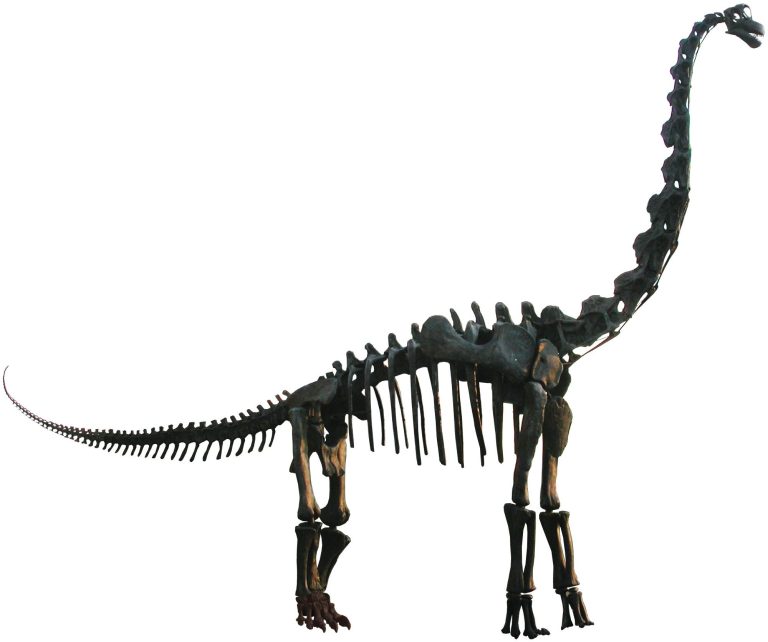
Brachiosaurus altithorax
Brachiosaurus altithorax
A colossal macronarian sauropod with disproportionately long forelimbs and an elevated neck built for high-canopy conifer browsing during the Late Jurassic.
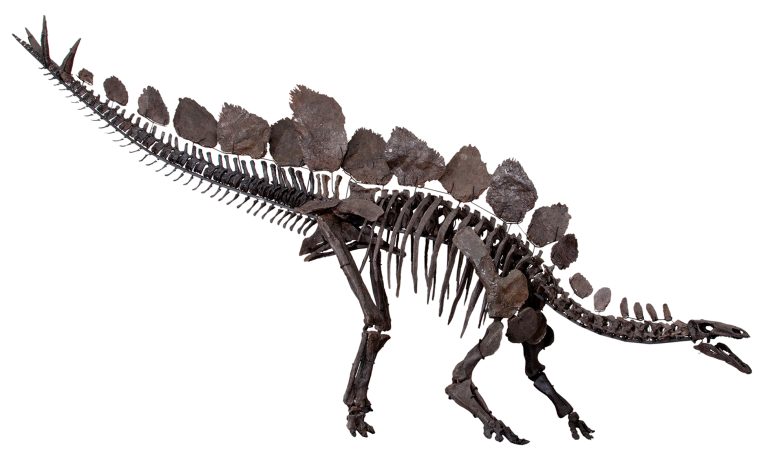
Stegosaurus stenops
Stegosaurus stenops
An iconic plated herbivore possessing alternating osteodermal dorsal plates for thermoregulation or display and four lethal tail spikes (thagomizer) for active defense.
Related Paleontological Dispatches
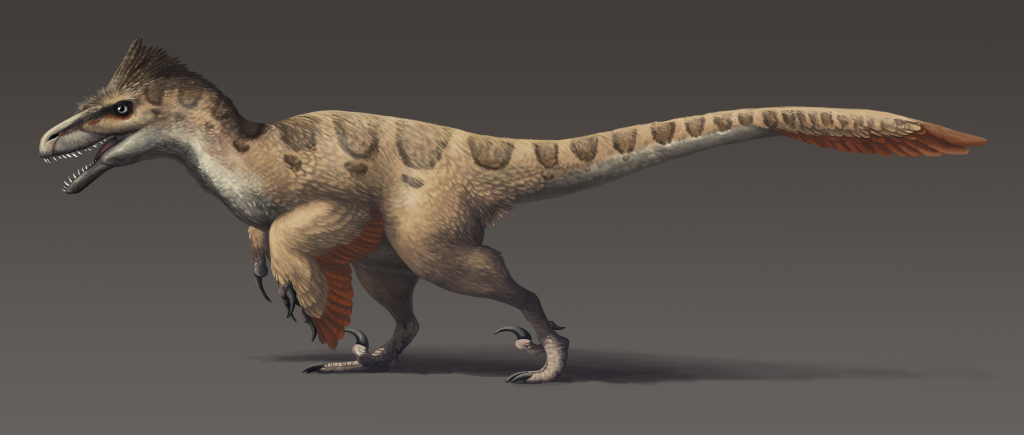
Utahraptor: The Giant Raptor Found in Utah
When pop culture introduced the world to the terrifying “raptors” of cinema in 1993, audiences were terrified by…

Giganotosaurus: The Giant Predator of Patagonia
When Argentine paleontologists Rodolfo Coria and Leonardo Salgado announced the discovery of Giganotosaurus carolinii in 1995, the announcement…

Ankylosaurus: The Living Tank of the Cretaceous
In the final stages of the Late Cretaceous, western North America was home to some of the most…