Decoding the Hell Creek Formation: The Final Days of the Dinosaurs
Stratigraphical analysis and floral turnover in the terminal two million years of the Mesozoic Era.
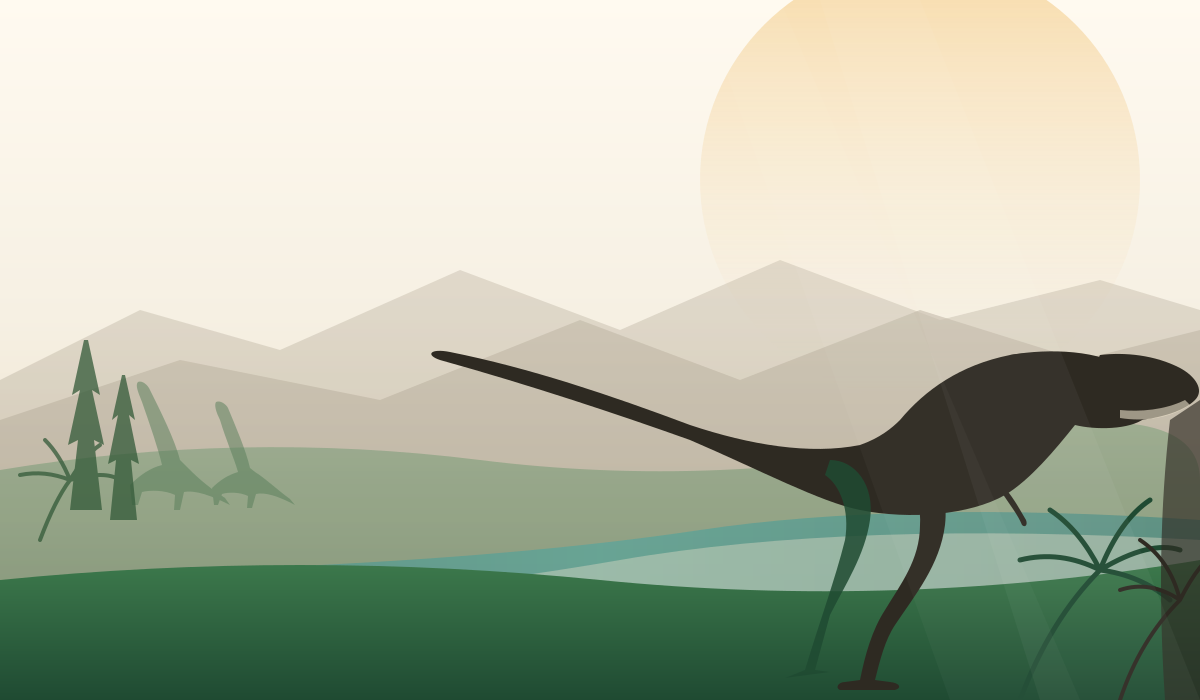
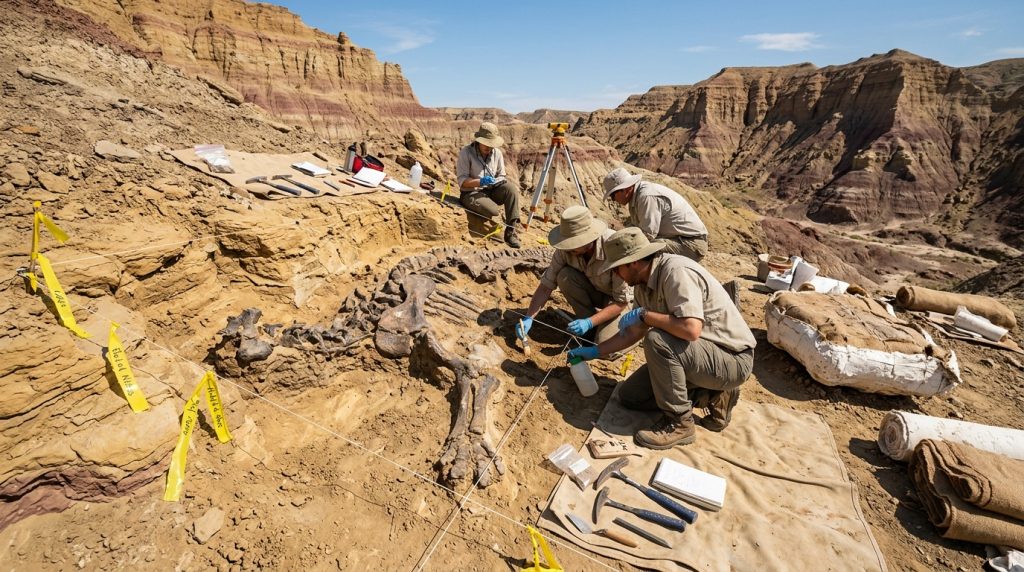
The Hell Creek Formation, exposed across badlands in Montana, Wyoming, North Dakota, and South Dakota, offers the world’s most meticulously studied geological window into the terminal Cretaceous Period. Deposited by meandering river systems flowing eastward into the retreating Western Interior Seaway, this 100-meter-thick sequence of siltstones, mudstones, and channel sandstones preserves the final two million years of non-avian dinosaur evolution.
Geological Setting & Ancient River Systems
During the latest Maastrichtian stage, approximately 68 to 66 million years ago, western North America was shaped by the concluding pulses of the Laramide Orogeny. Volcanic highlands to the west shed vast volumes of sediment eastward across an expansive alluvial coastal plain. These braided and meandering river channels formed dense networks of oxbow lakes, river bars, and extensive overbank floodplains.
Palynological analysis of fossil pollen and spores reveals a warm temperate to subtropical canopy dominated by taxodiaceous conifers, angiosperms, and flourishing cycads. Modern geochemical reconstructions indicate mean annual temperatures between 14°C and 19°C, with marked seasonal precipitation that created lush riparian corridors supporting massive herbivore populations.
The Apex Ecosystem: Predators and Giants
The upper tiers of the Hell Creek food web were anchored by colossal theropods and heavily armored herbivores. Tyrannosaurus rex roamed these humid river valleys as the apex terrestrial carnivore, capable of delivering crushing bite forces exceeding 35,000 Newtons. Fossils of Triceratops horridus, with their massive cranial frills and elongated brow horns, constitute over 40 percent of large dinosaur skeletons recovered from the formation.
Living alongside these giants were the heavily armored ankylosaurid Ankylosaurus magniventris, the massive crested hadrosaur Edmontosaurus annectens, and agile dromaeosaurid maniraptorans that patrolled the forest margins in search of microvertebrates and juvenile prey.
The K-Pg Boundary Horizon
At the absolute summit of the Hell Creek sequence lies a distinct stratigraphical marker: a thin clay layer enriched with anomalous concentrations of iridium, shocked quartz grains, and microscopic impact spherules. This horizon records the catastrophic Chicxulub asteroid impact in the Yucatán Peninsula 66 million years ago.
High-precision uranium-lead (U-Pb) zircon dating from bentonite ash beds immediately bracketing this boundary provides an absolute date of 66.04 million years before the present. The sudden disappearance of non-avian dinosaur fossils above this boundary line marks the definitive close of the Mesozoic Era.
Modern Discoveries and Research Techniques
Contemporary expeditions employ drone LiDAR mapping, synchrotron micro-CT scanning, and rare-earth element (REE) geochemical profiling to reconstruct micro-stratigraphy with millimeter precision. These advanced analytical toolsets demonstrate that the Hell Creek ecosystem was vibrant, biodiverse, and ecologically resilient right up to the final astronomical moment of impact.
Scientific Sources & Peer-Reviewed Literature

Referenced Dinosaur Species 3 species
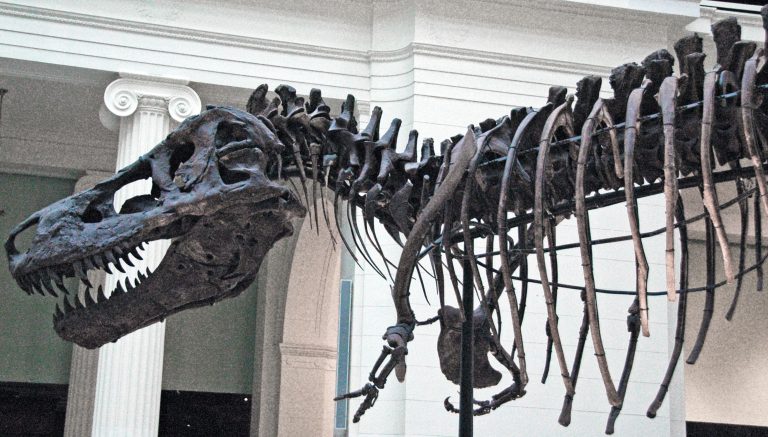
Tyrannosaurus rex
Tyrannosaurus rex
Tyrannosaurus rex was one of the largest terrestrial carnivores of all time, roaming western North America just prior to the Cretaceous-Paleogene extinction event. With an estimated bite force exceeding 35,000 Newtons and acute stereoscopic vision, it sat uncontested at the apex of its ecosystem.
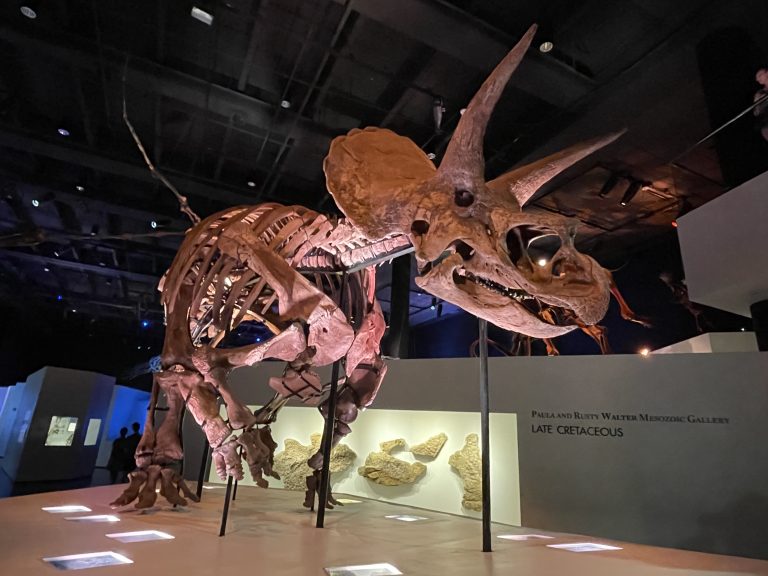
Triceratops horridus
Triceratops horridus
Triceratops horridus is one of the most recognizable horned dinosaurs. Equipped with two brow horns measuring up to 1 meter in length, a shorter nasal horn, and a solid parietal-squamosal frill, it was a dominant herbivore that actively defended against contemporary predators like Tyrannosaurus rex.
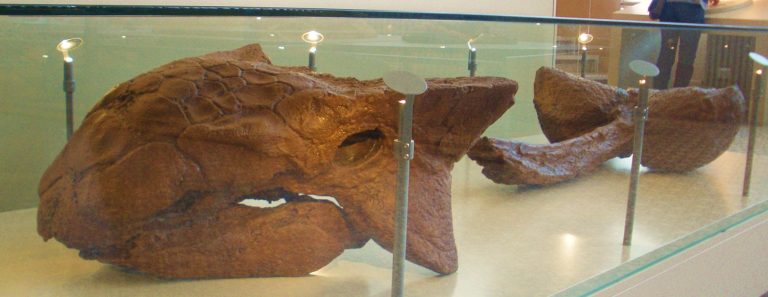
Ankylosaurus magniventris
Ankylosaurus magniventris
The living tank of the Late Cretaceous, armored in thick osteoderm plates with cranial horns and a massive distal tail club capable of shattering theropod bones.
Related Paleontological Dispatches
Dinosaur News This Month: What Paleontologists Just Announced
Welcome to the October 2026 edition of Paleontological Dispatches, your curated, scientifically verified monthly roundup of what researchers…
The 10 Biggest Dinosaur Discoveries of the Last 5 Years
The last five years (2021–2026) represent one of the most prolific and intellectually transformative golden ages in the…

Why It Can Take 20 Years to Name a New Dinosaur
Whenever headlines announce that paleontologists have unveiled a spectacular new dinosaur species, the public naturally envisions a researcher…