Geological Deep Time
The Mesozoic Era (252–66 Ma)
A Journey Through Deep Time
Dinosaurs walked our planet for more than 165 million years—an incomprehensible expanse of deep time during which continents split, global climates swung from arid deserts to polar greenhouses, and thousands of species rose and vanished. Explore the three defining chapters of the Mesozoic Era, discover how ancient life transformed over millions of years, and meet the verified species preserved in the fossil record.
165+
Million Years
Non-Avian Dinosaur Era (231–66 Ma)
3
Geological Periods
Triassic • Jurassic • Cretaceous
1
Supercontinent Rifting
Pangaea Breakup to Modern Continents
10,000+
Living Relatives
Modern Birds Are Living Avian Dinosaurs

What Was the Age of Dinosaurs?
In the history of Earth, the "Age of Dinosaurs" corresponds to the Mesozoic Era—a major geological interval lasting from approximately 251.9 million years ago to 66.0 million years ago. Nestled between the ancient Paleozoic Era and our modern Cenozoic Era, the Mesozoic is defined by the evolutionary rise, planetary dominance, and sudden catastrophe of terrestrial non-avian dinosaurs.
To comprehend this era, one must confront the reality of deep time. Human civilizations measure history in centuries and millennia; our entire written record spans roughly 5,000 years. The Mesozoic lasted 186 million years—a duration more than 37,000 times longer than all recorded human history. Over this immense gulf of time, rocks did not remain stationary, climates underwent massive shifts, and evolution continually cycled through diverse lineages of vertebrate life.
Proportional Duration of the Three Dinosaur Periods
Notice that the Cretaceous was by far the longest period, lasting almost 80 million years—longer than the entire duration of time that has passed since the dinosaurs vanished.
Scientific Note: The Species Turnover Principle
Popular media often portrays dinosaurs as living simultaneously in a single prehistoric jungle. In truth, individual species persisted in the fossil record for an average of only 1 to 3 million years before evolving or going extinct. No dinosaur species survived across all three periods.
Period 1 • The Dawn
251.9 to 201.4 Million Years Ago
The Triassic Period: The Crucible of Ancient Life
Born out of the ashes of the greatest extinction in Earth’s history, the Triassic was a harsh, sun-baked proving ground where early dinosaurs emerged as agile underdogs among towering archosaur rivals.
Geology & Climate
All continental landmasses were fused into the supercontinent Pangaea, flanked by the gargantuan Panthalassa ocean. The vast continental interior was arid, plagued by extreme seasonal megamonsoons and vast desert belts. Around 234–232 Ma, the Carnian Pluvial Episode triggered millions of years of intense global humidity, fundamentally shifting plant life and stimulating dinosaur expansion.
Evolution of Early Dinosaurs
The earliest confirmed dinosaurs appeared approximately 233–231 million years ago in southwestern Gondwana (modern-day South America). Unlike the gargantuan giants of later epochs, these pioneers were slender, bipedal cursors. Erect hind limbs beneath their bodies gave them superior locomotion and respiration compared to competing sprawling reptiles.
The End-Triassic Extinction (201.4 Ma)
As Pangaea began to rift apart, immense basalt volcanism erupted in the Central Atlantic Magmatic Province (CAMP). Skyrocketing greenhouse gases and ocean acidification wiped out competing crurotarsan pseudosuchians and large amphibians. Dinosaurs survived, poised to inherit the earth.
Verified Triassic Dinosaurs in Our Collection
2 species curated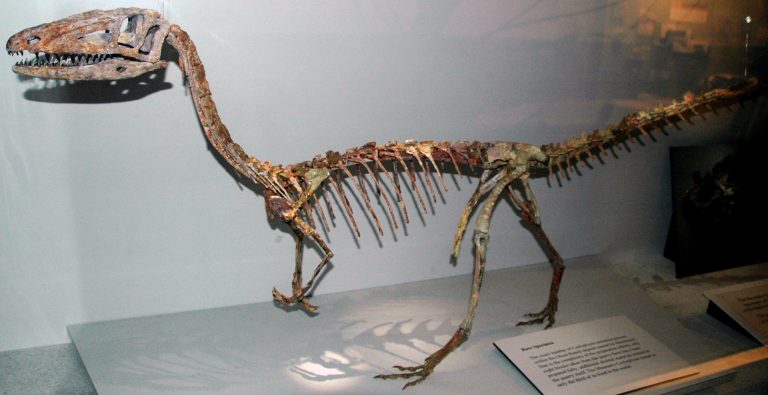
Triassic Specimens in Curation
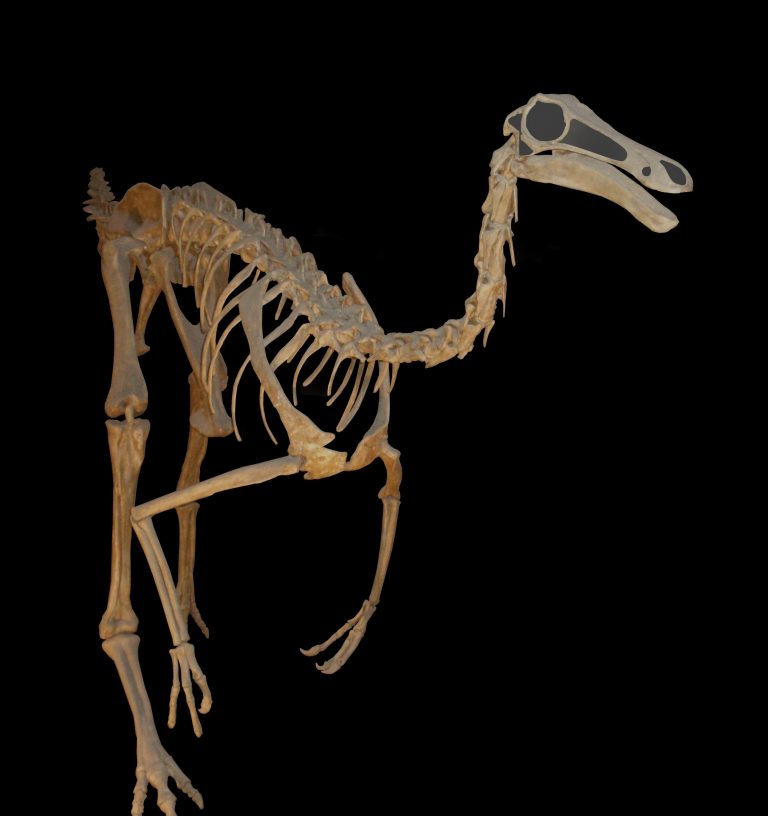
Peer-reviewed profiles for Herrerasaurus and Eoraptor are currently undergoing scientific verification and anatomical life restoration modeling.
Period 2 • The Golden Age
201.4 to 145.0 Million Years Ago
The Jurassic Period: The Era of Continental Giants
With competitors eliminated and Pangaea fragmenting into verdant island-continents, dinosaurs underwent breathtaking evolutionary radiations, filling skies, floodplains, and canopies with unprecedented body sizes.
A Lush Greenhouse Planet
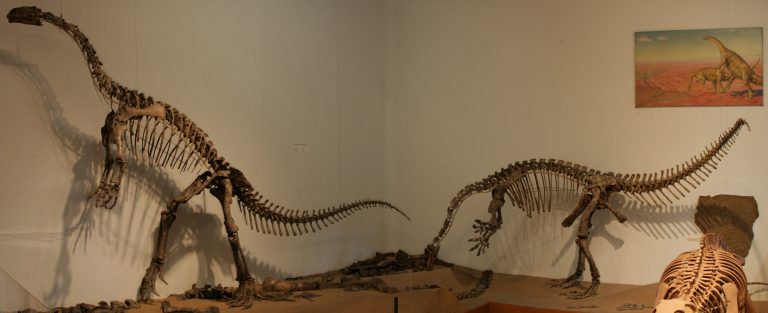
Pangaea severed into Laurasia (north) and Gondwana (south), creating the proto-Atlantic Ocean and opening the warm Tethys Seaway. Moisture swept inland across previously arid continental deserts, cultivating monumental forests of towering conifers, cycads, ginkgoes, and tree ferns.
The Miracle of Sauropod Gigantism
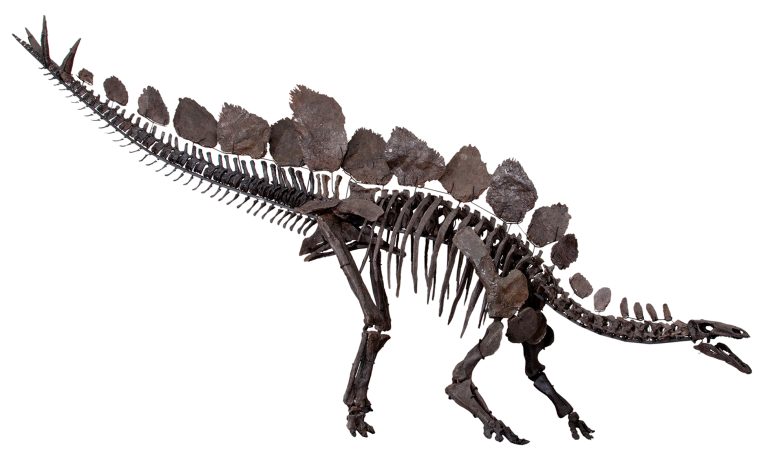
Long-necked sauropods reached colossal proportions. Avian-like internal air-sac respiratory systems lightened their skeletons, while long necks permitted expansive feeding envelopes without moving their massive bodies. They coexisted with armored stegosaurs and apex theropods like Allosaurus.
The Origin of Feathers & Birds
During the Late Jurassic (~150 Ma), feathered theropods gave rise to the earliest avialans—exemplified by Archaeopteryx lithographica from German limestone lagoons. Possessing toothed jaws, clawed wings, and feathered flight surfaces, it captured the living transition from dinosaurs to modern birds.
Verified Jurassic Dinosaurs in Our Collection
4 species curated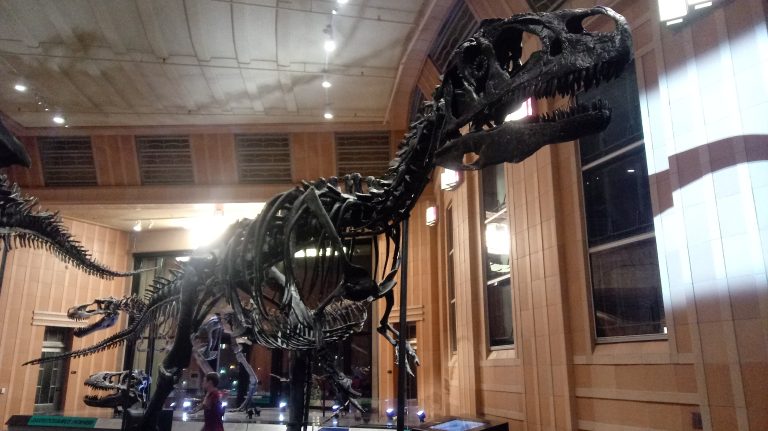

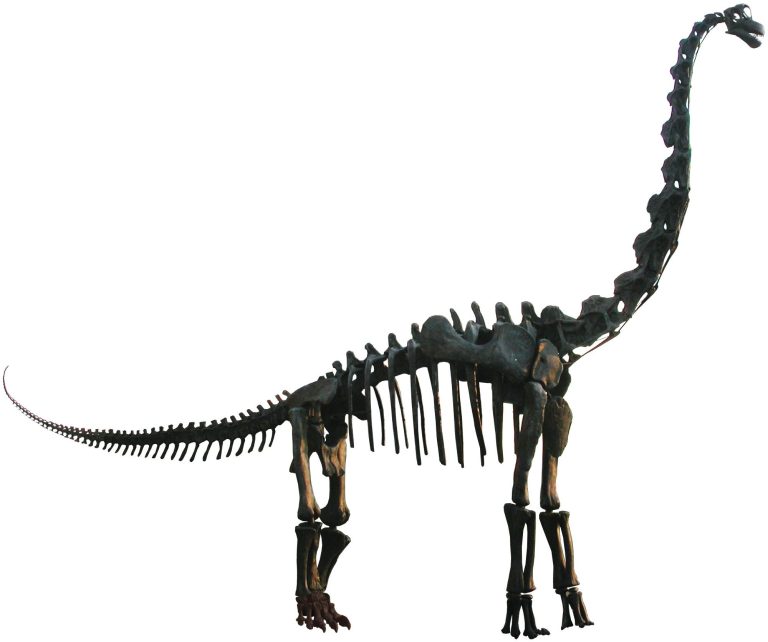
Period 3 • Peak Diversity & The Cataclysm
145.0 to 66.0 Million Years Ago
The Cretaceous Period: Floral Revolution to Extinction
The longest Mesozoic period witnessed unprecedented ecological complexity: flowering plants transformed terrestrial diets, horned and duckbilled dinosaurs proliferated in millions, and the age culminated in an asteroid strike that changed planetary history.
Fragmented Continents & Seaways
Continents drifted toward familiar modern locations. South America separated from Africa, opening the South Atlantic. North America was severed into Laramidia (west) and Appalachia (east) by the Western Interior Seaway. Geographic isolation spurred localized evolutionary explosions.
The Angiosperm (Flowering) Revolution
Around 125–100 Ma, flowering plants (angiosperms) co-evolved with pollinating insects, exploding in diversity and replacing ancient gymnosperms across vast floodplains. Herbivorous dinosaurs evolved grinding dental batteries (hadrosaurs) and shearing frilled beaks (ceratopsians) to process these fibrous new foods.
The K-Pg Extinction Cataclysm (66.0 Ma)
A 10–15 km asteroid struck Chicxulub on the Yucatán Peninsula, unleashing megatsunamis, widespread fires, and an impact winter that collapsed photosynthesis. Non-avian dinosaurs vanished, but small avian dinosaurs (beaked birds) survived to populate the modern world.
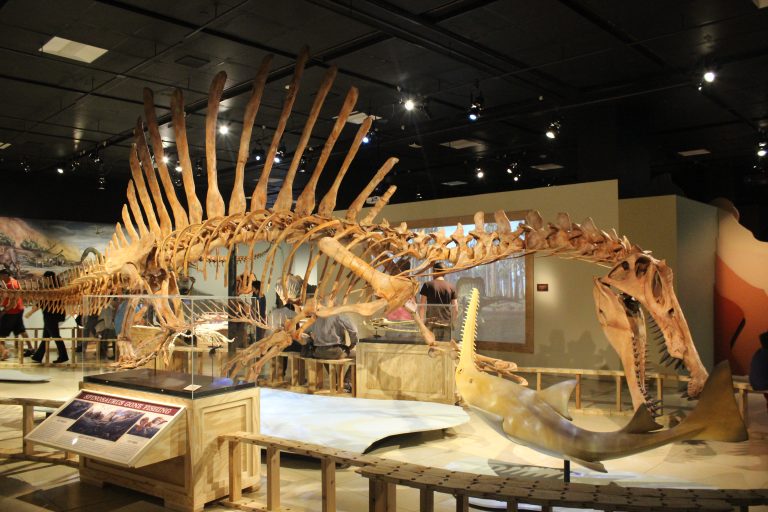
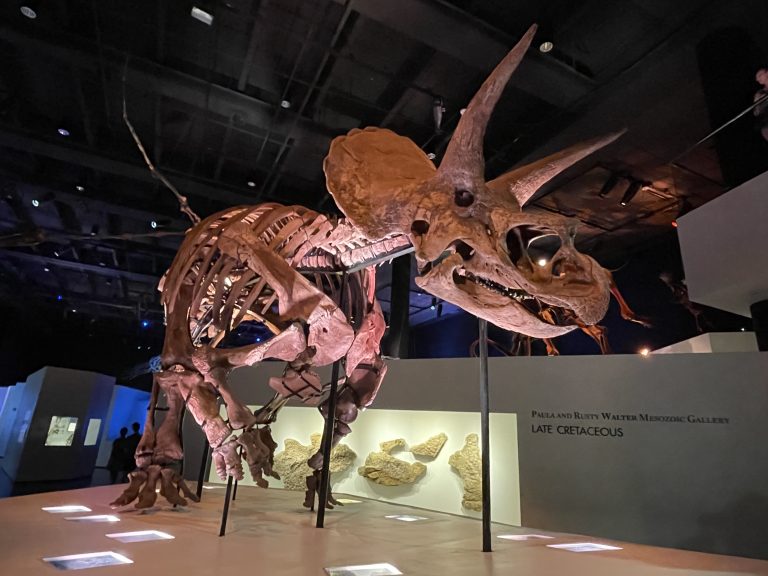
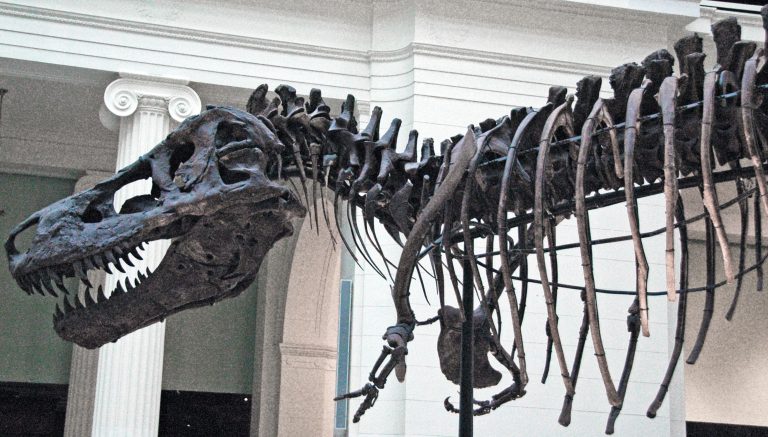
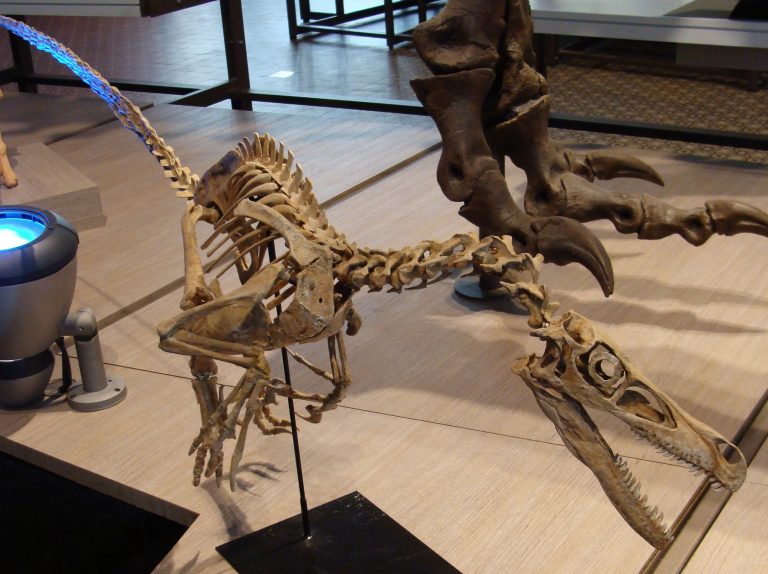
Verified Cretaceous Dinosaurs in Our Collection
7 species curated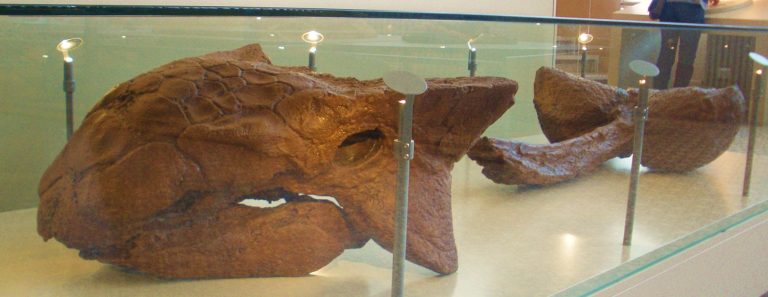
Evolutionary Chronology
Key Milestones of the Mesozoic Era
Seven cataclysms, evolutionary innovations, and planetary shifts that shaped the course of dinosaur history.
~252.0 Ma
The End-Permian "Great Dying" Extinction
Siberian Traps volcanic outgassing wiped out over 90% of marine species and 70% of terrestrial vertebrate families. The ecological void cleared the stage for archosaurs and the dawn of dinosaurs.
~233–231 Ma
The Carnian Pluvial Episode & Earliest Dinosaurs
Protracted global rainfall broke severe Pangaean droughts. Small, bipedal early dinosaurs like Herrerasaurus and Eoraptor rapidly diversified across southwestern Gondwana.
~201.4 Ma
End-Triassic Extinction & Rifting of Pangaea
The Central Atlantic Magmatic Province (CAMP) triggered widespread volcanic toxicity, eliminating competing crurotarsan pseudosuchians and allowing dinosaurs to dominate the Jurassic.
~175.0 Ma
Pangaea Fractures into Laurasia and Gondwana
The opening of the Central Atlantic and Tethys Seaways created warm, humid maritime climates, initiating the golden age of monumental sauropods and plated stegosaurs.
~150.0 Ma
The Origin of Avian Dinosaurs (Archaeopteryx)
Feathered maniraptoran theropods evolved asymmetrical flight feathers and specialized skeletal adaptations, establishing the avian branch of dinosaurs that survives today.
~125–100 Ma
The Angiosperm Explosion (Flowering Plants)
Flowering plants and pollinating insects revolutionized terrestrial ecosystems, replacing ancient gymnosperms and driving the evolution of advanced hadrosaur and ceratopsian herbivores.
~66.0 Ma
Chicxulub Asteroid Impact & The K-Pg Extinction
A 10–15 km asteroid impact and Deccan Traps volcanism triggered nuclear-winter-like atmospheric blackout, bringing an end to non-avian dinosaurs while beaked birds survived.
Paleoenvironmental Science
Earth Then vs. Earth Today
Dinosaurs lived on a planet that would seem alien to modern observers: warmer, ice-free, and reconfigured by tectonic drift.
| Environmental Metric | Mesozoic Era (Dinosaur Age) | Modern Earth (Cenozoic / Anthropocene) |
|---|---|---|
| Continents & Geography | Single supercontinent (Pangaea) rifting into Laurasia and Gondwana; high global sea levels forming shallow epicontinental seaways. | 7 distinct, separated continents with deep global ocean basins and polar ice caps. |
| Global Climate & Ice | Greenhouse climate with no permanent polar ice caps; tropical and subtropical belts extended far toward the poles; temperate forests grew in Antarctica. | Icehouse climate with permanent glaciers and ice caps at both poles, and pronounced equatorial-to-polar temperature gradients. |
| Atmospheric Carbon Dioxide | Significantly higher CO2 levels (estimated between 1,000 and 2,000 ppm), driving intensive planetary greenhouse warming and plant growth. | Approx. 420 ppm (rising rapidly from pre-industrial baseline of ~280 ppm). |
| Dominant Flora (Plant Life) | Triassic/Jurassic: Gymnosperms (conifers, cycads, ginkgoes, seed ferns) and giant ferns. Cretaceous: Earliest radiation of flowering angiosperms. | Flowering plants (angiosperms) dominate over 80% of terrestrial ecosystems; widespread grasses, prairies, savannas, and tundra. |
| Dominant Terrestrial Vertebrates | Non-avian dinosaurs occupied virtually all terrestrial herbivore and apex predator ecological niches above 10 kg. | Mammals dominate large terrestrial niches; birds (avian dinosaurs) dominate air; humans exert primary planetary influence. |
How Long Did Dinosaurs Live on Earth?
When people ask how long dinosaurs lived, science provides three very different answers depending on whether one means the era, the species, or an individual animal:
1. The Era Duration (~165 Million Years)
As an overarching taxonomic clade, non-avian dinosaurs dominated Earth from ~231 Ma to 66 Ma. If we include birds (which are living avian dinosaurs), the dinosaur dynasty has lasted over 230 million years and continues today.
2. The Species Duration (1–3 Million Years)
Individual dinosaur species did not persist for dozens of millions of years. Like modern mammals, a typical dinosaur species existed in the fossil record for 1 to 3 million years before evolving into descendant forms or succumbing to extinction.
3. The Individual Lifespan (5 to 80 Years)
Paleohistologists determine individual dinosaur age by cutting fossil bones to count Lines of Arrested Growth (LAGs)—similar to tree rings. Small theropods lived 5–15 years; Tyrannosaurus rex reached adult size rapidly and lived roughly 28–30 years (e.g., specimen "Sue"); while colossal sauropods are estimated to have reached 50–80 years.
Temporal Separation
When Did Famous Dinosaurs Live?
One of the most surprising insights of paleontology is that many famous dinosaurs lived tens of millions of years apart.
The Stegosaurus vs. T. rex Paradox
Stegosaurus lived approximately 150 million years ago during the Late Jurassic. Tyrannosaurus rex lived approximately 66 million years ago during the Late Cretaceous. That means Stegosaurus was separated from T. rex by 84 million years—whereas T. rex lived only 66 million years before modern humans!
👉 T. rex lived closer in time to the launch of the smartphone than it did to Stegosaurus.
The Cosmic Perspective
Earth History Compressed into 24 Hours
If Earth’s 4.54 billion-year history were scaled into a single 24-hour day, human civilization would occupy less than the final tenth of a second before midnight.
12:00:00 AM
Earth Forms
Accretion of dust and molten rock 4.54 billion years ago.
04:00:00 AM
First Microbial Life
Single-celled anaerobic organisms appear (~3.8 Ga).
09:05:00 PM
Cambrian Explosion
Rapid emergence of complex multicellular animal phyla (~541 Ma).
10:46:00 PM
Dinosaurs Appear (Triassic)
Early dinosaurs emerge (~231 Ma). They rule the planet for nearly an hour on this clock.
11:39:00 PM
Asteroid Impact (K-Pg)
Non-avian dinosaurs go extinct (~66 Ma) just 21 minutes before midnight.
11:59:56 PM
Homo sapiens Appears
Modern humans evolve (~300,000 yrs ago), 4 seconds before midnight.
11:59:59.9 PM
Recorded Human History
All pyramids, empires, and digital technology occupy 0.095 seconds.
The End of Non-Avian Dinosaurs & The Avian Miracle
Sixty-six million years ago, a 10-to-15-kilometer asteroid slammed into the shallow carbonate platform of the Yucatán Peninsula at roughly 20 kilometers per second. The resulting Chicxulub crater unleashed kinetic energy equivalent to billions of atomic bombs. Vaporized rock, soot, and sulfur aerosols were propelled into the stratosphere, blocking sunlight and triggering an intense multi-year impact winter that abruptly shut down photosynthesis in oceans and on land.
Non-avian dinosaurs—alongside giant marine reptiles (mosasaurs, plesiosaurs), pterosaurs, and ammonites—were wiped out completely. Animals with high metabolic requirements and massive caloric demands had nowhere to hide.
Why Did Birds Survive?
Small crown birds possessed crucial biological adaptations: toothless beaks suited for eating dormant seeds when green foliage vanished, small body sizes requiring minimal daily calories, and ground-dwelling habits that allowed shelter in burrows. Today, more than 10,000 living species of birds—from hummingbirds to penguins—are living theropod dinosaurs.
Scientific Inquiry
Frequently Asked Questions About the Dinosaur Timeline
Verified answers to the most common questions regarding geological deep time, dinosaur evolution, and prehistoric chronology.
When did dinosaurs first appear?
Dinosaurs first appeared approximately 233 to 231 million years ago during the Carnian stage of the Late Triassic period. Fossil evidence from southwestern Gondwana (modern Argentina and Brazil)—including Herrerasaurus, Eoraptor, and Buriolestes—indicates early dinosaurs were small, bipedal archosaurs that diversified rapidly following the Carnian Pluvial Episode.
How long did dinosaurs live on Earth?
Non-avian dinosaurs lived on Earth for approximately 165 million years, from their emergence in the Late Triassic (~231 Ma) until their extinction at the end of the Cretaceous period (66.0 Ma). Avian dinosaurs (birds) evolved during the Late Jurassic (~150 Ma) and survive today, meaning the dinosaur lineage has persisted for over 230 million years.
What are the three dinosaur periods?
The three geological periods of the Mesozoic Era are the Triassic Period (approx. 251.9–201.4 million years ago), the Jurassic Period (approx. 201.4–145.0 million years ago), and the Cretaceous Period (approx. 145.0–66.0 million years ago). Together, they form the Age of Dinosaurs.
Which period came first, Jurassic or Cretaceous?
The Jurassic Period came first (approx. 201.4–145.0 Ma), followed immediately by the Cretaceous Period (approx. 145.0–66.0 Ma). Both followed the earlier Triassic Period (approx. 251.9–201.4 Ma).
When did T. rex live?
Tyrannosaurus rex lived during the latest Cretaceous period, specifically the late Maastrichtian stage, approximately 68 to 66 million years ago. T. rex did not live during the Jurassic period and lived closer in time to modern humans than to Jurassic dinosaurs like Stegosaurus.
When did Triceratops live?
Triceratops lived during the late Maastrichtian stage of the Late Cretaceous period, approximately 68 to 66 million years ago. It inhabited ancient coastal floodplains of North America (Laramidia) and coexisted alongside Tyrannosaurus rex and Ankylosaurus.
Were humans alive with dinosaurs?
No. Non-avian dinosaurs went extinct approximately 66 million years ago, whereas anatomically modern humans (Homo sapiens) evolved only about 300,000 years ago—separated by a temporal gap of more than 65 million years. However, because modern birds are living avian dinosaurs, humans co-exist with dinosaurs today.
What caused the dinosaur extinction?
The Cretaceous–Paleogene (K-Pg) mass extinction 66.0 million years ago was primarily caused by the hypervelocity impact of a 10-to-15-kilometer asteroid at Chicxulub on the Yucatán Peninsula, Mexico. The impact ignited global wildfires, generated megatsunamis, and ejected stratospheric aerosols causing a multi-year impact winter that collapsed photosynthesis. Massive Deccan Traps volcanic outgassing in India also contributed pre-existing ecological stress.
Are birds dinosaurs?
Yes. In modern vertebrate paleontology and cladistics, birds (Aves / Neornithes) are classified as specialized theropod dinosaurs belonging to the clade Maniraptora. Birds evolved from small feathered theropods during the Late Jurassic (~150 Ma) and represent the only dinosaur lineage that survived the K-Pg extinction.
Which period had the largest dinosaurs?
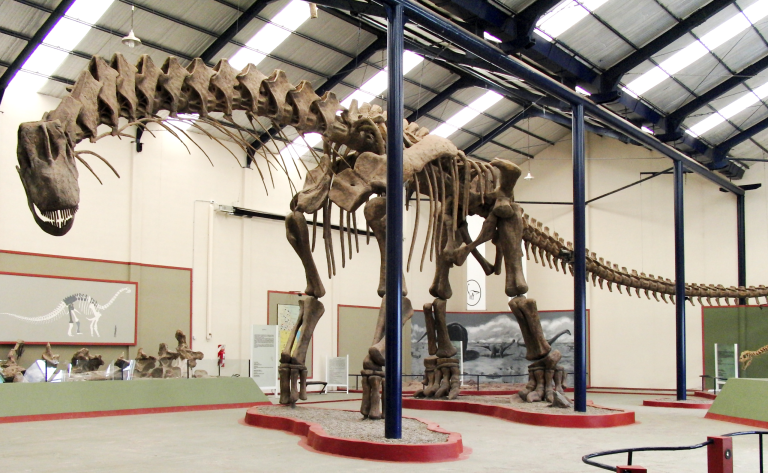
While colossal sauropods existed in the Late Jurassic (such as Brachiosaurus and Diplodocus), the largest terrestrial animals to ever exist lived during the Cretaceous Period. Titanosaurs such as Argentinosaurus, Patagotitan, and Puertasaurus reached lengths exceeding 35 meters (115 feet) and body masses between 70 and 80 metric tons.
Did all dinosaurs live at the same time?
No. Dinosaurs lived across more than 165 million years of deep time, and individual species had average fossil record durations of only 1 to 3 million years before evolving or going extinct. For instance, Stegosaurus (~150 Ma) and Tyrannosaurus rex (~66 Ma) were separated by approximately 84 million years of evolutionary time.
What was Earth like when dinosaurs lived?
Earth was substantially warmer than today, featuring a greenhouse climate with high sea levels and no permanent polar ice caps for most of the Mesozoic. Continents began as a single supercontinent (Pangaea) before rifting apart. Flora evolved from seed ferns, cycads, and conifers in the Triassic and Jurassic to complex ecosystems dominated by flowering plants (angiosperms) by the mid-Cretaceous.
Continue Exploring
Explore the Prehistoric World
Dive deeper into peer-reviewed dinosaur profiles, mass extinction dispatches, and anatomical life restorations.
Dinosaur Directory
Browse our comprehensive catalog of verified dinosaur species filtered by period, diet, and continental region.
Browse Species Catalog →Field Dispatches & Stories
Read deep-dive essays exploring mass extinctions, fossil excavations, and the science of modern paleontology.
Read Field Dispatches →The Permian Extinction
Discover how the catastrophic End-Permian "Great Dying" reset Earth’s biosphere and made the Age of Dinosaurs possible.
Read Permian Story →