Utahraptor: The Giant Raptor Found in Utah
A forensic examination of Utahraptor ostrommaysorum: unearthing the 500-kilogram grizzly-sized dromaeosaurid, its 35-centimeter sickle claw, the Cedar Mountain megablock, and the reality of raptor pack hunting.
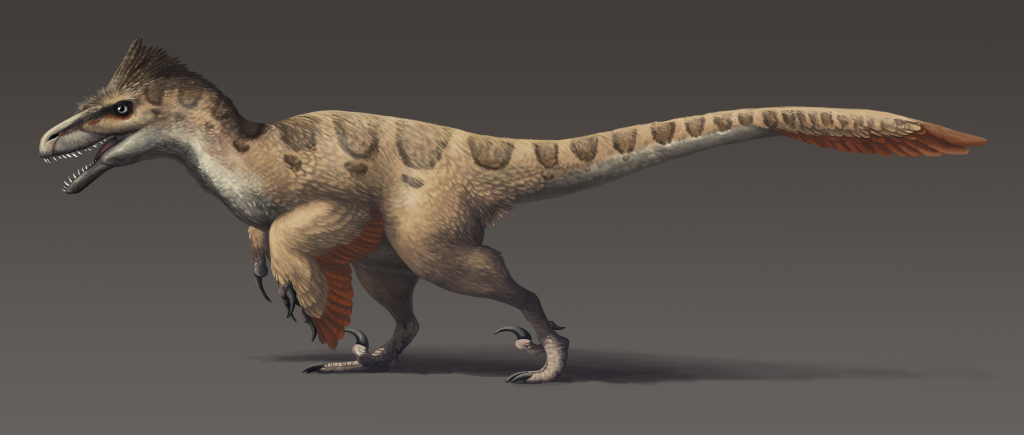
When pop culture introduced the world to the terrifying “raptors” of cinema in 1993, audiences were terrified by human-sized, hyper-intelligent pack hunters. Yet in paleontology, the true animals that inspired those movie depictions—Mongolian Velociraptor and North American Deinonychus—were far smaller than cinematic monsters. But just as those movies debuted, real-world field paleontology pulled off an astonishing surprise: the discovery of a genuine, colossal dromaeosaurid in the desert badlands of eastern Utah. Named Utahraptor ostrommaysorum, this apex predator stretched up to 7 meters (23 feet) in length and weighed roughly half a metric ton. Built not like an agile greyhound, but like a heavily muscled grizzly bear armed with 35-centimeter sickle claws, Utahraptor was the largest, heaviest, and most formidable raptor ever to walk the Earth.
Key Paleontological Takeaways
- Colossal Proportions: Adult Utahraptor ostrommaysorum measured between 5.5 and 7.0 meters (18 to 23 feet) in length and weighed an estimated 280 to 500+ kilograms (620 to 1,100 lbs)—roughly 30 to 40 times more massive than Velociraptor.
- The Apex Sickle Claw: The hypertrophied second toe claw (pedal ungual) measured 22 to 24 cm in preserved bone core, extending to approximately 35 centimeters (14 inches) with its outer keratinous sheath, functioning as a powerful grappling anchor.
- Ambush Wrestler, Not a Sprinter: Unlike slender cursorial raptors, Utahraptor possessed short, stocky metatarsals (shin bones) and massive femoral musculature, engineered for explosive grappling and overpowering heavy herbivorous dinosaurs.
- The 9-Ton Megablock: Excavations in the Yellow Cat Member of the Cedar Mountain Formation uncovered a 9-ton sandstone block containing multiple Utahraptor skeletons clustered around an iguanodontian dinosaur, offering unprecedented clues into Early Cretaceous predator traps and social behavior.
1. Discovery in the Yellow Cat Badlands: James Kirkland’s 1991 Breakthrough
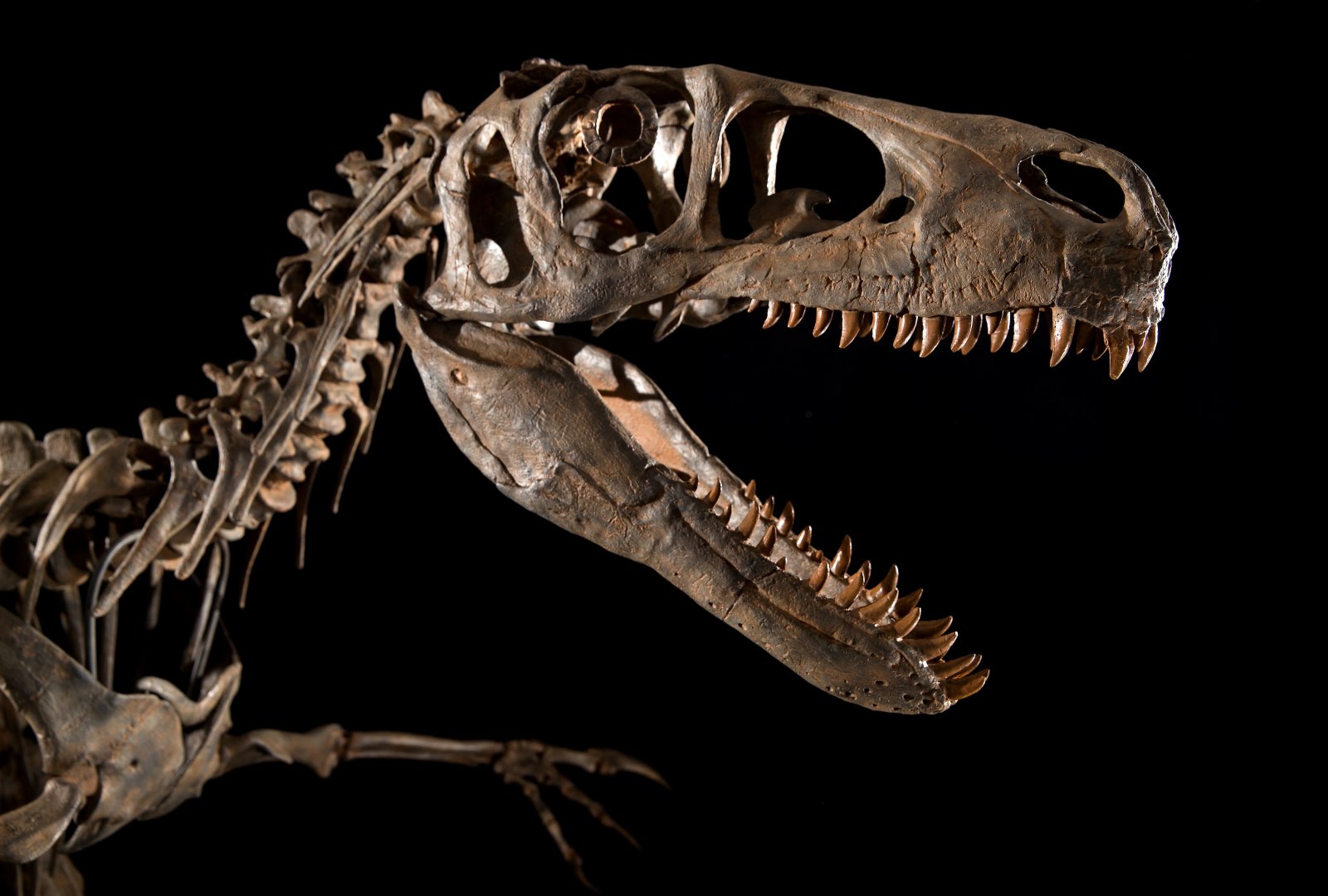
In 1991, paleontologist Dr. James Kirkland, accompanied by fossil preparator Robert Gaston and Donald Burge of the College of Eastern Utah Prehistoric Museum, was prospecting in the Yellow Cat Member of the Cedar Mountain Formation north of Moab, Utah. At a site now designated the Gaston Quarry, the team uncovered an extraordinarily large fossilized claw core along with foot bones and cranial fragments.
The morphology of the foot bone was unmistakably that of a dromaeosaurid theropod—characterized by the specialized, hyperextendable second toe. However, its immense dimensions staggered the researchers: the claw was larger than that of any dromaeosaur known to science, dwarfing the sickle claws of Montana’s Deinonychus and Mongolia’s Velociraptor.
In 1993, Kirkland, Gaston, and Burge published the formal species description, christening the animal Utahraptor ostrommaysorum. The genus name translates to “Utah’s plunderer” or “Utah’s thief.” The specific epithet honors two pivotal figures: Dr. John H. Ostrom of Yale University, whose pioneering research on Deinonychus established the modern link between theropod dinosaurs and birds; and Chris Mays, founder of Dinamation International Society, who provided crucial funding for the excavation.
Recent high-precision radiometric dating and magnetostratigraphic analyses place the Yellow Cat Member of the Cedar Mountain Formation in the earliest Cretaceous (Barremian to Berriasian stages, approximately 135 to 125 million years ago), placing Utahraptor tens of millions of years earlier than Late Cretaceous raptors like Velociraptor.
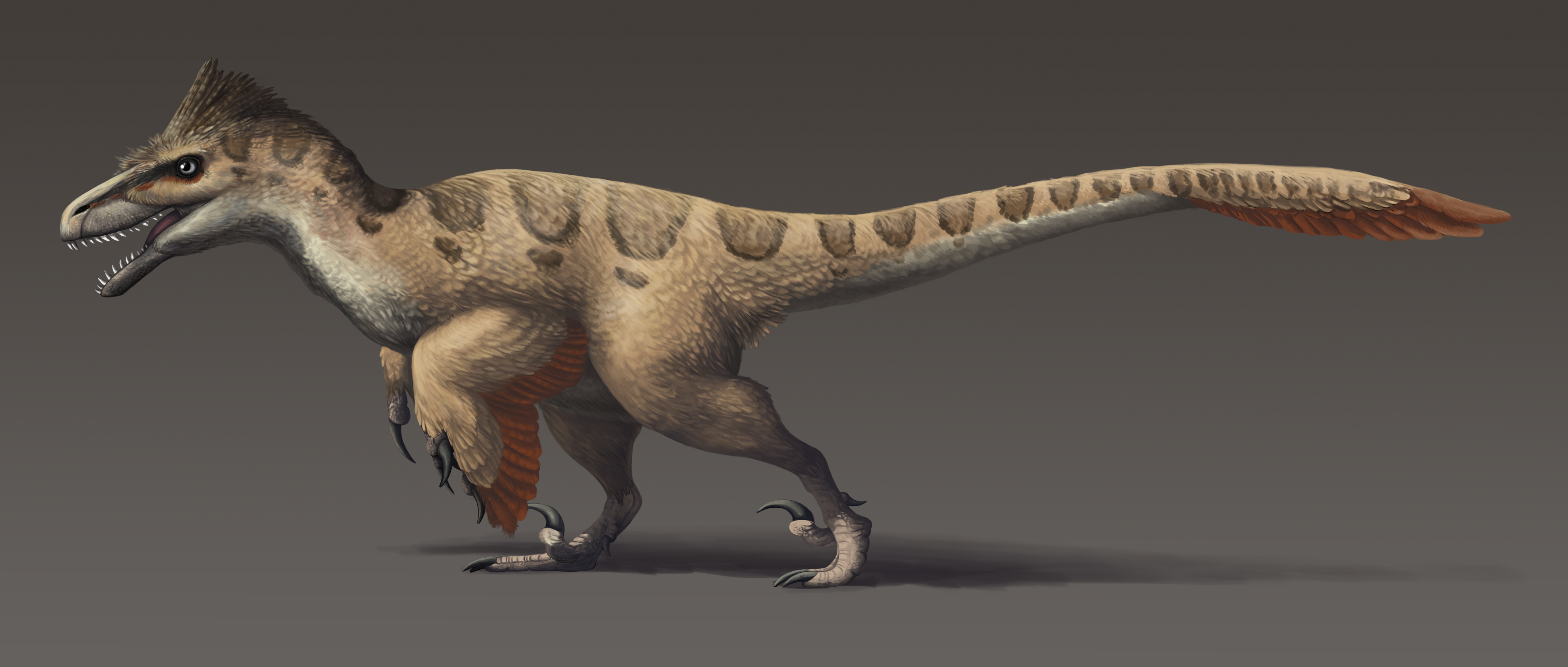
2. Giant Raptor Anatomy: Grizzly-Sized Mass vs. Movie Monsters
In popular culture, the word “raptor” evokes an image of a slim, lightweight predator sprinting across open terrain like an ostrich. While that description applies reasonably well to small paravians like Velociraptor or Dromaeosaurus, Utahraptor evolved into an entirely different biological niche.
The table below highlights the dramatic morphological chasm separating Utahraptor from its famous relative Velociraptor:
| Anatomical Trait | Utahraptor ostrommaysorum | Velociraptor mongoliensis |
|---|---|---|
| Geological Age & Location | Early Cretaceous (~135–125 Ma), Utah, USA | Late Cretaceous (~75–71 Ma), Gobi Desert, Mongolia |
| Adult Body Length | 5.5 – 7.0 meters (18–23 feet) | 1.8 – 2.0 meters (6.0–6.5 feet) |
| Estimated Adult Body Mass | 280 – 500+ kg (620–1,100 lbs) | 14 – 18 kg (31–40 lbs) |
| Sickle Claw Core Length | 22 – 24 cm (~35 cm sheathed) | 6.5 – 7.5 cm (~9 cm sheathed) |
| Limb & Locomotor Build | Stocky, short metatarsals, heavy bone walls (ambush wrestler) | Slender, elongated metatarsals, gracile build (cursorial runner) |
| Primary Ecological Role | Apex predator of multi-ton iguanodontians and sauropods | Mesopredator of small ceratopsians (Protoceratops) and lizards |
Rather than a fleet-footed sprinter, recent osteological descriptions published by the Utah Geological Survey demonstrate that Utahraptor was a heavily built, muscular grappler. Its femur was robust and curved, its tibia was stocky, and its metatarsus (foot) was relatively short. In biomechanics, short lower leg bones indicate high leverage and torque rather than high sprint speeds. Utahraptor relied on dense cover to ambush armored prey, lunging forward with explosive short-range bursts and using its physical bulk to wrestle victims to the earth.
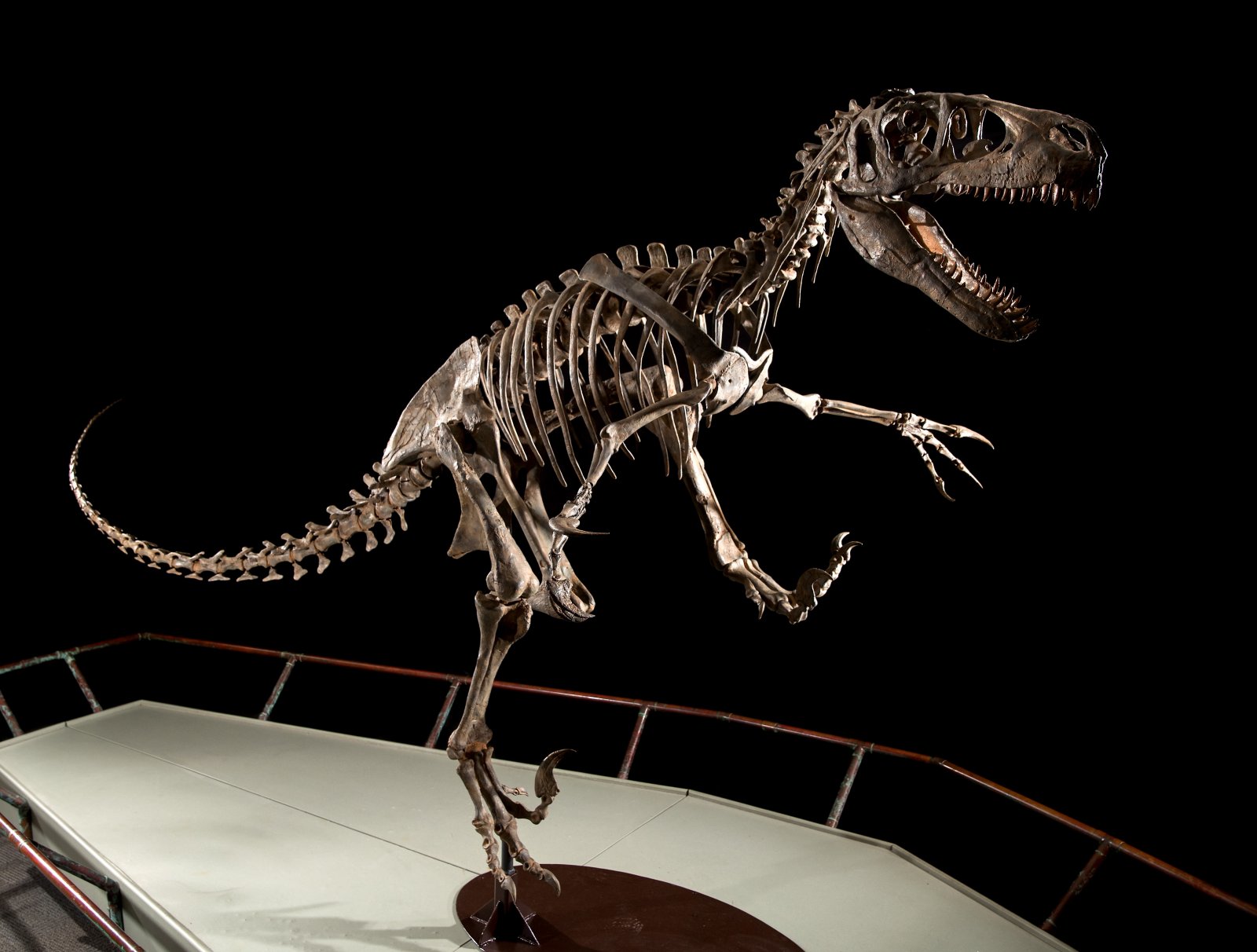
3. The 35-Centimeter Sickle Claw: Anatomy of an Anchor Weapon
The hallmark of dromaeosaurid paleobiology is the modified second digit of the foot, which bore a specialized, hyperextended ungual claw. Held elevated off the substrate during walking to preserve its razor-sharp tip, this sickle claw reached colossal proportions in Utahraptor.
The fossilized bony core of the claw measures between 22 and 24 centimeters (8.7 to 9.5 inches) along the outer curvature. In living animals, claws are surrounded by an outer sheath of epidermal keratin. Factoring in this keratinous extension, the living sickle claw measured approximately 35 centimeters (nearly 14 inches)—exceeding the size of a human forearm.
The Biomechanics of Killing: The RPR Model
Early 20th-century popularizations claimed that raptors used their sickle claws like running scythes to disembowel prey in mid-stride. Modern biomechanical analyses—most notably the Raptor Prey Restraint (RPR) model developed by Dr. Denver Fowler and colleagues (2011)—have thoroughly debunked this slash-and-run myth:
- Puncture and Anchor: Finite element testing shows that the cross-sectional shape of dromaeosaurid claws is poorly suited for slicing through thick hide and muscle without snapping under lateral stress. Instead, the claw was engineered for vertical puncture and locking anchorage.
- Pinning and Subduing: Utahraptor leaped onto large prey—such as the contemporary iguanodontian Iguanacolossus or basal sauropods like Cedarosaurus—driving its massive sickle claws deep into the victim’s flanks or neck. The claws acted as biological grappling hooks, anchoring the predator’s half-ton weight to the struggling herbivore while its powerful jaws inflicted catastrophic bite trauma.
4. Feathers, Scales, and the Integumentary Evidence
Did a 500-kilogram predator like Utahraptor have feathers? In paleontology, answering questions about ancient soft tissue requires careful evaluation of both direct physical evidence and phylogenetic bracketing.
A. What the Cedar Mountain Fossils Show
Because the sandstone and caliche mudstones of the Cedar Mountain Formation consist of relatively coarse sediments, delicate microscopic soft tissues like feathers are rarely preserved. To date, no direct feather impressions have been recovered from Utahraptor bonebeds.
B. Phylogenetic Bracketing
However, Utahraptor is nested deep within the dromaeosaurid clade Eudromaeosauria. Direct feather impressions, branching barbs, and ulnar quill knobs (follicular attachments for pennaceous flight feathers) are preserved in numerous close relatives, including Microraptor, Sinornithosaurus, Zhenyuanlong, and Velociraptor. Under the principles of evolutionary biology, characters shared by both ancestral and derived members of a clade are inferred to be present in all intermediate taxa unless lost secondarily.
C. Conservative Modern Reconstruction
At 500 kilograms, Utahraptor was obviously far too heavy for aerodynamic flight. However, dense plumage served critical physiological and behavioral roles:
- Thermoregulation: During the Early Cretaceous, inland Utah experienced seasonal temperature drops. A dense coat of filamentous, plumaceous contour feathers acted as an insulating thermal blanket, conserving metabolic body heat.
- Display and Brooding: Pennaceous feathers on the arms and tail likely served as visual socio-sexual display structures for courtship and territory signaling, as well as shielding egg clutches during nesting.
5. The Utahraptor Megablock and the Pack-Hunting Debate
In 2014, paleontologist Jim Kirkland and the Utah Geological Survey made one of the most astonishing discoveries in dinosaur paleontology: a monumental 9-ton sandstone block containing a concentrated jumble of articulated and associated dinosaur skeletons.
Upon initial preparation, the “Utahraptor Megablock” was found to contain the remains of at least:
- One large adult Utahraptor
- Four subadult Utahraptor individuals
- Three juveniles and at least two tiny infants
- Associated bones of an iguanodontian herbivore (likely Iguanacolossus)
Pack Hunting vs. Predator Trap
Popular media immediately seized on the megablock as definitive proof that Utahraptor hunted in organized, family-based packs like wolves. However, rigorous paleontological analysis demands caution. Sedimentological examination indicates that the dinosaurs were buried in water-saturated, dewatering quicksand (a marly spring deposit). In such environments, a large herbivore becomes mired in treacherous mud, emitting distress calls that attract carnivores one by one. As each predator attempts to scavenge the trapped prey, it too becomes hopelessly mired—creating a classic predator trap analogous to the famous La Brea Tar Pits or Cleveland-Lloyd Dinosaur Quarry.
While the presence of multiple age classes together provides tantalizing evidence for possible family groups or parental attendance, cooperative pack hunting remains a fascinating scientific hypothesis rather than an established certainty.
Common Misconceptions About Utahraptor
- Misconception 1: “Utahraptor was just an oversized Velociraptor.”
- Utahraptor was not a scaled-up Velociraptor. They belong to different dromaeosaurid subfamilies (Dromaeosaurinae vs. Velociraptorinae) and were separated by roughly 50 million years and an ocean. While Velociraptor was a gracile, small-prey hunter, Utahraptor was a heavily built apex carnivore engineered to overpower multi-ton herbivores.
- Misconception 2: “The sickle claw was used to disembowel running prey.”
- Biomechanical stress testing proves the sickle claw was built for downward puncture and grappling rather than horizontal slicing. Attempting to disembowel running prey would have fractured the claw under sideways bending forces.
- Misconception 3: “Utahraptor was a supersonic sprinter like a cheetah.”
- Its stocky limb proportions, short metatarsals, and heavy body mass indicate that Utahraptor was built for wrestling power and short-burst acceleration rather than sustained high-speed pursuit.
Frequently Asked Questions
How big was Utahraptor?
Adult Utahraptor measured between 5.5 and 7.0 meters (18 to 23 feet) in total body length, stood 1.8 meters (6 feet) tall at the hips, and weighed between 280 and 500+ kilograms (620 to 1,100 lbs), making it the largest known dromaeosaurid.
Did Utahraptor have feathers?
While direct feather impressions have not yet been found in the coarse Cedar Mountain sandstone, phylogenetic bracketing with feathered close relatives confirms that Utahraptor possessed an extensive coat of insulatory and display feathers.
How big was the sickle claw on Utahraptor?
The fossil bone core of the second toe claw measured 22 to 24 cm, extending to approximately 35 centimeters (14 inches) with its keratinous sheath—roughly the length of an adult human forearm.
What did Utahraptor hunt?
Utahraptor preyed on large Early Cretaceous herbivores of the Cedar Mountain Formation, including iguanodontians like Iguanacolossus and Hippodraco, armored polacanthid ankylosaurs like Gastonia, and juvenile sauropods.
What is the Utahraptor Megablock?
The Utahraptor Megablock is a 9-ton sandstone block excavated in 2014 containing at least ten individual Utahraptor skeletons of different ages preserved alongside herbivore bones in an ancient quicksand predator trap.
Final Takeaway: The Apex Paravian of the Early Cretaceous
Utahraptor ostrommaysorum proved to the world that dromaeosaurids were not merely agile understory hunters living in the shadows of giants—they were capable of becoming apex giants themselves. Combining the lethal claw mechanics of paravian evolution with the muscular bulk and grappling power of a grizzly bear, Utahraptor commanded the Early Cretaceous badlands of Utah as one of the most remarkable predators the prehistoric world ever produced.
Peer-Reviewed Literature Cited
- Kirkland, J. I., Gaston, R., & Burge, D. (1993). A large dromaeosaur (Theropoda) from the Lower Cretaceous of eastern Utah. Hunteria, 2(10), 1–16.
- Fowler, D. W., et al. (2011). The predatory ecology of Deinonychus and the origin of flapping in birds. PLOS ONE, 6(12), e28964. doi:10.1371/journal.pone.0028964
- Turner, A. H., et al. (2007). Feather quill knobs in the dinosaur Velociraptor. Science, 317(5845), 1721. doi:10.1126/science.1148041
- Kirkland, J. I., et al. (2016). The Utahraptor megablock: uncovering a Lower Cretaceous predator trap. Journal of Vertebrate Paleontology, 36, Program and Abstracts, 169.
- Senter, P. (2006). Comparison of forelimb function between Deinonychus, Bambiraptor, and Velociraptor. Journal of Vertebrate Paleontology, 26(4), 897–906. doi:10.1671/0272-4634(2006)26[897:COFFDB]2.0.CO;2
Scientific Sources & Peer-Reviewed Literature

Referenced Dinosaur Species 2 species
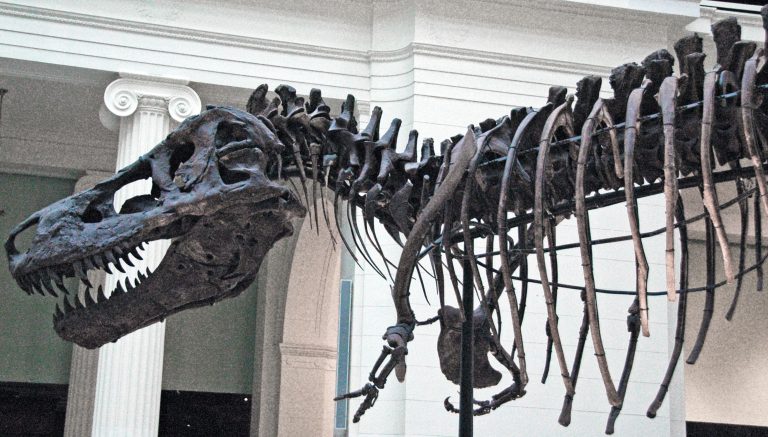
Tyrannosaurus rex
Tyrannosaurus rex
Tyrannosaurus rex was one of the largest terrestrial carnivores of all time, roaming western North America just prior to the Cretaceous-Paleogene extinction event. With an estimated bite force exceeding 35,000 Newtons and acute stereoscopic vision, it sat uncontested at the apex of its ecosystem.
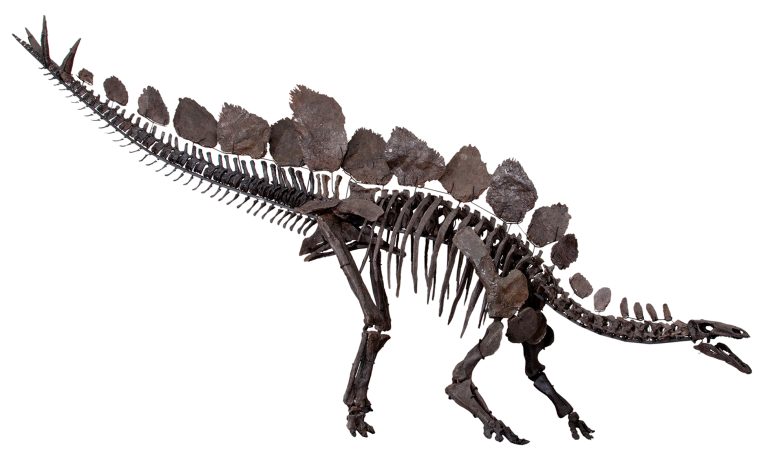
Stegosaurus stenops
Stegosaurus stenops
An iconic plated herbivore possessing alternating osteodermal dorsal plates for thermoregulation or display and four lethal tail spikes (thagomizer) for active defense.
Related Paleontological Dispatches

Giganotosaurus: The Giant Predator of Patagonia
When Argentine paleontologists Rodolfo Coria and Leonardo Salgado announced the discovery of Giganotosaurus carolinii in 1995, the announcement…
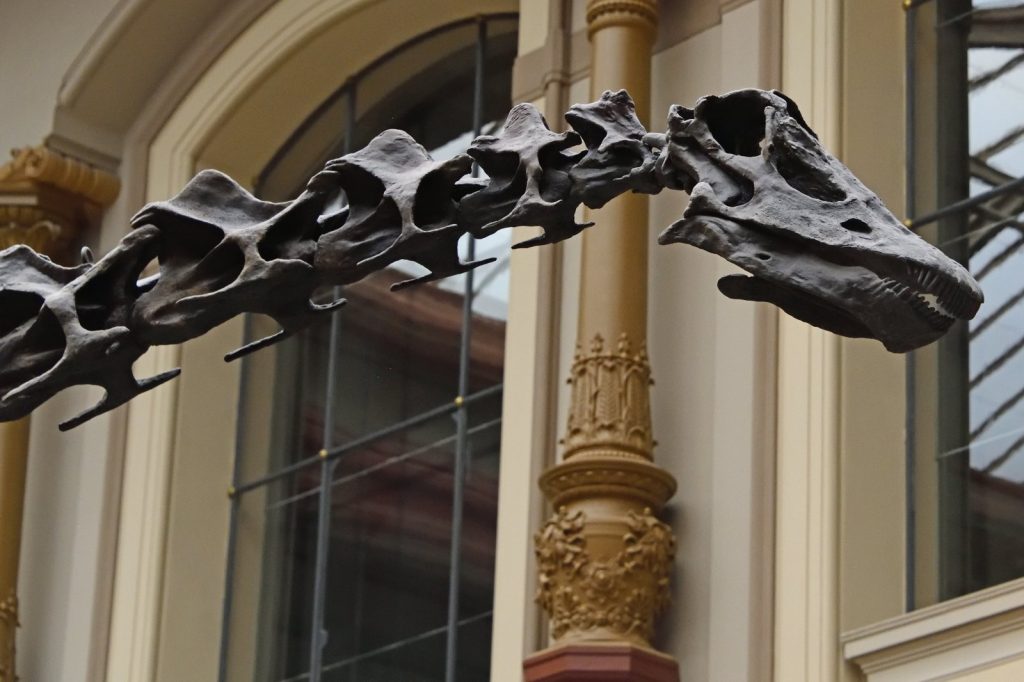
Diplodocus: How Long Was This Whip-Tailed Giant?
Among all the colossal dinosaurs unearthed from the Late Jurassic rock strata of western North America, Diplodocus has…

Ankylosaurus: The Living Tank of the Cretaceous
In the final stages of the Late Cretaceous, western North America was home to some of the most…