Spinosaurus mirabilis: The ‘Hell Heron’ and the Truth Behind Its Scimitar Crest
The landmark 2026 discovery of Spinosaurus mirabilis in Niger reveals the tallest cranial crest known in any theropod—and rewrites the debate over how giant spinosaurs hunted.
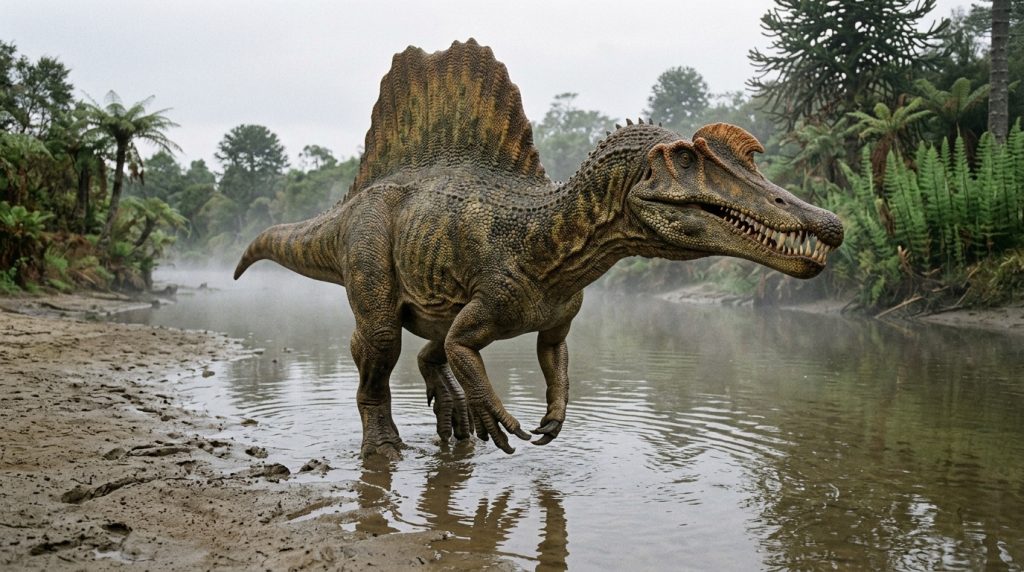
For more than a century, Spinosaurus has captivated the scientific world as one of the most enigmatic predators in the history of life on Earth. Ever since German paleontologist Ernst Stromer first described Spinosaurus aegyptiacus from Egyptian fossils in 1915—only for that priceless holotype skeleton to be pulverized during an Allied bombing raid on Munich in 1944—researchers have debated whether Spinosaurus was a lone, bizarre evolutionary anomaly or part of an extensive, diverse dynasty of semi-aquatic titans.
In February 2026, that century-old debate took a dramatic leap forward. An international team of paleontologists led by Dr. Paul Sereno of the University of Chicago published a landmark monograph in the journal Science titled “Scimitar-crested Spinosaurus species from the Sahara caps stepwise spinosaurid radiation”. In it, they formally named Spinosaurus mirabilis—the first new species placed in the genus Spinosaurus in over 110 years.
Almost immediately, headlines flashed across global media declaring the discovery of a “unicorn dinosaur” and a “hell heron that stalked prehistoric waters.” But beneath the viral hype lies a profound, evidence-based paleontological reality. The fossils of Spinosaurus mirabilis provide decisive answers to long-standing arguments regarding how giant spinosaurs lived, where they hunted, and how their bizarre cranial ornamentation evolved across deep time.

1. What Is Spinosaurus mirabilis? A Century-in-the-Making Breakthrough
The discovery of Spinosaurus mirabilis represents an extraordinary milestone in theropod paleontology. The species name, mirabilis, is Latin for “astonishing,” “remarkable,” or “wonderful”—an apt descriptor chosen by the research team to reflect the surprising cranial anatomy of the animal and its unexpected geographic origin.
The holotype specimen is cataloged as MNBH JEN1 and is permanently reposited in the national collections of the Musée National Boubou Hama in Niamey, Republic of Niger. The fossil represents a subadult individual measuring approximately 8 meters (26.2 feet) in length. Comparative developmental scaling indicates that fully mature adults reached estimated lengths between 10 and 12 meters (33 to 39 feet), firmly establishing S. mirabilis as an apex riverine carnivore capable of rivaling other massive mid-Cretaceous theropods.
Until this publication, mainstream paleontology widely treated Spinosaurus as a monotypic genus containing solely the North African species Spinosaurus aegyptiacus. The formal recognition of S. mirabilis proves that the genus was not an isolated, one-off evolutionary experiment, but rather a diversified lineage that successfully adapted to distinct ecological settings across the African landmass.
2. Where and When It Lived: Deep Inland in the Mid-Cretaceous Sahara
To grasp why Spinosaurus mirabilis has upended paleontological thinking, one must look at the geological map. The fossils were excavated from the central Sahara Desert of Niger within the Farak Formation (specifically from the Jenguebi and Iguidi localities). Radiometric and biostratigraphic dating securely places this geological horizon in the Cenomanian stage of the Late Cretaceous, approximately 95 million years ago (~95 Ma).
The crucial distinction lies in the ancient depositional environment. Previous iconic discoveries of Spinosaurus aegyptiacus from the Bahariya Formation of Egypt and the Kem Kem beds of southeastern Morocco were deposited in coastal mangrove swamps, tidal flats, and estuarine lagoons directly bordering the ancient Tethys Sea. This coastal distribution led several researchers to propose that spinosaurs were marine-dependent coast-dwellers.
The Farak Formation of Niger, however, lay hundreds of kilometers inland from any Cretaceous coastline. The sedimentary facies consist of thick channel sandstones, overbank mudstones, and freshwater siltstones laid down by vast braided river networks, oxbow lakes, and floodplain forests. Spinosaurus mirabilis was not swimming in ocean bays; it ruled dense freshwater river corridors surrounded by conifer canopies and fern prairies deep within the African interior.
3. The Holotype Fossils: What Was Actually Discovered?
In paleontology, it is vital to distinguish between what the fossil record genuinely preserves and what scientists reconstruct through comparative modeling. The holotype of Spinosaurus mirabilis (MNBH JEN1) includes several well-preserved, highly diagnostic cranial elements:
- The Rostrum: The right premaxilla and portions of both maxillae, forming the distinctive elongated, narrow snout that characterizes spinosaurids.
- The Cranial Crest: The hyper-expanded, fused nasal and prefrontal bones that form the midline skull crest.
- The Lower Jaw: An articulated section of the right dentary showing deep tooth alveoli.
- Dentition: Five intact, beautifully preserved maxillary teeth displaying the conical form and fine longitudinal enamel fluting typical of spinosaurids.
- Referred Specimens: Associated isolated teeth, rostral fragments, and isolated vertebrae recovered from nearby outcrops of the Farak Formation.
While the cranial bones are exceptionally informative, the complete postcranial skeleton—most notably the full dorsal sail and tail—is still incompletely known from the Farak Formation. Scientists reconstruct the postcranial anatomy of S. mirabilis by cross-referencing its diagnostic skull with articulated skeletons of close relatives, including Spinosaurus aegyptiacus and the contemporaneous Niger spinosaurid Suchomimus tenerensis.
4. The Scimitar Crest: Why the “Unicorn” Label Is Misleading
No feature of Spinosaurus mirabilis has generated more public curiosity than its cranial crest. When Dr. Sereno’s expedition team first uncovered the fossil eroding from the desert floor, an isolated curving tip was exposed first. In the field, researchers casually noted that the solitary curved tip looked like a “unicorn horn.” Headline writers seized upon the phrase, and within hours, social media was ablaze with depictions of a mythical, horned monster.
The scientific reality is far more interesting than a mythical horn. The crest of Spinosaurus mirabilis is not a circular, spiraled horn like that of a unicorn or a narwhal. Instead, it is a laterally compressed, blade-like scimitar-shaped crest that rises vertically along the midline of the skull above the eyes and snout.
At an estimated height of approximately 50 centimeters (nearly 20 inches), it is the tallest cranial crest discovered on any non-avian theropod dinosaur. Detailed macroscopic inspection reveals that the bony surface of the crest is scored by deep, branching neurovascular grooves. These grooves prove that in life, the bone was covered by a thick, tough sheath of keratin (the same structural protein found in bird beaks, turtle shells, and mammal horns).
What was its biological purpose? Because the bone is paper-thin laterally, the crest could not have withstood the mechanical stresses of head-butting, ramming, or weaponized combat. Instead, it functioned as an elaborate socio-sexual display structure. In life, covered in brightly pigmented keratin, the scimitar crest would have served as a high-visibility visual banner, allowing individuals to recognize their own species across wide river floodplains and signal physical maturity to potential mates.
5. Why Paleontologists Nicknamed It the “Hell Heron”
Beyond the crest, the second moniker attached to the new species is the “Hell Heron.” It is essential to clarify that “Hell Heron” is an informal ecological analogy, not a taxonomic name, and it does not mean Spinosaurus was covered in flight feathers or behaved like a gentle garden bird.
The nickname originated from the ecological lifestyle proposed by Sereno and his coauthors. They argue that Spinosaurus mirabilis hunted in a manner analogous to a colossal modern heron—such as the African Goliath heron (Ardea goliath)—patrolling river margins and wading through shallow sandbars to ambush aquatic prey with rapid, specialized strikes.
This “wading hunter” hypothesis sits at the very heart of the fiercest debate in modern paleontology: Was Spinosaurus a deep-water swimmer, or a shoreline wader?
- The Submarine Pursuit Hypothesis (Ibrahim et al., 2020): Proponents of this model argue that Spinosaurus was an obligate, fully aquatic pursuit predator that swam through open water using a broad, paddle-like tail to chase prey like a reptilian crocodile-whale hybrid.
- The Shoreline Wader Hypothesis (Sereno et al., 2022, 2026): Digital biomechanical reconstructions, center-of-mass simulations, and bone histology indicate that Spinosaurus was too buoyant and hydrodynamically unstable to swim efficiently in open, deep water. Instead, its anatomy aligns with an ambush predator that waded in chest-deep shallows, using its height and neck reach to strike downward at fish from above the waterline.
The discovery of S. mirabilis hundreds of miles inland in shallow river deposits provides powerful support for the wading model. Rather than being confined to deep ocean bays, spinosaurs thrived in braided freshwater channels where wading ambush tactics offered an abundant caloric payoff.
6. Physical Scale: How Big Was Spinosaurus mirabilis?
Estimating the dimensions of an extinct animal requires careful anatomical scaling. Because the holotype individual (MNBH JEN1) has been identified through histological bone growth lines as a subadult, paleontologists can calculate both its death size and its projected mature adult dimensions:
| Metric Parameter | Subadult Holotype (MNBH JEN1) | Projected Adult S. mirabilis | Spinosaurus aegyptiacus |
|---|---|---|---|
| Total Body Length | ~8.0 m (26.2 ft) | 10.0–12.0 m (32.8–39.4 ft) | 13.0–14.0 m (42.6–45.9 ft) |
| Hip Standing Height | ~2.2 m (7.2 ft) | ~2.8–3.2 m (9.2–10.5 ft) | ~3.5–3.8 m (11.5–12.5 ft) |
| Estimated Body Mass | ~1.5–2.0 tonnes (3,300–4,400 lbs) | ~3.5–5.0 tonnes (7,700–11,000 lbs) | ~6.5–7.5 tonnes (14,300–16,500 lbs) |
| Cranial Crest Height | ~42 cm (16.5 in) | Up to ~50 cm (19.7 in) | ~20 cm (low dorsal ridge) |
| Primary Habitat | Inland freshwater river basin | Inland freshwater river basin | Coastal mangrove & tidal delta |
As the table illustrates, while S. mirabilis was slightly more slender and compact than the gargantuan, 14-meter S. aegyptiacus, fully grown adults were nonetheless enormous theropods capable of looking an adult human in the eye from across a river channel. For a head-to-head comparison between spinosaurs and other apex theropods, explore our interactive Spinosaurus vs Tyrannosaurus rex comparison.
7. Diet and Feeding Ecology: Teeth, Jaws, and Prehistoric Fish
The skull of Spinosaurus mirabilis is an engineering masterclass in specialized aquatic predation. While terrestrial apex theropods like Carcharodontosaurus possessed curved, serrated teeth designed to slice flesh from terrestrial sauropods, the jaws of S. mirabilis were adapted for an entirely different trophic guild:
- Interlocking Conical Dentition: The maxillary teeth are straight, sharp, and circular in cross-section with subtle fluting. When the jaws clamped shut, the upper and lower teeth interdigitated (slotted together), creating an inescapable cage that impaled slippery, muscular fish.
- The Subnarial Rosette: The front of the upper snout expands into a broad, spoon-shaped rosette that interlocks with a notch in the lower jaw, maximizing gripping power at the tip of the snout.
- Pressure-Sensitive Neurovascular Pits: The tip of the premaxilla is riddled with hundreds of microscopic neurovascular foramina linked directly to the trigeminal cranial nerve. Just like modern crocodilians and aquatic birds, S. mirabilis used these integumentary sensory organs to detect minute pressure waves produced by fish swimming through murky, sediment-laden river water.
The freshwater ecosystems of the Farak Formation were brimming with colossal aquatic prey. S. mirabilis shared its rivers with massive freshwater coelacanths (relatives of Mawsonia reaching over 3 meters in length), giant lungfish (Ceratodus), armored freshwater turtles, and primitive sawfish (sclerorhynchids), providing an almost limitless caloric supply along the inland waterways.
8. What This Discovery Reveals About Spinosaurus Evolution
The authors of the Science paper emphasized that the discovery of Spinosaurus mirabilis “caps a stepwise spinosaurid radiation.” What does this mean for our broader understanding of dinosaur evolution?
Spinosaurid evolution did not happen overnight. It was an incremental, 30-million-year transformation. Early spinosaurids from the Early Cretaceous of Western Europe—such as Baryonyx (~125 Ma)—were generalist riverside predators with moderately elongated snouts and modest neural spines. Over tens of millions of years, as spinosaurids migrated across Gondwana, they evolved increasingly specialized aquatic adaptations, culminating in the colossal body plans, hyper-extended dorsal sails, and specialized display structures seen in mid-Cretaceous Africa.
Spinosaurus mirabilis demonstrates that by 95 million years ago, spinosaurs had successfully bifurcated into distinct geographical and environmental niches. Rather than dying out as a failed, overspecialized branch, spinosaurs were thriving in multiple ecosystems—from the coastal lagoons of Egypt and Morocco to the deep inland waterways of Niger. To trace how these environmental shifts played out across the wider Mesozoic Era, visit our comprehensive Geological Timeline of Dinosaurs.
9. What Scientists Still Do Not Know
Even with this extraordinary discovery, rigorous paleontology requires acknowledging the boundaries of our current knowledge. Several important questions regarding Spinosaurus mirabilis remain unanswered:
- The Exact Outline of the Sail: While fragmentary dorsal vertebrae confirm elongated neural spines in the Farak Formation, a complete articulated dorsal sail has not yet been discovered for S. mirabilis. Whether its sail shared the rectangular, M-shaped profile of S. aegyptiacus or had a unique contour remains to be confirmed by future fieldwork.
- The Anatomy of the Tail: Does S. mirabilis possess the broad, paddle-like caudal neural spines discovered in Moroccan specimens of S. aegyptiacus, or did it retain a more traditional, slender theropod tail?
- Maximum Adult Size Limits: Because the holotype is a subadult, the true upper limit of adult growth remains an open estimate. Only the recovery of fully grown, fused adult skeletons will provide definitive maximum mass figures.
- Soft-Tissue Coloration: While we know the scimitar crest was encased in keratin, the specific pigmentation and visual display patterns of the living animal cannot be extracted from fossilized bone alone.
10. What Most People Get Wrong About Spinosaurus mirabilis
Because the discovery of Spinosaurus mirabilis went viral within hours of its academic publication, several major misconceptions took root across social media and mainstream news. Let’s set the scientific record straight:
Misconception 1: “It had a magical unicorn horn on its forehead.”
The Reality: The crest is a flat, backward-curving blade (scimitar crest), not a circular or helical horn like that of a mythical unicorn. The “unicorn” nickname was merely an offhand field observation made when only the curved tip of the fossil was exposed in the sand.
Misconception 2: “It was an oceanic sea monster that hunted like a mosasaur.”
The Reality: The Farak Formation was located hundreds of miles inland in a freshwater river basin. Spinosaurus mirabilis was an inland riverine predator, not an open-ocean swimmer.
Misconception 3: “It replaces Spinosaurus aegyptiacus.”
The Reality: S. mirabilis does not invalidate or replace S. aegyptiacus. They are two distinct, contemporaneous sister species within the same genus, representing different populations adapted to distinct African habitats.
Misconception 4: “Scientists found an entire, complete skeleton.”
The Reality: The holotype represents diagnostic cranial material, jaws, teeth, and associated vertebrae. Complete postcrania are inferred using comparative anatomy from related spinosaurids.
Frequently Asked Questions About Spinosaurus mirabilis
How is Spinosaurus mirabilis different from Spinosaurus aegyptiacus?
The primary difference lies in cranial ornamentation and habitat. S. mirabilis possessed an extraordinary scimitar-shaped cranial crest reaching up to 50 cm in height and lived in an inland freshwater river system in Niger, whereas S. aegyptiacus possessed a much lower cranial ridge and inhabited coastal tidal flats and estuaries in Egypt and Morocco.
Why was Spinosaurus mirabilis nicknamed the ‘Hell Heron’?
Paleontologists Dr. Paul Sereno and his team used the term “Hell Heron” to describe its inferred hunting behavior. Like a massive modern heron, it is thought to have waded through shallow river margins and sandbars, striking downward into the water to catch giant fish, rather than pursuing prey as an underwater swimmer.
What does the name Spinosaurus mirabilis mean?
Spinosaurus is Greek for “spine lizard,” referencing the elongated dorsal neural spines along its back. The species name mirabilis is Latin for “astonishing,” “remarkable,” or “marvelous,” chosen by the researchers because of its astonishing, scimitar-shaped cranial crest.
How big was Spinosaurus mirabilis compared to T. rex?
The subadult holotype of S. mirabilis measured approximately 8 meters (26 ft), but adults are estimated to have reached 10 to 12 meters (33 to 39 ft) in length and 3.5 to 5 tonnes in body mass. While comparable in total length to an adult Tyrannosaurus rex (~12.3 meters), T. rex was significantly heavier and more robust, with an estimated adult mass of roughly 8.4 tonnes.
Where was Spinosaurus mirabilis discovered?
The fossils were discovered in the central Sahara Desert in the Republic of Niger, within the Cenomanian-aged Farak Formation at the Jenguebi locality by an international expedition led by paleontologist Paul Sereno.
Final Takeaway: A New Chapter in Spinosaur Paleontology
The naming of Spinosaurus mirabilis in February 2026 marks one of the most exciting paleontological breakthroughs of the modern era. Far from being a mythical “unicorn,” it reveals a breathtakingly specialized riverine predator that dominated the waterways of prehistoric Niger 95 million years ago. Its towering scimitar crest, interlocking fish-catching teeth, and inland river habitat expand our understanding of how dinosaurs conquered aquatic ecosystems.
As field expeditions continue in the Sahara, further discoveries from the Farak Formation will undoubtedly shed more light on the anatomy and life history of this magnificent animal. In the meantime, Spinosaurus mirabilis stands as an enduring testament to the endless capacity of the fossil record to surprise, inspire, and rewrite our view of the prehistoric world.
Ready to explore more prehistoric discoveries? Visit our Spinosaurus Profile, dive into the scientific guides in the Learn Hub, or explore our curated field dispatch on Decoding the Hell Creek Formation.
Scientific Sources & Peer-Reviewed Literature

Referenced Dinosaur Species 1 species
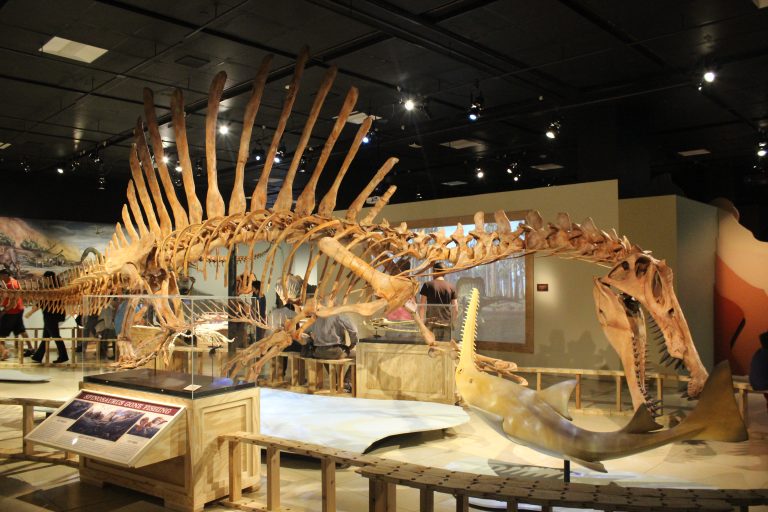
Spinosaurus aegyptiacus
Spinosaurus aegyptiacus
A colossal semi-aquatic predatory theropod equipped with a massive dorsal neural sail, crocodyliform snout, and paddle-like tail adapted for pursuing giant Cretaceous fish.
Related Paleontological Dispatches
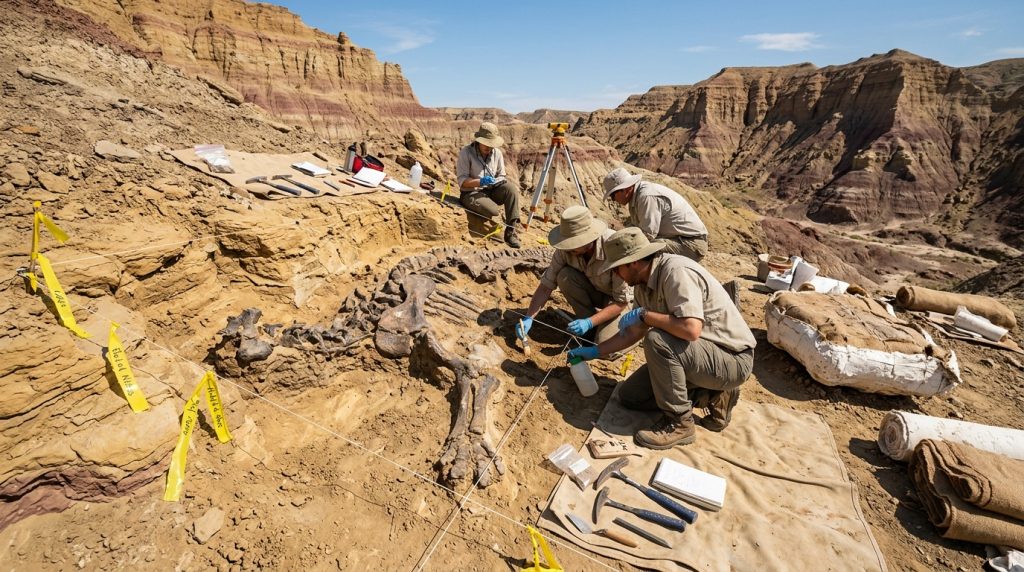
Dinosaur News This Month: What Paleontologists Just Announced
Welcome to the October 2026 edition of Paleontological Dispatches, your curated, scientifically verified monthly roundup of what researchers…
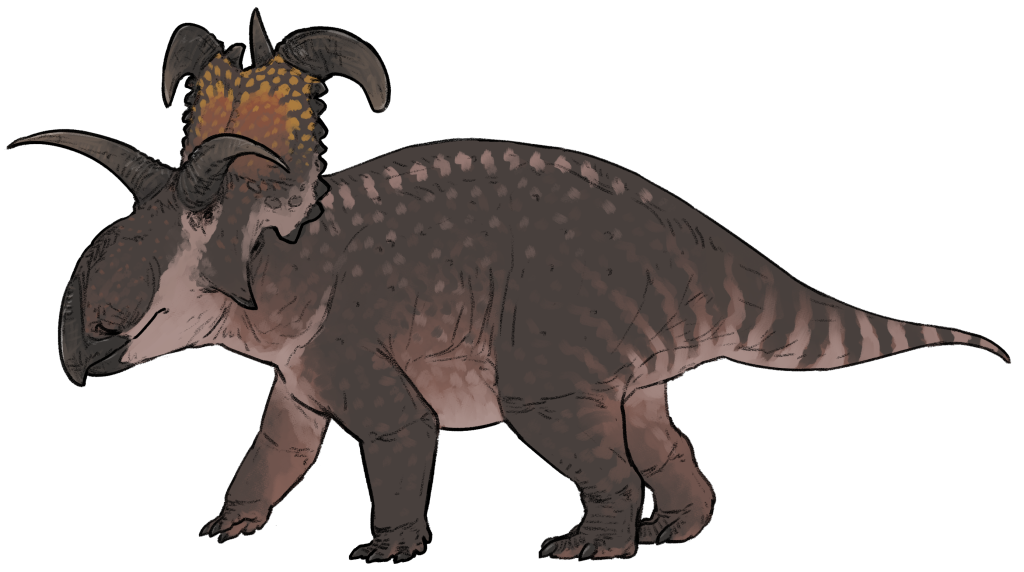
The 10 Biggest Dinosaur Discoveries of the Last 5 Years
The last five years (2021–2026) represent one of the most prolific and intellectually transformative golden ages in the…

Why It Can Take 20 Years to Name a New Dinosaur
Whenever headlines announce that paleontologists have unveiled a spectacular new dinosaur species, the public naturally envisions a researcher…