Stegosaurus: Why It Had Back Plates and a Spiked Tail
From alternating solar radiators and sexual billboards to a 40-mph spiked tail that punctured Allosaurus bones, uncover the true science of Stegosaurus armor—and why the famous 'second brain' is pure myth.
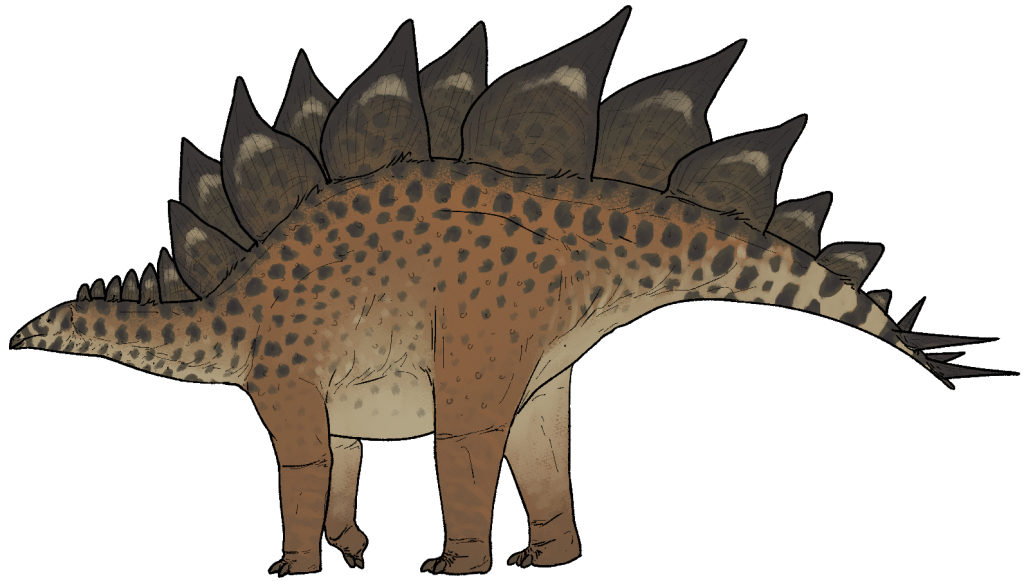
With its tiny head, towering double row of kite-shaped plates, and a tail bristling with four lethal spikes, Stegosaurus is instantly recognizable to every child on Earth. Yet behind this beloved Jurassic silhouette lies over a century of fierce scientific debate. When Othniel Charles Marsh first named the creature in 1877 during the historic “Bone Wars,” he mistakenly believed the plates lay flat across its back like shingles on a roof—hence the genus name Stegosaurus, meaning “roof lizard.”
Since that initial blunder, paleontology has unraveled the extraordinary biomechanical and behavioral truths behind this nine-meter herbivore. Why did Stegosaurus evolve giant plates that were not even attached to its skeleton? How did its spiked tail—the famous “thagomizer”—strike with enough velocity to puncture solid predator bone? And what is the real biological explanation behind the persistent myth that Stegosaurus had a “second brain” in its hip?
Here is what peer-reviewed paleontology reveals about the armored plates, defensive weaponry, and neuroanatomy of Stegosaurus.
Stegosaurus Anatomy Profile
- Taxonomy: Thyreophora → Stegosauridae → Stegosaurus stenops
- Geological Period: Late Jurassic (Kimmeridgian–Tithonian, ~155–150 Ma)
- Geographic Range: Morrison Formation (Colorado, Wyoming, Utah, USA)
- Total Length & Mass: ~9.0 meters (30 ft); ~5,000 to 7,000 kg (5.5–7.7 tons)
- Dorsal Plates: 17 alternating dermal osteoderms (up to 75 cm / 2.5 ft tall)
- Tail Weapon: 4 horizontal spikes (thagomizer) measuring 60–90 cm long
1. The Dermal Plates: 17 Osteoderms Floating in Skin
The most iconic feature of Stegosaurus is its two rows of vertical plates. However, museum visitors are often astonished to learn that the plates are not fused to the vertebral column. They are modified dermal osteoderms—bony deposits that formed within the thick skin itself, anchored by a dense network of collagenous Sharpey’s fibers and cartilage.
In mature Stegosaurus stenops, there are exactly 17 plates running from the neck to the mid-tail. Rather than standing in parallel paired sets, pristine articulated specimens (such as the famous “Sophie” specimen at the Natural History Museum in London) prove that the plates were arranged in a staggered, alternating configuration. Measuring up to 75 centimeters (2.5 feet) tall on the lower back, the plates were thin in cross-section with thickened, porous bases.
2. Competing Hypotheses for Plate Function: Display, Heat, or Shield?
Why did Stegosaurus evolve these enormous plates? Paleontologists have debated three primary hypotheses:
1. Socio-Sexual Display and Species Recognition
The prevailing scientific consensus is that the plates functioned primarily as visual display structures. Seen from the side, a standing Stegosaurus appeared nearly twice as tall, instantly deterring predators like Allosaurus fragilis. Furthermore, a 2015 study by Evan Saitta documented distinct sexual dimorphism in Stegosaurus plates from Montana: some individuals possessed broad, oval plates, while others possessed taller, pointed plates, indicating sexual selection and courtship signaling similar to the horns of modern antelope.
2. The Thermoregulation Hypothesis (Solar Radiators)
In the 1970s and 1980s, paleontologists James Farlow and Armand de Ricqlès noted that plate bone surfaces were covered in deep vascular channels. They suggested the plates operated as biological cooling fins or solar collectors: pumping blood through the plates to absorb morning sun or radiate excess body heat during the midday Jurassic heat. However, subsequent histological thin-sectioning by Main et al. (2005) demonstrated that these vascular channels fed an outer growing sheath of tough keratin, rather than an open circulatory heat-exchange radiator.
3. Physical Armor: A Flawed Theory
Early researchers assumed the plates acted as physical armor against bites. However, because the plates were thin, stood vertically rather than covering the flanks, and left the vulnerable belly and neck exposed, they offered minimal protection against flank attacks, disproving the idea that they were simple shields.
3. The Thagomizer: Biomechanical Weapon of Devastating Defense
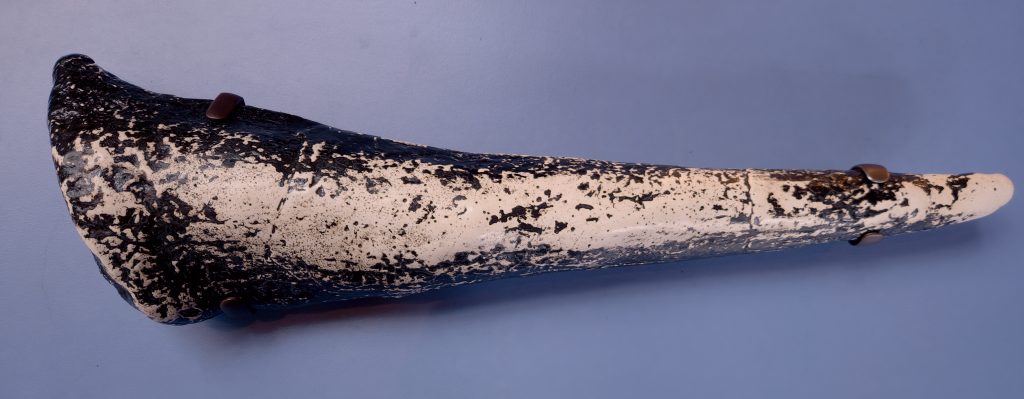
While the plates handled visual display, the tail was built for pure lethality. At the end of the tail sat four elongated, conical spikes measuring between 60 and 90 centimeters (2 to 3 feet) in length, projecting horizontally outward and slightly backward.
In one of the most delightful episodes in scientific history, this weapon had no formal anatomical name until 1982, when cartoonist Gary Larson published a Far Side comic showing cavemen naming the spikes “the thagomizer… after the late Thag Simmons.” Paleontologist Kenneth Carpenter formally adopted the term at the Society of Vertebrate Paleontology, and today “thagomizer” is the recognized scientific anatomical term used in peer-reviewed monographs worldwide!
Biomechanical Strike Force
Biomechanical simulations conducted by Carpenter and colleagues demonstrated that Stegosaurus had an exceptionally flexible tail. While the front half of the tail was stiffened to support massive caudofemoralis longus walking muscles, the posterior half lacked ossified tendons, allowing a lateral swinging arc of over 180 degrees. An adult Stegosaurus could whip its thagomizer at speeds exceeding 65 to 70 km/h (40 to 45 mph), delivering thousands of joules of kinetic energy focused onto sharp, keratin-tipped points.
4. Forensic Proof of Conflict: The Punctured Allosaurus
Is there direct physical evidence that Stegosaurus used its thagomizer against real predators? Yes. Paleontologists in Utah discovered an articulated caudal vertebra of an adult Allosaurus fragilis with a catastrophic injury: a clean, circular puncture hole penetrating deep through the solid bone.
Carpenter et al. demonstrated that the puncture matched the exact conical diameter, taper, and elliptical cross-section of an adult Stegosaurus thagomizer spike. Astonishingly, the bone edges show clear signs of subsequent bone remodeling and healing—proving that the Allosaurus survived the strike, escaped, and lived for months after taking a direct hit from a Stegosaurus tail!
5. Debunking the “Second Brain” Myth
One of the most persistent myths in dinosaur lore is that Stegosaurus had two brains: a walnut-sized brain in its head, and a “second brain” in its hips to control its tail and legs. This myth originated in 1877 when O.C. Marsh discovered that the neural canal passing through the sacrum (hip vertebrae) was expanded into an enormous cavity nearly twenty times the volume of the cranial braincase.
Modern comparative anatomy has completely dismantled this idea:
- The Brain Was Small, But Adequate: The actual brain in the skull was indeed small—weighing roughly 80 grams (the size of a plum or walnut)—but perfectly adequate for a low-browsing herbivore that relied on visual herd displays and defensive tail reflexes.
- The Lumbosacral Expansion: Every vertebrate, including birds and humans, has an enlarged spinal cord in the hip region to anchor the complex nerve bundles (the lumbosacral plexus) that operate the legs.
- The Glycogen Body: In modern birds (the living descendants of dinosaurs), this identical sacral cavity houses the glycogen body—a specialized non-nervous organ packed with glycogen and lipids that regulates metabolic energy and assists in equilibrium during bipedal motion. The sacral cavity of Stegosaurus contained nerve roots and energy-storing tissue—it never contained brain tissue, neurons, or conscious thought!
6. Feeding Ecology: Low-Browsing Fern Slicers
Stegosaurus held its head only about 1 meter off the ground. Its jaws were lined with small, leaf-shaped teeth with tiny serrated denticles, designed not for crushing wood, but for cropping low-lying Jurassic vegetation:
- Target Flora: Ferns, horsetails, mosses, fallen cycad seeds, and low gymnosperm seedlings.
- Gastroliths and Fermentation: Because its teeth could not grind fibrous plant material into paste, Stegosaurus likely swallowed smooth stomach stones (gastroliths) and relied on an enormous, slow-fermenting gut chamber to digest tough cellulose.
Common Misconceptions About Stegosaurus
Misconception 1: “Stegosaurus had a second brain in its tail.”
Reality: The enlarged sacral cavity housed nerve bundles and an energy-storing glycogen body, identical to modern birds. It contained zero neurons or cognitive function.
Misconception 2: “The back plates were arranged in symmetrical parallel pairs.”
Reality: Pristine fossil skeletons like “Sophie” prove the 17 plates were arranged in a staggered, alternating pattern along the spine.
Misconception 3: “Stegosaurus fought Tyrannosaurus rex.”
Reality: Stegosaurus lived in the Late Jurassic (~150 Ma), while T. rex lived in the Late Cretaceous (~66 Ma). More time separates Stegosaurus from T. rex (roughly 85 million years) than separates T. rex from modern humans (66 million years)!
Frequently Asked Questions
Why did Stegosaurus have plates on its back?
Scientific evidence indicates the 17 alternating plates served primarily for visual display, species recognition, and sexual courtship, while secondarily making the animal look twice as tall to deter predators like Allosaurus.
What is a thagomizer, and why is it called that?
The thagomizer is the four-spiked defensive weapon at the tip of a stegosaur’s tail. The term was coined in a 1982 Far Side cartoon by Gary Larson and was subsequently adopted as the formal scientific term by vertebrate paleontologists.
Were Stegosaurus plates attached to its bones?
No. The plates were dermal osteoderms embedded within thick, fibrous skin and connective tissue, resting above the spine without being fused to the vertebrae.
How smart was Stegosaurus?
Its brain was approximately the size and shape of a walnut (around 80 grams), giving it a relatively low encephalization quotient. However, its sensory and motor processing was well-adapted for low grazing, herd signaling, and reactive tail defense.
Could the thagomizer penetrate predator bone?
Yes. Paleontologists discovered an Allosaurus vertebra with a healed puncture wound matching the exact dimensions of a Stegosaurus tail spike, proving the weapon struck with bone-piercing velocity.
Final Takeaway: An Evolutionary Icon of the Jurassic
Stegosaurus was not a slow-witted biological blunder; it was one of the most successful, specialized herbivores of the Late Jurassic. By evolving alternating dermal billboards to communicate across the prehistoric savanna and a precision-guided spiked thagomizer to shatter attacking carnivores, Stegosaurus dominated western North America for millions of years.
When we replace outdated myths of “second brains” with the reality of osteoderm biomechanics and forensic predator clashes, Stegosaurus emerges as an unforgettable masterwork of evolutionary engineering.
To dive deeper into armored dinosaur anatomy, explore our dedicated Stegosaurus Profile, compare it with Cretaceous contemporaries in our Dinosaur Comparison Engine, or explore its Jurassic Morrison world on our Geological Timeline.
Peer-Reviewed Literature Cited
- Carpenter, K., Sanders, F., McWhinney, L. A., & Wood, L. (2005). Evidence for predatory-prey relationships through bite marks and weapon damage. The Carnivorous Dinosaurs, Indiana University Press, 325–344.
- Main, R. P., de Ricqlès, A., Horner, J. R., & Padian, K. (2005). The evolution and function of thyreophoran dinosaur scutes: Implications for plate function in Stegosaurus. Paleobiology, 31(2): 291–314. DOI: 10.1666/0094-8373(2005)031[0291:TEAFOT]2.0.CO;2
- Saitta, E. T. (2015). Evidence for sexual dimorphism in the plated dinosaur Stegosaurus mjosi (Ornithischia, Stegosauria) from the Morrison Formation of Montana. PLOS ONE, 10(4): e0121403. DOI: 10.1371/journal.pone.0121403
- Marsh, O. C. (1877). A new order of extinct Reptilia (Stegosauria) from the Jurassic of the Rocky Mountains. American Journal of Science, 14: 513–514.

Referenced Dinosaur Species 5 species
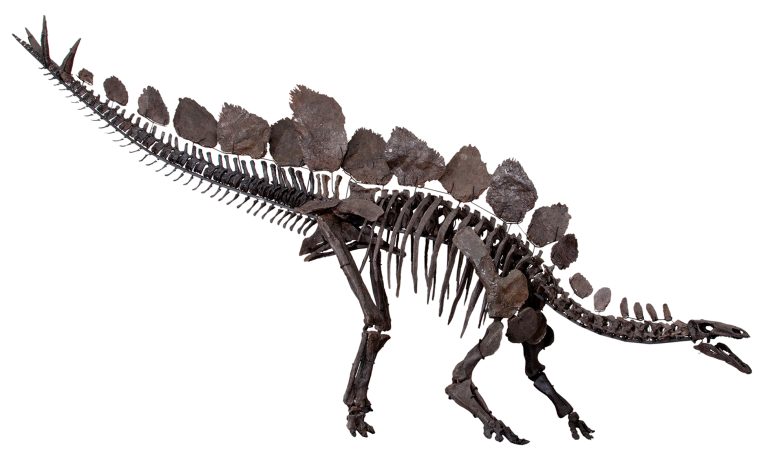
Stegosaurus stenops
Stegosaurus stenops
An iconic plated herbivore possessing alternating osteodermal dorsal plates for thermoregulation or display and four lethal tail spikes (thagomizer) for active defense.
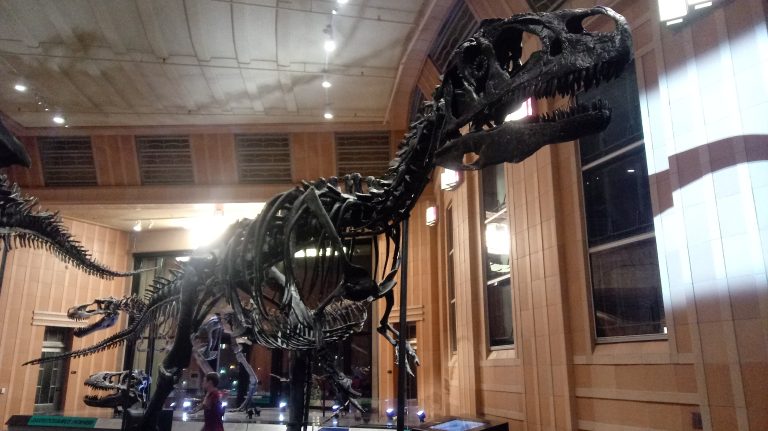
Allosaurus fragilis
Allosaurus fragilis
The most common and lethal apex predator of the Late Jurassic Morrison Formation, hunting with gaping jaws, slashing bites, and robust three-clawed forelimbs.
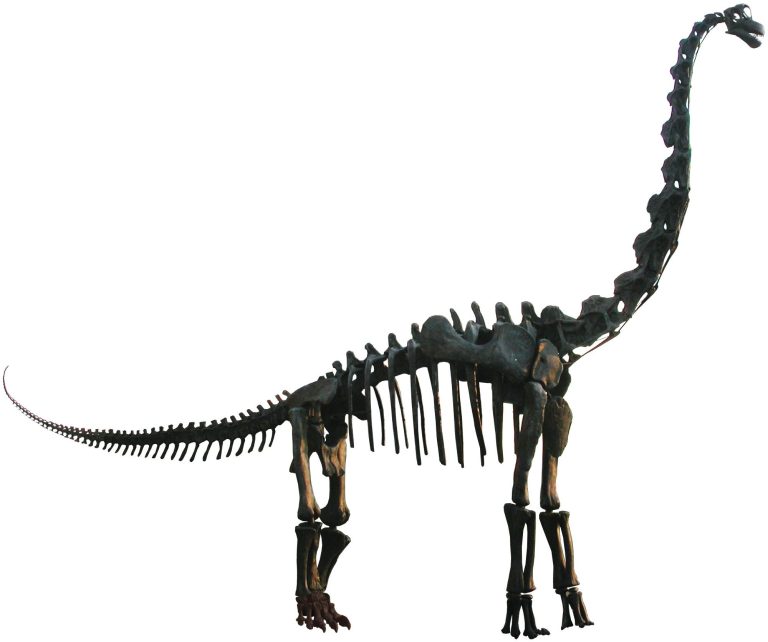
Brachiosaurus altithorax
Brachiosaurus altithorax
A colossal macronarian sauropod with disproportionately long forelimbs and an elevated neck built for high-canopy conifer browsing during the Late Jurassic.
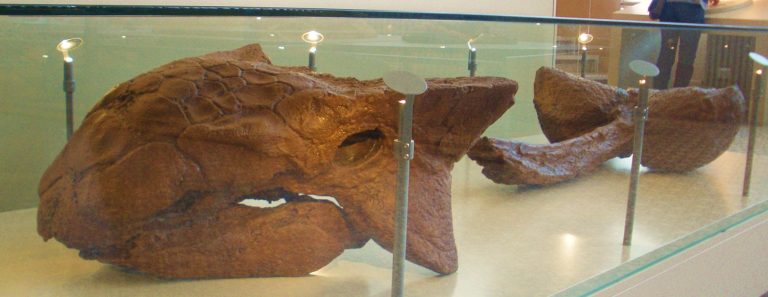
Ankylosaurus magniventris
Ankylosaurus magniventris
The living tank of the Late Cretaceous, armored in thick osteoderm plates with cranial horns and a massive distal tail club capable of shattering theropod bones.
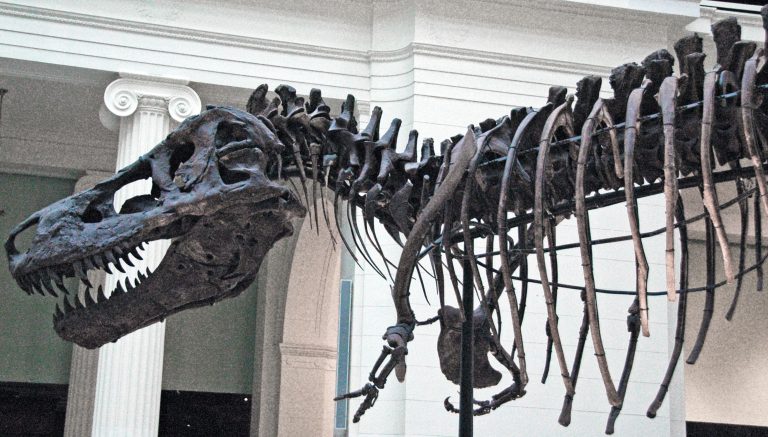
Tyrannosaurus rex
Tyrannosaurus rex
Tyrannosaurus rex was one of the largest terrestrial carnivores of all time, roaming western North America just prior to the Cretaceous-Paleogene extinction event. With an estimated bite force exceeding 35,000 Newtons and acute stereoscopic vision, it sat uncontested at the apex of its ecosystem.
Related Paleontological Dispatches
Triceratops: Why It Had Three Horns and a Huge Frill
For more than a century, popular books and films have depicted Triceratops as nature’s ultimate prehistoric battle tank:…

Did T. rex Have Feathers? What the Fossils Really Say
Over the past three decades, popular depictions of Tyrannosaurus rex have swung between two radical extremes. For nearly…
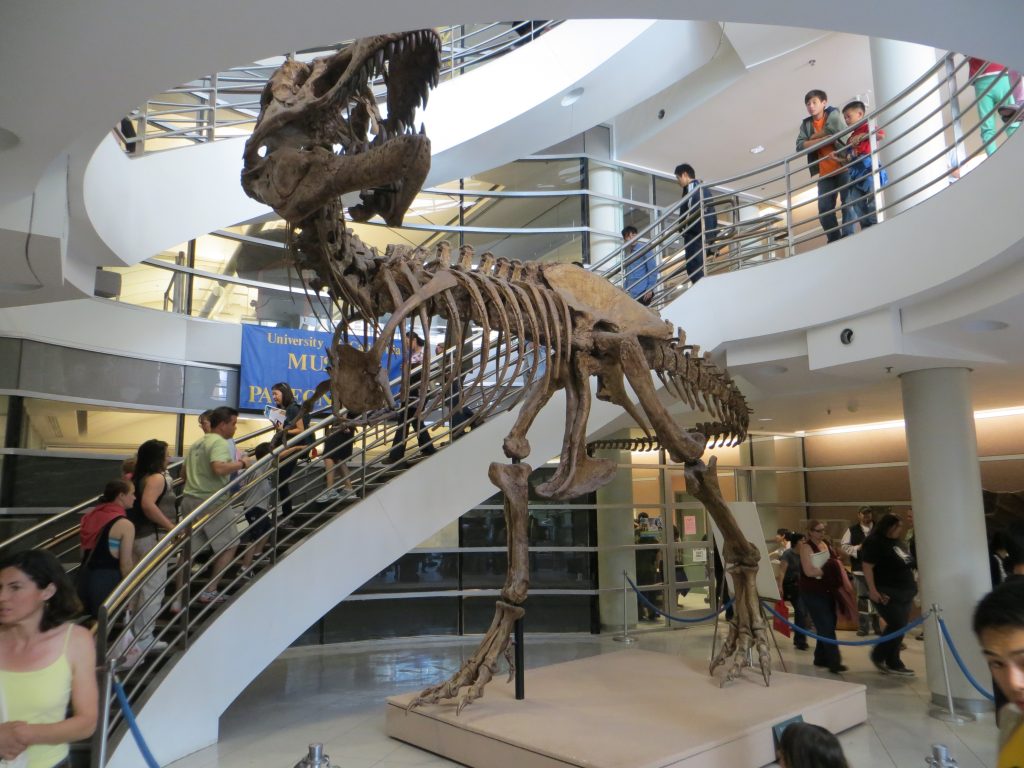
How Big Was a T. rex? Size, Weight and Height Compared
Search the internet for the size of Tyrannosaurus rex, and you will find wildly contradictory numbers. One website…